
Yiddish
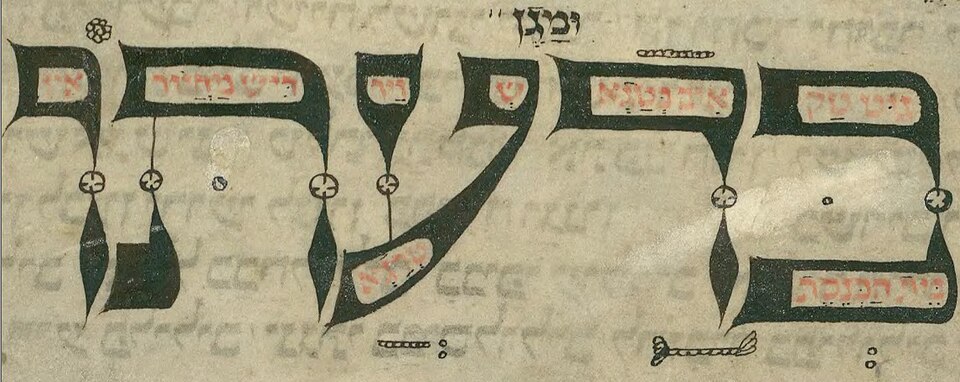
0 sources
Yiddish is classified as a macrolanguage [1]. It is also associated with the country of Australia .
Yiddish
Summary
Yiddish is a macrolanguage[1]. Yiddish draws 13,553 Wikipedia views per month (macrolanguage category, ranking #2 of 12).[2]
Key Facts
- Yiddish is in the country of Australia[3].
- Yiddish is in the country of Austria[4].
- Yiddish is in the country of Argentina[5].
- Yiddish is in the country of Belarus[6].
- Yiddish is in the country of Belgium[7].
- Yiddish is in the country of Bosnia and Herzegovina[8].
- Yiddish's instance of is recorded as macrolanguage[9].
- Yiddish's instance of is recorded as modern language[10].
- Yiddish's instance of is recorded as natural language[11].
- Yiddish's flag is recorded as Yiddish language flags[12].
- Yiddish is a type of High German[13].
- Yiddish is a type of Jewish languages[14].
- Yiddish is a type of West Germanic languages[15].
- Yiddish's writing system is recorded as Hebrew-script-based alphabet[16].
- Yiddish's writing system is recorded as Hebrew alphabet[17].
- Yiddish is part of Jewish culture[18].
- Yiddish is part of non-territorial languages of France[19].
- Yiddish's Commons category is recorded as Yiddish language[20].
- Yiddish's Wikimedia language code is recorded as yi[21].
- Yiddish comprises European Yiddish[22].
- Yiddish comprises Israel Yiddish[23].
- Yiddish comprises Eastern Yiddish[24].
- Yiddish comprises Western Yiddish[25].
- Yiddish comprises Litvish[26].
- Yiddish's coordinate location is recorded as {'lat': 51, 'lon': 24}[27].
Body
Geography
Country listings include Australia[3], a Commonwealth realm[28], in Australia[29], founded in 1901[30]; Austria[4], a sovereign state[31], in Austria[32], founded in 1918[33]; Argentina[5], a sovereign state[34], in Argentina[35], founded in 1816[36]; Belarus[6], a sovereign state[37], in Belarus[38], founded in 1991[39]; Belgium[7], a sovereign state[40], in Belgium[41], founded in 1830[42]; and Bosnia and Herzegovina[8], a sovereign state[43], in Bosnia and Herzegovina[44], founded in 1992[45]. Part of include Jewish culture[18] and non-territorial languages of France[19].
Designation and Status
Recorded instance of include macrolanguage[9], modern language[10], and natural language[11].
Why It Matters
Yiddish draws 13,553 Wikipedia views per month (macrolanguage category, ranking #2 of 12).[2] Yiddish has Wikipedia articles in 30 language editions, a strong signal of global cultural recognition.[46] Yiddish is known by 74 alternative names across languages and contexts.[47]
Yiddish has been cited as an influence by English[48], a natural language[49], in American Samoa[50]; Esperanto[51], a planned language[52], in Esperantujo[53], founded in 1887[54]; Yenish[55], a mixed language[56], in Germany[57]; Bargoens[58], a cant[59], in Netherlands[60]; and Hebronics[61], a dialect[62].
FAQs
Who did Yiddish influence?
Yiddish has been cited as an influence by English[48], Esperanto[51], Yenish[55], and Bargoens[58].