
David Ben-Gurion
0 sources
Summary
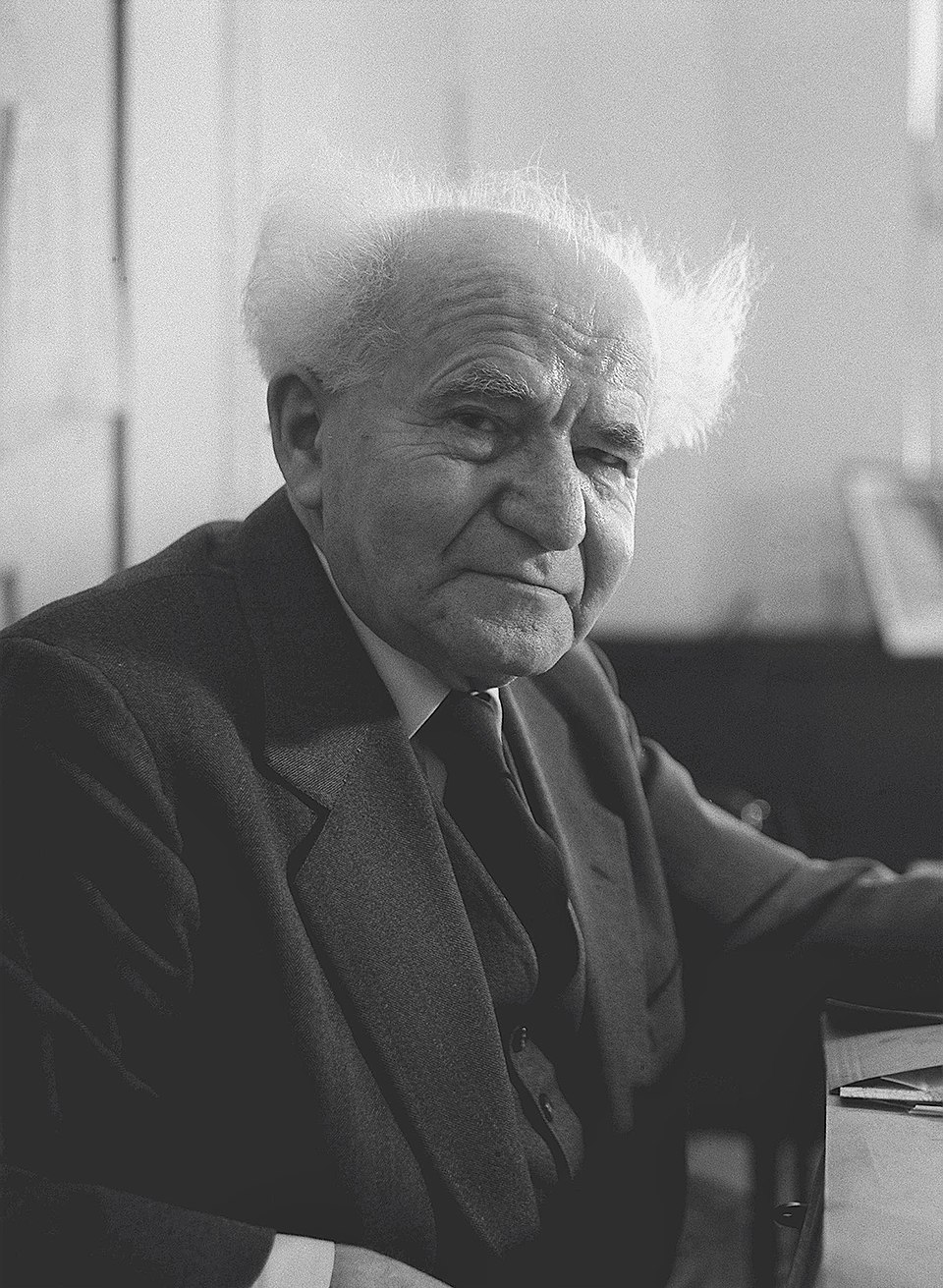
David Ben-Gurion was born on October 16, 1886[1], in Płońsk[2]. He died on December 1, 1973[3], in Ramat Gan[4]. He worked as a politician[5], trade unionist[6], and zionist[7]. He ranks in the top 0.39% of human entities by monthly Wikipedia readership (38,799 views/month, #3,888 of 1,000,298).[8]
Key Facts
- Place of death: Jaffa[9]
- Place of burial: Midreshet Ben-Gurion[10]
- Father: Avigdor Ben Gurion[11]
- Spouse: Paula Ben-Gurion[12]
- Child: Amos Ben-Gurion[13], Renana Leshem[14], Geula Ben-Eliezer[15]
- Country of citizenship: Russian Empire[16], Ottoman Empire[17], Mandatory Palestine[18], Israel[19]
- Field of work: politics[20], Zionism[21]
- Position held: Prime Minister of Israel[22], Minister of Defense of Israel[23], Knesset member[24], general secretary[25], Education Minister of Israel[26], Justice Minister of Israel[27], Minister of Transport and Road Safety[28], President of the Provisional State Council[29]
- Educated at: Istanbul University Faculty of Law[30], University of Warsaw[31], Istanbul University[32]
- Award received: Bialik Prize[33], honorary doctor of Tel Aviv University[34], honorary citizen of Jerusalem[35]
- Member of: Histadrut[36], Jewish National Council[37]
- Religion or worldview: Judaism[38]
- Sex or gender: male[39]
- Member of political party: Mapai[40], Rafi[41], National List[42], Workers of Zion[43], Labor Unity[44]
- Commons category: David Ben-Gurion[45]
- Cause of death: stroke[46]
- Participated in conflict: World War I[47]
- Family name: Ben-Gurion[48]
- Given name: David[49], Dávid[50]
Body
Works and Contributions
Things named for David Ben-Gurion include Ben Gurion Airport[51], an international airport[52], in Israel[53], founded in 1937[54]; Ben-Gurion University of the Negev[55], a public research university[56], in Israel[57], founded in 1969[58]; Ben-Gurion's Hut[59], a museum[60], in Israel[61], founded in 1953[62]; David and Pola Ben Gurion graves[63], a protected area[64], in Israel[65]; Ben Gurion Canal Project[66], a proposed canal[67], in Israel[68]; Ben-Gurion House in Tel Aviv[69], a museum[70], in Israel[71], founded in 1976[72]; Ben-Gurion National Solar Energy Center[73], a research institute[74], in Israel[75], founded in 1987[76], headquartered in Ben-Gurion University of the Negev[77]; and Ben-Gurion Day[78], a national day[79], in Israel[80].
Why It Matters
David Ben-Gurion has Wikipedia articles in 30 language editions, a strong signal of global cultural recognition.[81] He is known by 140 alternative names across languages and contexts.[82]
Entities named for him include Ben Gurion Airport[51], an international airport[52], in Israel[53], founded in 1937[54]; Ben-Gurion University of the Negev[55], a public research university[56], in Israel[57], founded in 1969[58]; Ben-Gurion's Hut[59], a museum[60], in Israel[61], founded in 1953[62]; David and Pola Ben Gurion graves[63], a protected area[64], in Israel[65]; Ben Gurion Canal Project[66], a proposed canal[67], in Israel[68]; and Ben-Gurion House in Tel Aviv[69], a museum[70], in Israel[71], founded in 1976[72].
FAQs
Where was David Ben-Gurion born?
David Ben-Gurion was born in Płońsk[2].
Where did David Ben-Gurion die?
David Ben-Gurion died in Ramat Gan[4].
Who were David Ben-Gurion's parents?
David Ben-Gurion's father was Avigdor Ben Gurion[11].
Who was David Ben-Gurion married to?
David Ben-Gurion's spouses include Paula Ben-Gurion[12].
What did David Ben-Gurion do for work?
David Ben-Gurion worked as a politician[5], trade unionist[6], and zionist[7].
Where did David Ben-Gurion go to school?
David Ben-Gurion was educated at Istanbul University Faculty of Law[30], University of Warsaw[31], and Istanbul University[32].
What awards did David Ben-Gurion receive?
Honors received include Bialik Prize[33], honorary doctor of Tel Aviv University[34], and honorary citizen of Jerusalem[35].