
Turkish
Oghuz Turkic language of the Turkish people
Press Enter · cited answer in seconds
0 sources
Summary
Turkish is a natural language[1]. Turkish ranks in the top 3% of natural language entities by monthly Wikipedia readership (18,364 views/month).[2]
Key Facts
- Ethnic group: Turks[3]
- Country: Bulgaria[4], Cyprus[5], Greece[6], Turkey[7], Northern Cyprus[8]
- Instance of: modern language[9], field of study[10]
- Main regulatory text: Constitution of Turkey[11]
- Based on: Old Anatolian Turkish[12]
- Subclass of: Western Oghuz[13], Turkic[14]
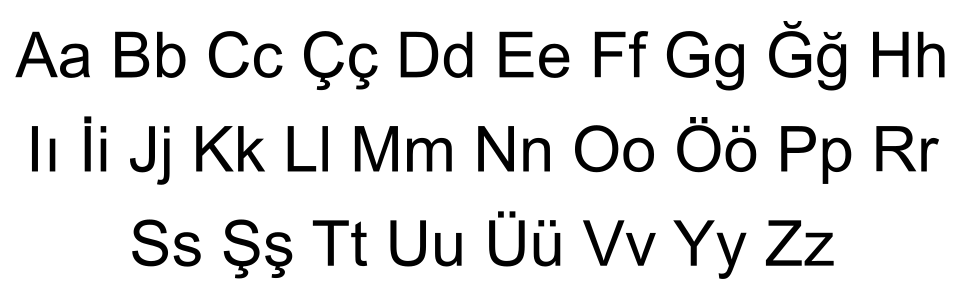
- Writing system: Turkish alphabet[15], Turkish Braille[16]
- Commons category: Turkish language[17]
- Wikimedia language code: tr[18]
- Topic's main category: Category:Turkish language[19]
- Language regulatory body: Turkish Language Association[20]
- Number of speakers, writers, or signers: 82,231,620[21], 79,526,830[22], 79,400,000[23], 78,527,240[24], 71,435,850[25], 5,870,300[26], 5,670,300[27], 350,000[28], 380,300[29]
- Described by source: Small Brockhaus and Efron Encyclopedic Dictionary[30]
- Stack Exchange tag: https://linguistics.stackexchange.com/tags/turkish[31], https://stackoverflow.com/tags/turkish[32], https://tex.stackexchange.com/tags/turkish[33]
- Native label: Türkçe[34]
- NCI Thesaurus ID: C154180[35]
- Short name: турецкий[36], турецька[37], türkcə[38], түрікше[39], туркаг[40], türgi keel[41]
- Different from: Turkic[42], Turki[43]
- UNESCO language status: 1 safe[44]
- Indigenous to: Turks[45], Burgas[46], Kardzhali[47], Smolyan[48], Haskovo[49], Cyprus[50], Xanthi Prefecture[51], Rhodope Prefecture[52]
Why It Matters
Turkish has Wikipedia articles in 30 language editions, a strong signal of global cultural recognition.[53] Turkish is known by 76 alternative names across languages and contexts.[54]
Turkish has been cited as an influence by English[55], a natural language[56], in American Samoa[57] and Globasa[58], an international auxiliary language[59], founded in 2019[60].
FAQs
Who did Turkish influence?
Turkish has been cited as an influence by English[55] and Globasa[58].