
Walter Benjamin
0 sources
Walter Benjamin
Summary
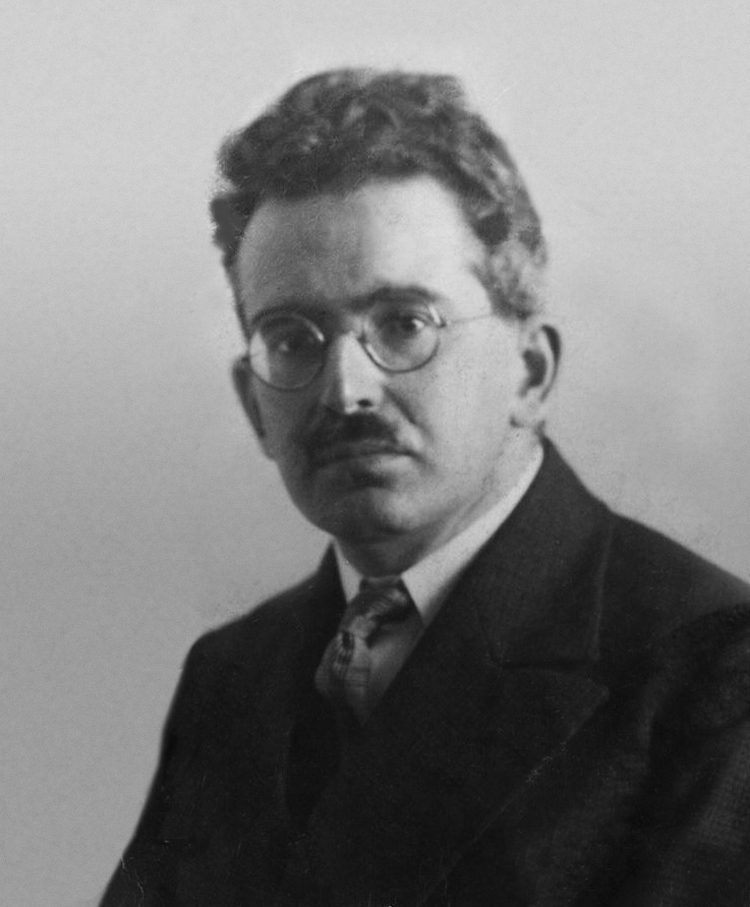
Walter Benjamin is a human[1]. His place of birth was Berlin[2]. He was born on July 15, 1892[3]. He died in Portbou[4]. He died on September 26, 1940[5]. He worked as a philosopher[6], writer[7], translator[8], essayist[9], and literary critic[10]. He ranks in the top 0.59% of human entities by monthly Wikipedia readership (20,297 views/month, #5,899 of 1,000,298).[11]
Key Facts
- Walter Benjamin's place of birth was Berlin[2].
- Walter Benjamin died in Portbou[4].
- Walter Benjamin was born on July 15, 1892[3].
- Walter Benjamin died on September 26, 1940[5].
- Walter Benjamin is buried at Cementiri de Portbou[12].
- Walter Benjamin's father was Emil Benjamin[13].
- Among Walter Benjamin's spouses was Dora Sophie Kellner[14].
- A child of Walter Benjamin was Stefan Benjamin[15].
- Walter Benjamin held citizenship in Kingdom of Prussia[16].
- Walter Benjamin held citizenship in German Reich[17].
- German was Walter Benjamin's native language[18].
- Walter Benjamin's professions included philosopher[6].
- Walter Benjamin's professions included writer[7].
- Walter Benjamin's professions included translator[8].
- Walter Benjamin's professions included essayist[9].
- Walter Benjamin worked as a literary critic[10].
- Walter Benjamin worked as a sociologist[19].
- Walter Benjamin's field of work was philosophy[20].
- Walter Benjamin's education included a stint at Ludwig-Maximilians-Universität München[21].
- Walter Benjamin was educated at University of Bern[22].
- Walter Benjamin was educated at Humboldt-Universität zu Berlin[23].
- Walter Benjamin's education included a stint at University of Freiburg[24].
- Walter Benjamin's doctoral advisor was Richard Herbertz[25].
- A notable work attributed to Walter Benjamin is Theses on the Philosophy of History[26].
- A notable work attributed to Walter Benjamin is The Work of Art in the Age of Mechanical Reproduction[27].
Body
Origins and Family
Walter Benjamin's place of birth was Berlin[2]. He was born on July 15, 1892[3]. His father was Emil Benjamin[13]. German was his native language[18].
Education
Educated at Ludwig-Maximilians-Universität München[21], a public research university[28], in Germany[29], founded in 1472[30], headquartered in Hauptgebäude der Ludwig-Maximilians-Universität München[31]; University of Bern[22], a comprehensive university[32], in Switzerland[33], founded in 1834[34], headquartered in Main building of the University of Berne[35]; Humboldt-Universität zu Berlin[23], a comprehensive university[36], in Germany[37], founded in 1809[38], headquartered in Berlin[39]; and University of Freiburg[24], a public university[40], in Germany[41], founded in 1457[42], headquartered in Freiburg im Breisgau[43]. Walter Benjamin's doctoral advisor was Richard Herbertz[25].
Career and Affiliations
Recorded occupations include philosopher[6], writer[7], translator[8], essayist[9], literary critic[10], and sociologist[19]. Walter Benjamin's field of work was philosophy[20].
Works and Contributions
Notable works include Theses on the Philosophy of History[26], a written work[44], founded in 1940[45]; The Work of Art in the Age of Mechanical Reproduction[27], a literary work[46], founded in 1936[47]; The Origin of German Tragic Drama[48]; One-way Street[49]; and The arcades project[50].
Personal Life
Among Walter Benjamin's spouses was Dora Sophie Kellner[14]. A child of him was Stefan Benjamin[15].
Death and Burial
Walter Benjamin died on September 26, 1940[5]. He died in Portbou[4]. Burial took place at Cementiri de Portbou[12].
Why It Matters
Walter Benjamin ranks in the top 0.59% of human entities by monthly Wikipedia readership (20,297 views/month, #5,899 of 1,000,298).[11] He has Wikipedia articles in 27 language editions, a strong signal of global cultural recognition.[51] He is known by 42 alternative names across languages and contexts.[52]
He has been cited as an influence by Hannah Arendt[53], a philosopher[54], 1906–1975[55], of Prussia[56], awarded the Guggenheim Fellowship[57], specialised in political philosophy[58]; Slavoj Žižek[59], a philosopher[60], b. 1949[61], of Slovenia[62], awarded the Ambassador of Science of the Republic of Slovenia[63], specialised in ideology[64]; Theodor W. Adorno[65], a philosopher[66], 1903–1969[67], of United States[68], awarded the Goethe Plaque of the City of Frankfurt[69], specialised in philosophy[70]; Jacques Derrida[71], a philosopher[72], 1930–2004[73], of France[74], awarded the Theodor W. Adorno Award[75], specialised in philosophy of language[76]; Jean Baudrillard[77], a philosopher[78], 1929–2007[79], of France[80], specialised in philosophy[81]; and Byung-Chul Han[82], a writer[83], b. 1959[84], of South Korea[85], awarded the Salzburg State Prize for Future Research[86].
Works attributed to him include The Work of Art in the Age of Mechanical Reproduction[87], The arcades project[88], Theses on the Philosophy of History[89], Capitalism as Religion[90], and Berlin Childhood around 1900[91].
FAQs
Where was Walter Benjamin born?
Born in Berlin[2], Walter Benjamin…
Where did Walter Benjamin die?
Walter Benjamin passed away in Portbou[4].
Who were Walter Benjamin's parents?
Walter Benjamin's father was Emil Benjamin[13].
Who was Walter Benjamin married to?
Walter Benjamin's spouses include Dora Sophie Kellner[14].
What did Walter Benjamin do for work?
Walter Benjamin worked as philosopher[6], writer[7], translator[8], essayist[9], and literary critic[10].
Where did Walter Benjamin go to school?
Walter Benjamin was educated at Ludwig-Maximilians-Universität München[21], University of Bern[22], Humboldt-Universität zu Berlin[23], and University of Freiburg[24].
Who did Walter Benjamin influence?
Walter Benjamin has been cited as an influence by Hannah Arendt[53], Slavoj Žižek[59], Theodor W. Adorno[65], and Jacques Derrida[71].