
Günther Anders
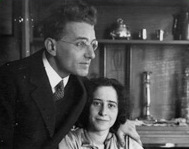
0 sources
Günther Anders was born on July 12, 1902, in Wrocław.[1][2][3][4][5][6][7][8][9] He died on December 17, 1992, in Vienna.[1][2][3][4][5][6][7][9] His citizenships were Germany, Austria, and the United States.[10][11]
He worked as a philosopher, translator, screenwriter, historian of Modern Age, film critic, and art critic.[9] He was educated at the University of Freiburg. His field was philosophy of technology and philosophy.[12]
His employers included The New School, the United States Office of War Information, Berliner Börsen-Courier, and the Metropolitan Museum of Art. His awards included the Theodor W. Adorno Award, Andreas Gryphius Prize, Literature Award of the Bavarian Academy of the Fine Arts, Sigmund Freud Prize, Preis der Stadt Wien für Publizistik, and State Prize for Cultural Journalism.[13]
Günther Anders
Summary
Günther Anders is a human[1]. His place of birth was Wrocław[2]. He was born on July 12, 1902[3]. He passed away in Vienna[4]. He died on December 17, 1992[5]. He worked as a philosopher[6], translator[7], screenwriter[8], historian of Modern Age[9], and film critic[10]. He ranks in the top 0.71% of human entities by monthly Wikipedia readership (721 views/month, #7,116 of 1,000,298).[11]
Key Facts
- Günther Anders's place of birth was Wrocław[2].
- Günther Anders passed away in Vienna[4].
- Günther Anders was born on July 12, 1902[3].
- Günther Anders died on December 17, 1992[5].
- Günther Anders's father was William Stern[12].
- Günther Anders's mother was Clara Stern[13].
- Günther Anders was married to Hannah Arendt[14].
- Günther Anders was married to Elisabeth Freundlich[15].
- Among Günther Anders's spouses was Charlotte Lois Zelka[16].
- Günther Anders held citizenship in Germany[17].
- Günther Anders held citizenship in Austria[18].
- Günther Anders held citizenship in United States[19].
- Günther Anders's professions included philosopher[6].
- Günther Anders worked as a translator[7].
- Günther Anders worked as a screenwriter[8].
- Günther Anders's professions included historian of Modern Age[9].
- Günther Anders worked as a film critic[10].
- Günther Anders worked as an art critic[20].
- Günther Anders's field of work was philosophy of technology[21].
- Günther Anders's field of work was philosophy[22].
- Günther Anders was employed by The New School[23].
- Among Günther Anders's employers was United States Office of War Information[24].
- Among Günther Anders's employers was Berliner Börsen-Courier[25].
- Among Günther Anders's employers was Metropolitan Museum of Art[26].
- Günther Anders was educated at University of Freiburg[27].
Product Details
The following facts are restated verbatim from public-domain and CC0 open-data sources — every line is independently verifiable against the named source's catalog.
MusicBrainz — CC0 open music encyclopedia
-
Type: Person[28]
-
Country: DE[29]
-
Began / founded: 1902-07-12[30]
-
Ended / dissolved: 1992-12-17[31]
-
MusicBrainz ID: 362df742-12b2-4b5f-9c31-ee61e60287e3[32]
Body
Origins and Family
Günther Anders was born in Wrocław[2]. He was born on July 12, 1902[3]. His father was William Stern[12]. His mother was Clara Stern[13].
Education
Günther Anders's education included a stint at University of Freiburg[27]. His doctoral advisor was Edmund Husserl[33]. Studied under Martin Heidegger[34], Edmund Husserl[35], and Ernst Cassirer[36].
Career and Affiliations
Recorded occupations include philosopher[6], translator[7], screenwriter[8], historian of Modern Age[9], film critic[10], and art critic[20]. Fields of work include philosophy of technology[21], a branch of philosophy[37] and philosophy[22], an academic discipline[38]. Employers include The New School[23], a private university[39], in United States[40], founded in 1919[41]; United States Office of War Information[24], an United States federal agency[42], in United States[43], founded in 1942[44], headquartered in Washington, D.C.[45]; Berliner Börsen-Courier[25], a daily newspaper[46], in Kingdom of Prussia[47], founded in 1868[48], headquartered in Berlin[49]; and Metropolitan Museum of Art[26], an art museum[50], in United States[51], founded in 1870[52], headquartered in New York City[53].
Recognition
Awards received include Theodor W. Adorno Award[54], a cultural prize[55], founded in 1977[56]; Andreas Gryphius Prize[57], a literary award[58], in Germany[59]; Literature Award of the Bavarian Academy of the Fine Arts[60], a literary award[61], in Germany[62]; Sigmund Freud Prize[63], a literary award[64], in Germany[65], founded in 1964[66]; Preis der Stadt Wien für Publizistik[67], a Q133833579[68], in Austria[69], founded in 1951[70]; and State Prize for Cultural Journalism[71], a journalism prize[72], in Austria[73].
Personal Life
Spouses include Hannah Arendt[14], a philosopher[74], 1906–1975[75], of Prussia[76], awarded the Guggenheim Fellowship[77], specialised in political philosophy[78]; Elisabeth Freundlich[15], a translator[79], 1906–2001[80], of Austria[81], specialised in creative and professional writing[82]; and Charlotte Lois Zelka[16], a pianist[83], 1930–2001[84], of United States[85].
Death and Burial
Günther Anders died on December 17, 1992[5]. He passed away in Vienna[4].
Why It Matters
Günther Anders ranks in the top 0.71% of human entities by monthly Wikipedia readership (721 views/month, #7,116 of 1,000,298).[11] He has Wikipedia articles in 18 language editions, a strong signal of global cultural recognition.[86] He is known by 24 alternative names across languages and contexts.[87]
He has been cited as an influence by Fabrice Hadjadj[88], an essayist[89], b. 1971[90], of France[91], awarded the Grand prix catholique de littérature[92] and Jean-Pierre Dupuy[93], a philosopher[94], b. 1941[95], of France[96], awarded the Roger Caillois Prix[97], specialised in epistemology[98].
FAQs
Where was Günther Anders born?
Born in Wrocław[2], Günther Anders…
Where did Günther Anders die?
Günther Anders died in Vienna[4].
Who were Günther Anders's parents?
Günther Anders's father was William Stern[12]. Günther Anders's mother was Clara Stern[13].
Who was Günther Anders married to?
Günther Anders's spouses include Hannah Arendt[14], Elisabeth Freundlich[15], and Charlotte Lois Zelka[16].
What did Günther Anders do for work?
Günther Anders worked as philosopher[6], translator[7], screenwriter[8], historian of Modern Age[9], and film critic[10].
Where did Günther Anders go to school?
Günther Anders was educated at University of Freiburg[27].
What awards did Günther Anders receive?
Honors received include Theodor W. Adorno Award[54], Andreas Gryphius Prize[57], Literature Award of the Bavarian Academy of the Fine Arts[60], and Sigmund Freud Prize[63].
Who did Günther Anders influence?
Günther Anders has been cited as an influence by Fabrice Hadjadj[88] and Jean-Pierre Dupuy[93].