
Ernst Cassirer
0 sources
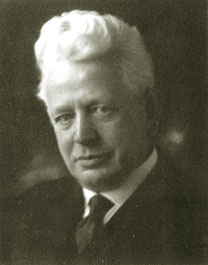
Ernst Cassirer was a philosopher, university teacher, and art historian[1][2][3] born on May 28, 1874, in Wrocław[4][5][6][2][7][8][9]. He was educated at the Humboldt-Universität zu Berlin and the University of Marburg[10], becoming associated with the Marburg School[11]. His employers included the University of Hamburg, where he worked from 1919 to 1933, and the University of Oxford from 1933 to 1935[12]. He also worked for the War Press Office of the German Reich and at All Souls College[12].
Cassirer received the Kuno Fischer Award and an honorary doctorate from the University of Gothenburg. He died of a myocardial infarction on April 13, 1945, in New York City[4][13][5][6][2][7][14][9][15][16][8][17][18][19][1]. His remains were buried at Cedar Park Cemetery[20].
Key Facts
- Date of birth: July 28, 1874[9]
- Place of burial: Cedar Park Cemetery[10]
- Father: Eduard Cassirer[11]
- Spouse: Toni Cassirer[12]
- Child: Heinz Cassirer[13]
- Country of citizenship: Kingdom of Prussia[14], Weimar Republic[15], Nazi Germany[16], Sweden[17]
- Employer: University of Oxford[18], All Souls College[19], War Press Office (German Reich)[20], University of Hamburg[21], Yale University[22], Columbia University[23], University of Gothenburg[24], Humboldt-Universität zu Berlin[25]
- Educated at: Humboldt-Universität zu Berlin[26], University of Marburg[27]
- Doctoral advisor: Hermann Cohen[28], Paul Natorp[29]
- Award received: Kuno Fischer Award[30], honorary doctor of the University of Gothenburg[31]
- Member of: Royal Swedish Academy of Letters, History and Antiquities[32]
- Sex or gender: male[33]
- Movement: Marburg School[34]
- Doctoral student: Leo Strauss[35], Helene Luise Ewald[36]
- Commons category: Ernst Cassirer[37]
- Archives at: Beinecke Rare Book & Manuscript Library[38]
- Cause of death: myocardial infarction[39]
- Family name: Cassirer[40]
- Given name: Ernst[41]
- Topic's main category: Category:Ernst Cassirer[42]
- Work location: Marburg[43], Berlin[44], Hamburg[45], Oxford[46], Uppsala[47], Gothenburg[48], New York City[49]
- Manner of death: natural causes[50]
Why It Matters
Ernst Cassirer has Wikipedia articles in 26 language editions, a strong signal of global cultural recognition.[51] He is known by 30 alternative names across languages and contexts.[52]
He has been cited as an influence by Michel Foucault[53], an anthropologist[54], 1926–1984[55], of France[56], specialised in philosophy[57]; Hugo Bergmann[58], a librarian[59], 1883–1975[60], of Austria[61], awarded the Israel Prize[62], specialised in philosophy[63]; Éric Weil[64], a philosopher[65], 1904–1977[66], of France[67]; and Vasily Seseman[68], a philosopher[69], 1884–1963[70], of Russian Empire[71].
Works attributed to him include The Philosophy of Symbolic Forms[72], a literary work[73].
His notable doctoral advisees include Leo Strauss[74], a politician[75], 1899–1973[76], of United States[77], awarded the Commander's Cross of the Order of Merit of the Federal Republic of Germany[78], specialised in philosophy[79] and Gertrud Bing[80], an art historian[81], 1892–1964[82], of Germany[83].
FAQs
Where was Ernst Cassirer born?
Ernst Cassirer's place of birth was Wrocław[2].
Where did Ernst Cassirer die?
Ernst Cassirer died in New York City[4].
Who were Ernst Cassirer's parents?
Ernst Cassirer's father was Eduard Cassirer[11].
Who was Ernst Cassirer married to?
Ernst Cassirer's spouses include Toni Cassirer[12].
What did Ernst Cassirer do for work?
Ernst Cassirer worked as a philosopher[5], university teacher[6], and art historian[7].
Where did Ernst Cassirer go to school?
Ernst Cassirer was educated at Humboldt-Universität zu Berlin[26] and University of Marburg[27].
What awards did Ernst Cassirer receive?
Honors received include Kuno Fischer Award[30] and honorary doctor of the University of Gothenburg[31].
Who did Ernst Cassirer influence?
Ernst Cassirer has been cited as an influence by Michel Foucault[53], Hugo Bergmann[58], Éric Weil[64], and Vasily Seseman[68].