
Gershom Scholem
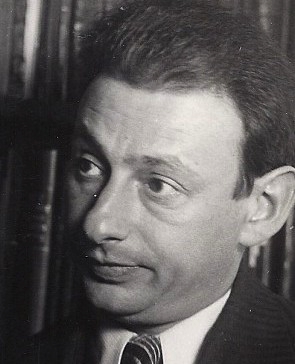
0 sources
Gershom Scholem was born on December 5, 1897, in Berlin [1][2][3][4][5][6][7][8][9][10][11] and died on February 21, 1982, in Jerusalem [1][12][13][3][4][7][9][10][11]. He held citizenship in Israel and Germany [11]. His parents were Arthur Scholem and Betty Scholem [11][11], and he had three siblings: Werner Scholem, Reinhold Scholem, and Erich Scholem [11]. He received his education at Ludwig-Maximilians-Universität München and Humboldt-Universität zu Berlin .
Scholem worked as a philosopher, librarian, historian, pedagogue, writer, and university teacher [1][11][9], primarily focusing on the fields of philosophy and Kabbalah . He was employed by the Hebrew University of Jerusalem . His notable works include Major Trends in Jewish Mysticism, From Berlin to Jerusalem, On the Kabbalah and its Symbolism, On the Mystical Shape of the Godhead: Basic Concepts in the Kabbalah, and On some basic concepts of Judaism .
He received numerous awards, including the Israel Prize, Bialik Prize, Pour le Mérite for Sciences and Arts order, Harvey Prize, Literature Award of the Bavarian Academy of the Fine Arts, and the Reuchlin Award [14][15]. Scholem was a member of the Israel Academy of Sciences and Humanities, the British Academy, the American Academy of Arts and Sciences, and the Royal Netherlands Academy of Arts and Sciences .
Gershom Scholem
Summary
Gershom Scholem is a human[1]. His place of birth was Berlin[2]. He was born on December 5, 1897[3]. He passed away in Jerusalem[4]. He died on February 21, 1982[5]. He worked as a philosopher[6], librarian[7], historian[8], pedagogue[9], and writer[10]. He ranks in the top 0.7% of human entities by monthly Wikipedia readership (1,192 views/month, #7,029 of 1,000,298).[11]
Key Facts
- Gershom Scholem was born in Berlin[2].
- Gershom Scholem died in Jerusalem[4].
- Gershom Scholem was born on December 5, 1897[3].
- Gershom Scholem died on February 21, 1982[5].
- Gershom Scholem is buried at Sanhedria Cemetery[12].
- Gershom Scholem's father was Arthur Scholem[13].
- Gershom Scholem's mother was Betty Scholem[14].
- Gershom Scholem was married to Fania Scholem[15].
- Gershom Scholem was married to Escha Scholem[16].
- Gershom Scholem held citizenship in Israel[17].
- Gershom Scholem held citizenship in Germany[18].
- Gershom Scholem's professions included philosopher[6].
- Gershom Scholem's professions included librarian[7].
- Gershom Scholem worked as a historian[8].
- Gershom Scholem worked as a pedagogue[9].
- Gershom Scholem's professions included writer[10].
- Gershom Scholem worked as a university teacher[19].
- Gershom Scholem's field of work was philosophy[20].
- Gershom Scholem's field of work was Kabbalah[21].
- Among Gershom Scholem's employers was Hebrew University of Jerusalem[22].
- Gershom Scholem was educated at Ludwig-Maximilians-Universität München[23].
- Gershom Scholem was educated at Humboldt-Universität zu Berlin[24].
- Gershom Scholem's doctoral advisor was Fritz Hommel[25].
- Gershom Scholem's doctoral advisor was Clemens Baeumker[26].
- A notable work attributed to Gershom Scholem is Major Trends in Jewish Mysticism[27].
Body
Origins and Family
Gershom Scholem's place of birth was Berlin[2]. He was born on December 5, 1897[3]. His father was Arthur Scholem[13]. His mother was Betty Scholem[14].
Education
Educated at Ludwig-Maximilians-Universität München[23], a public research university[28], in Germany[29], founded in 1472[30], headquartered in Hauptgebäude der Ludwig-Maximilians-Universität München[31] and Humboldt-Universität zu Berlin[24], a comprehensive university[32], in Germany[33], founded in 1809[34], headquartered in Berlin[35]. Doctoral advisors include Fritz Hommel[25], an orientalist[36], 1854–1936[37], of Germany[38], specialised in oriental studies[39] and Clemens Baeumker[26], a philosopher[40], 1853–1924[41], of Germany[42], specialised in history of philosophy[43].
Career and Affiliations
Recorded occupations include philosopher[6], librarian[7], historian[8], pedagogue[9], writer[10], and university teacher[19]. Fields of work include philosophy[20], an academic discipline[44] and Kabbalah[21]. Among Gershom Scholem's employers was Hebrew University of Jerusalem[22]. Doctoral students include Rivka Schatz Uffenheimer[45], Yosef Ben Shlomo[46], and Malachi Beit-Arié[47].
Works and Contributions
Notable works include Major Trends in Jewish Mysticism[27], From Berlin to Jerusalem[48], On the Kabbalah and its Symbolism[49], On the Mystical Shape of the Godhead: Basic Concepts in the Kabbalah[50], and On some basic concepts of Judaism[51]. Things named for Gershom Scholem include Gershom Shalom Award[52], an award[53], in Israel[54], founded in 1991[55].
Recognition
Awards received include Israel Prize[56], an award[57], in Israel[58], founded in 1953[59]; Bialik Prize[60], a literary award[61], in Israel[62], founded in 1933[63], headquartered in Tel Aviv[64]; Pour le Mérite for Sciences and Arts order[65], a civil decoration[66], in Prussia[67], founded in 1842[68]; Harvey Prize[69], a science award[70], in Israel[71], founded in 1972[72]; Literature Award of the Bavarian Academy of the Fine Arts[73], a literary award[74], in Germany[75]; and Reuchlin Award[76], a science award[77], in Germany[78].
Personal Life
Spouses include Fania Scholem[15], 1909–1999[79], of Israel[80] and Escha Scholem[16], an opinion journalist[81], 1896–1978[82], of Israel[83].
Death and Burial
Gershom Scholem died on February 21, 1982[5]. He died in Jerusalem[4]. He is buried at Sanhedria Cemetery[12].
Why It Matters
Gershom Scholem ranks in the top 0.7% of human entities by monthly Wikipedia readership (1,192 views/month, #7,029 of 1,000,298).[11] He has Wikipedia articles in 23 language editions, a strong signal of global cultural recognition.[84] He is known by 30 alternative names across languages and contexts.[85]
He has been cited as an influence by Jacob Taubes[86], a philosopher[87], 1923–1987[88], of Austria[89], specialised in sociology of religion[90] and Walter Benjamin[91], a philosopher[92], 1892–1940[93], of Kingdom of Prussia[94], specialised in philosophy[95].
Entities named for him include Gershom Shalom Award[52], an award[53], in Israel[54], founded in 1991[55].
His notable doctoral advisees include Isaiah Tishby[96], a philosopher[97], 1908–1992[98], of Israel[99], awarded the Bialik Prize[100], specialised in philosophy[101].
FAQs
Where was Gershom Scholem born?
Gershom Scholem's place of birth was Berlin[2].
Where did Gershom Scholem die?
Gershom Scholem died in Jerusalem[4].
Who were Gershom Scholem's parents?
Gershom Scholem's father was Arthur Scholem[13]. Gershom Scholem's mother was Betty Scholem[14].
Who was Gershom Scholem married to?
Gershom Scholem's spouses include Fania Scholem[15] and Escha Scholem[16].
What did Gershom Scholem do for work?
Gershom Scholem worked as philosopher[6], librarian[7], historian[8], pedagogue[9], and writer[10].
Where did Gershom Scholem go to school?
Gershom Scholem was educated at Ludwig-Maximilians-Universität München[23] and Humboldt-Universität zu Berlin[24].
What awards did Gershom Scholem receive?
Honors received include Israel Prize[56], Bialik Prize[60], Pour le Mérite for Sciences and Arts order[65], and Harvey Prize[69].
Who did Gershom Scholem influence?
Gershom Scholem has been cited as an influence by Jacob Taubes[86] and Walter Benjamin[91].