
John Locke
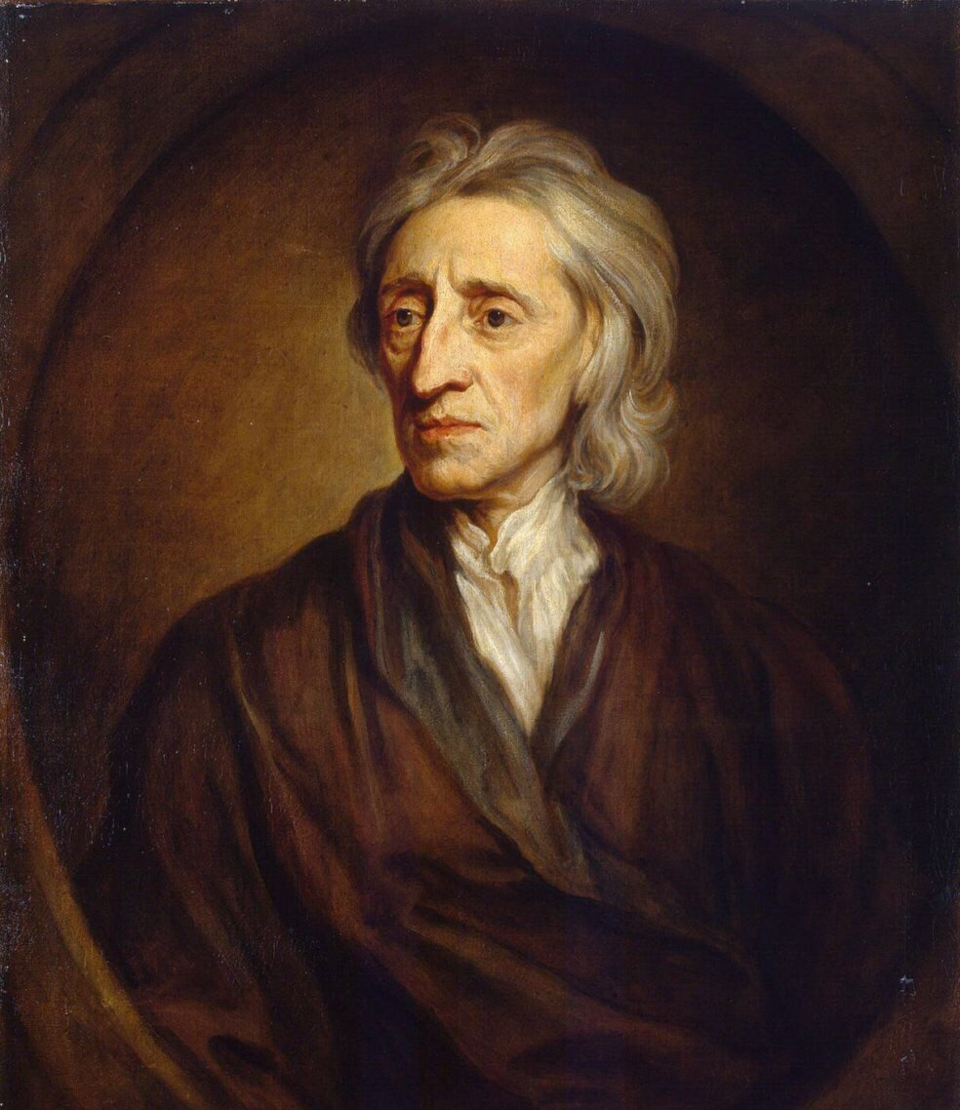
0 sources
John Locke
Summary
John Locke is a human[1]. Born in Wrington[2], he… he was born on August 29, 1632[3]. He died in High Laver[4]. He died on October 28, 1704[5]. He worked as a philosopher[6], politician[7], physician[8], writer[9], and scientist[10]. He ranks in the top 0.41% of human entities by monthly Wikipedia readership (52,477 views/month, #4,112 of 1,000,298).[11]
Key Facts
- John Locke was born in Wrington[2].
- John Locke passed away in High Laver[4].
- John Locke was born on August 29, 1632[3].
- John Locke was born on August 29, 1632[12].
- John Locke died on October 28, 1704[5].
- John Locke died on October 28, 1704[13].
- Burial took place at High Laver (All Saints) Churchyard[14].
- John Locke's father was John Locke[15].
- John Locke's mother was Agnes Keene[16].
- John Locke held citizenship in Kingdom of England[17].
- John Locke is identified as part of the English people ethnic group[18].
- John Locke worked as a philosopher[6].
- John Locke's professions included politician[7].
- John Locke's professions included physician[8].
- John Locke worked as a writer[9].
- John Locke worked as a scientist[10].
- John Locke's professions included philosopher of law[19].
- John Locke's field of work was philosophy[20].
- John Locke's field of work was epistemology[21].
- John Locke's field of work was political philosophy[22].
- John Locke's field of work was medicine[23].
- Among John Locke's employers was University of Oxford[24].
- Among John Locke's employers was Anthony Ashley Cooper, 1st Earl of Shaftesbury[25].
- Among John Locke's employers was Caleb Banks[26].
- John Locke was educated at Christ Church[27].
Body
Origins and Family
John Locke's place of birth was Wrington[2]. Recorded date of birth include August 29, 1632[3]. His father was he[15]. His mother was Agnes Keene[16]. He is identified as part of the English people ethnic group[18].
Education
Educated at Christ Church[27], a college of the University of Oxford[28], in United Kingdom[29], founded in 1546[30], headquartered in Oxford[31] and Westminster School[32], a boarding school[33], in United Kingdom[34], founded in 1179[35].
Career and Affiliations
Recorded occupations include philosopher[6], politician[7], physician[8], writer[9], scientist[10], and philosopher of law[19]. Fields of work include philosophy[20], an academic discipline[36]; epistemology[21], a branch of philosophy[37]; political philosophy[22], a branch of philosophy[38]; and medicine[23], a field of study[39]. Employers include University of Oxford[24], a collegiate university[40], in United Kingdom[41], founded in 1096[42], headquartered in Oxford[43]; Anthony Ashley Cooper, 1st Earl of Shaftesbury[25], a politician[44], 1621–1683[45], of Kingdom of England[46], awarded the Fellow of the Royal Society[47]; and Caleb Banks[26], a politician[48], 1659–1696[49], of Kingdom of England[50].
Works and Contributions
Notable works include An Essay Concerning Human Understanding[51], Two Treatises of Government[52], A Letter Concerning Toleration[53], Some Thoughts Concerning Education[54], Of the Conduct of the Understanding[55], and The prince and the cobbler[56]. Things named for John Locke include Lockean proviso[57] and Locke[58].
Recognition
John Locke received the Fellow of the Royal Society[59].
Personal Life
John Locke's religion is recorded as Protestantism[60].
Death and Burial
Recorded date of death include October 28, 1704[5]. John Locke died in High Laver[4]. The cause of death was myocardial infarction[61]. He is buried at High Laver (All Saints) Churchyard[14].
Why It Matters
John Locke ranks in the top 0.41% of human entities by monthly Wikipedia readership (52,477 views/month, #4,112 of 1,000,298).[11] He has Wikipedia articles in 30 language editions, a strong signal of global cultural recognition.[62] He is known by 31 alternative names across languages and contexts.[63]
He has been cited as an influence by Immanuel Kant[64], a philosopher[65], 1724–1804[66], of Kingdom of Prussia[67], specialised in epistemology[68]; Arthur Schopenhauer[69], a university teacher[70], 1788–1860[71], of Kingdom of Prussia[72], specialised in metaphysics[73]; Voltaire[74], a philosopher[75], 1694–1778[76], of France[77], awarded the Pour le Mérite for Sciences and Arts order[78], specialised in philosophy[79]; George Sand[80], a writer[81], 1804–1876[82], of France[83]; David Hume[84], a philosopher[85], 1711–1776[86], of Kingdom of Great Britain[87], specialised in philosophy[88]; and Edmund Burke[89], a politician[90], 1729–1797[91], of Kingdom of Ireland[92], specialised in political science[93].
Works attributed to him include Two Treatises of Government[94], An Essay Concerning Human Understanding[95], A Letter Concerning Toleration[96], Some Thoughts Concerning Education[97], and Of the Conduct of the Understanding[98]. Entities named for him include Lockean proviso[57] and Locke[58].
FAQs
Where was John Locke born?
John Locke was born in Wrington[2].
Where did John Locke die?
John Locke died in High Laver[4].
Who were John Locke's parents?
John Locke's father was John Locke[15]. John Locke's mother was Agnes Keene[16].
What did John Locke do for work?
John Locke worked as philosopher[6], politician[7], physician[8], writer[9], and scientist[10].
Where did John Locke go to school?
John Locke was educated at Christ Church[27] and Westminster School[32].
What awards did John Locke receive?
Honors received include Fellow of the Royal Society[59].
Who did John Locke influence?
John Locke has been cited as an influence by Immanuel Kant[64], Arthur Schopenhauer[69], Voltaire[74], and George Sand[80].