
Emmanuel Joseph Sieyès
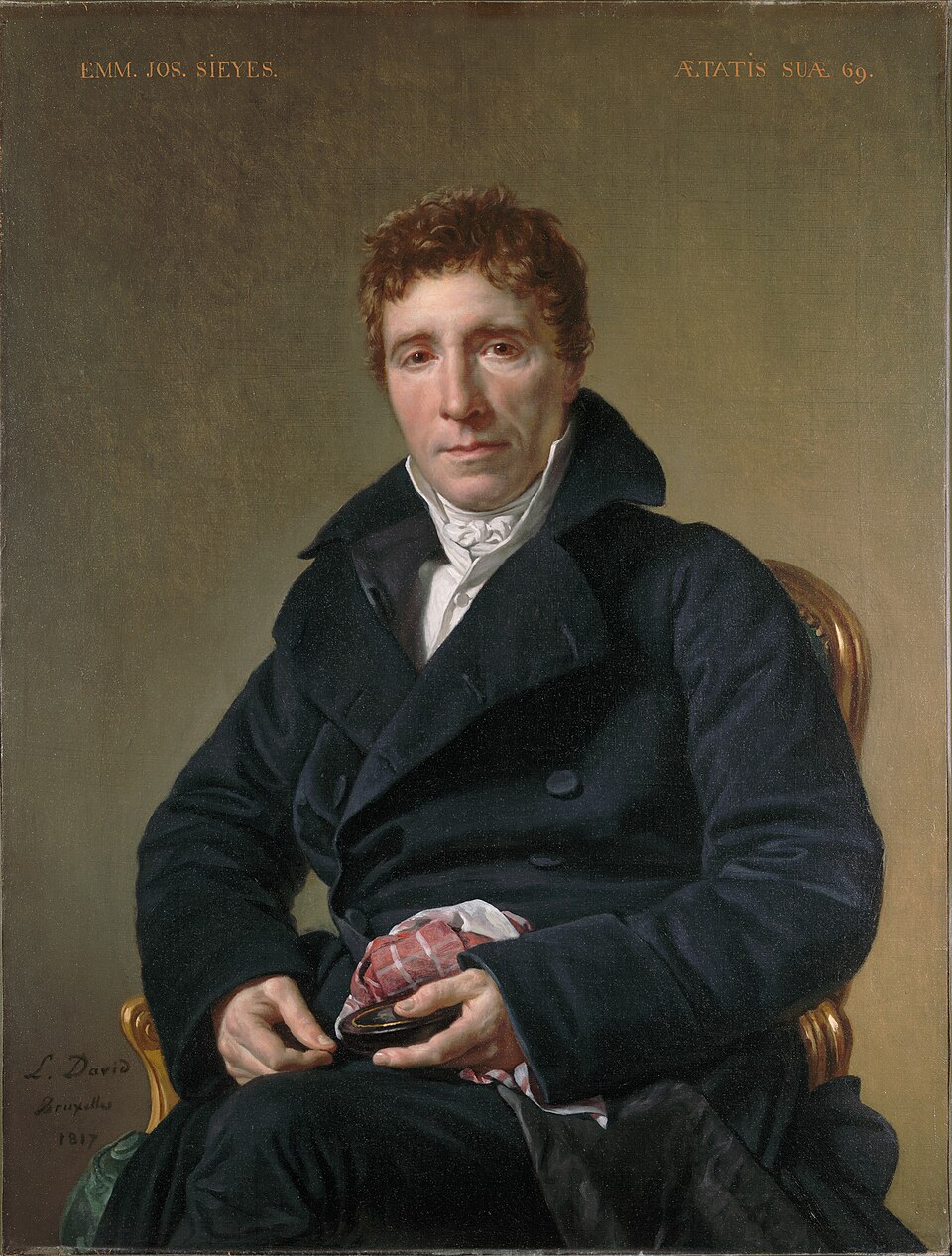
0 sources
Summary
Emmanuel Joseph Sieyès was born on May 3, 1748[1], in Fréjus[2]. He died on June 20, 1836[3], in Paris[4]. He worked as a politician[5], diplomat[6], sociologist[7], writer[8], and political theorist[9]. He ranks in the top 0.7% of human entities by monthly Wikipedia readership (7,538 views/month, #6,964 of 1,000,298).[10]
Key Facts
- Place of burial: Père Lachaise Cemetery[11], Grave of Sieyès[12]
- Country of citizenship: France[13]
- Occupation: non-fiction writer[14], Latin Catholic priest[15], essayist[16], cleric[17], revolutionary[18], member of parliament[19], Catholic priest[20]
- Position held: ambassador[21], president[22], Directeur (Directoire)[23], member[24], member of the Académie française[25], President of the National Convention[26]
- Educated at: University of Paris[27], Saint-Sulpice Seminary[28]
- Member of: Council of Five Hundred[29], Académie Française[30], Académie des Sciences Morales et Politiques[31], Société des Trente[32], National Convention[33]
- Religion or worldview: Catholic Church[34]
- Influenced by: John Locke[35], David Hume[36], Edward Gibbon[37], Voltaire[38], Jean-Jacques Rousseau[39], Étienne Bonnot de Condillac[40], François Quesnay[41], Honoré Gabriel Riqueti, comte de Mirabeau[42], Anne Robert Jacques Turgot[43], encyclopédistes[44]
- Sex or gender: male[45]
- Noble title: count[46]
- Member of political party: The Plain[47], Society of 1789[48]
- Movement: Age of Enlightenment[49]
- Commons category: Emmanuel-Joseph Sieyès[50]
- Archives at: Archives nationales[51]
- Family name: Sieyès[52]
- Given name: Emmanuel[53], Joseph[54]
Why It Matters
Emmanuel Joseph Sieyès has Wikipedia articles in 29 language editions, a strong signal of global cultural recognition.[55] He is known by 102 alternative names across languages and contexts.[56]
Works attributed to him include What Is the Third Estate?[57], a written work[58].
FAQs
Where was Emmanuel Joseph Sieyès born?
Emmanuel Joseph Sieyès's place of birth was Fréjus[2].
Where did Emmanuel Joseph Sieyès die?
Emmanuel Joseph Sieyès passed away in Paris[4].
What did Emmanuel Joseph Sieyès do for work?
Emmanuel Joseph Sieyès worked as a politician[5], diplomat[6], sociologist[7], writer[8], and political theorist[9].
Where did Emmanuel Joseph Sieyès go to school?
Emmanuel Joseph Sieyès was educated at University of Paris[27] and Saint-Sulpice Seminary[28].