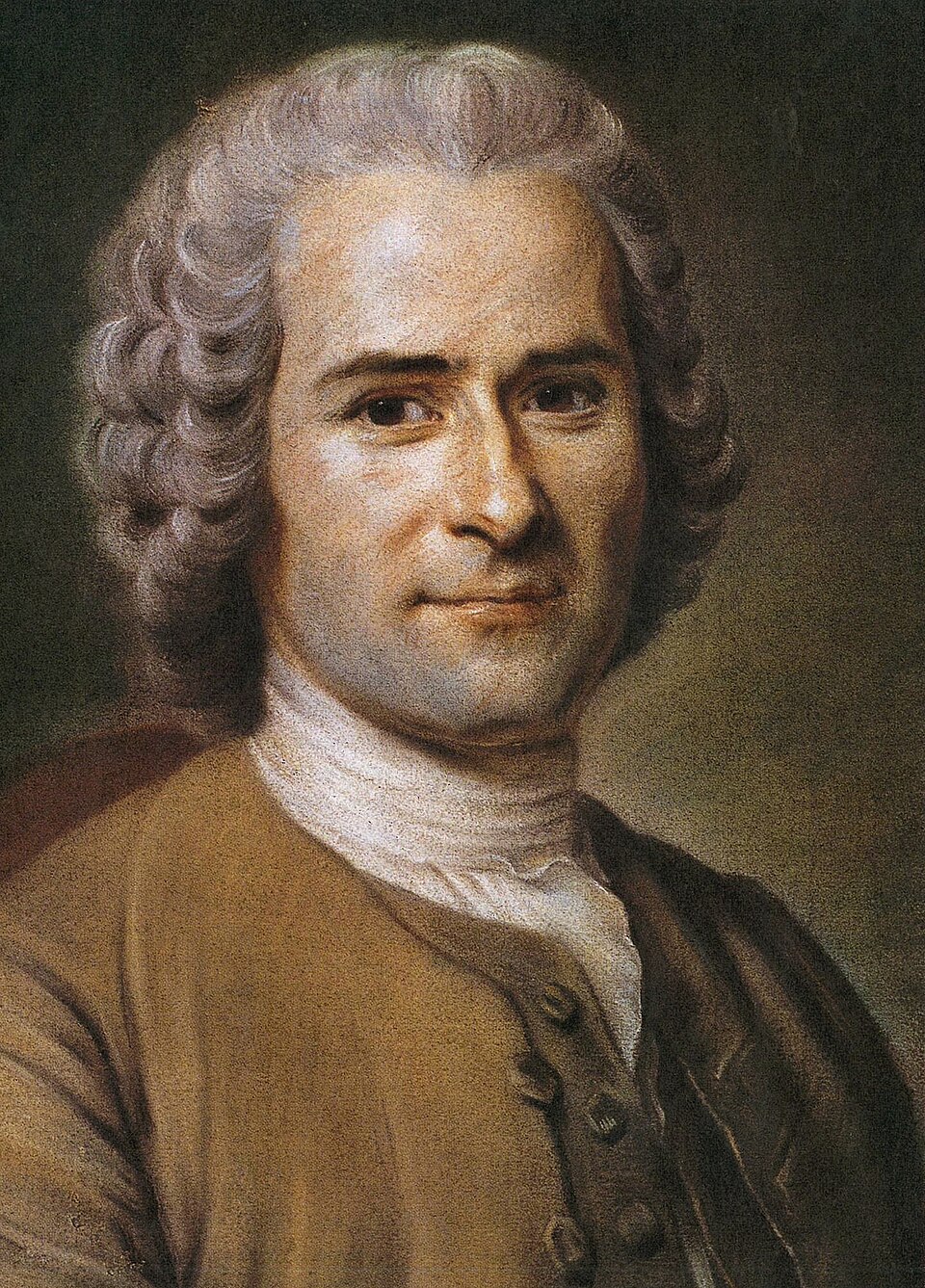
Maurice Quentin de La Tour · Public Domain · Wikimedia
Press Enter · cited answer in seconds
Searching…
0 sources
Summary
Jean-Jacques Rousseau was born on June 28, 1712[1], in Geneva[2]. He died on July 2, 1778[3], in Ermenonville[4]. He worked as a philosopher[5], classical composer[6], musicologist[7], novelist[8], and autobiographer[9]. He ranks in the top 0.45% of human entities by monthly Wikipedia readership (73,463 views/month, #4,549 of 1,000,298).[10]
Key Facts
Place of burial: cenotaph of Jean-Jacques Rousseau[11], Panthéon[12], île des Peupliers[13]
Things named for Jean-Jacques Rousseau include Île Rousseau[51].
Why It Matters
Jean-Jacques Rousseau has Wikipedia articles in 30 language editions, a strong signal of global cultural recognition.[52] He is known by 47 alternative names across languages and contexts.[53]
He has been cited as an influence by Friedrich Nietzsche[54], a philosopher[55], 1844–1900[56], of Kingdom of Prussia[57], specialised in classical philology[58]; Leo Tolstoy[59], a writer[60], 1828–1910[61], of Russian Empire[62], awarded the Order of Saint Anna, 4th class[63], specialised in philosophy[64]; Immanuel Kant[65], a philosopher[66], 1724–1804[67], of Kingdom of Prussia[68], specialised in epistemology[69]; Maximilien Robespierre[70], a politician[71], 1758–1794[72], of France[73], awarded the Concours général[74], specialised in revolutionary[75]; Georg Wilhelm Friedrich Hegel[76], a philosopher[77], 1770–1831[78], of Kingdom of Württemberg[79], awarded the Order of the Red Eagle 3rd Class[80], specialised in philosophy[81]; and George Sand[82], a writer[83], 1804–1876[84], of France[85].
He is credited with the discovery of amour-propre[86]. Works attributed to him include The Social Contract[87], Encyclopédie[88], Emile, or On Education[89], Discourse on Inequality[90], Confessions[91], and Julie, or the New Heloise[92]. Entities named for him include Île Rousseau[51].
FAQs
Where was Jean-Jacques Rousseau born?
Jean-Jacques Rousseau's place of birth was Geneva[2].
Where did Jean-Jacques Rousseau die?
Jean-Jacques Rousseau passed away in Ermenonville[4].
Who were Jean-Jacques Rousseau's parents?
Jean-Jacques Rousseau's father was Isaac Rousseau[14].
Who was Jean-Jacques Rousseau married to?
Jean-Jacques Rousseau's spouses include Thérèse Levasseur[15].
What did Jean-Jacques Rousseau do for work?
Jean-Jacques Rousseau worked as a philosopher[5], classical composer[6], musicologist[7], novelist[8], and autobiographer[9].
Who did Jean-Jacques Rousseau influence?
Jean-Jacques Rousseau has been cited as an influence by Friedrich Nietzsche[54], Leo Tolstoy[59], Immanuel Kant[65], and Maximilien Robespierre[70].
What did Jean-Jacques Rousseau discover?
Jean-Jacques Rousseau is credited as discoverer of amour-propre[86].
Use these citations when quoting this entity in research, articles, AI prompts, or wherever provenance matters. We aggregate Wikidata + Wikipedia + authoritative open-data sources; the stitched, scored, cross-referenced view is what 4ort.xyz contributes.
APA4ort.xyz Knowledge Graph. (2026). Jean-Jacques Rousseau. Retrieved October 17, 2026, from https://4ort.xyz/entity/jean-jacques-rousseau
Rolling log of changes to this entity's Wikidata record. Values shown reflect the current state of each edited property — follow the history link to see the precise diff for any edit.
"/* wbeditentity-statements-multiple-properties-update:0||3 */ source for place of birth, source for place of death, source for date of death from Store norske leksikon ([[Wikidata:Requests for permiss"
"/* wbsetclaim-create:1||1 */ Harper's tag: jean-jacques-rousseau, Matched to [[:toollabs:mix-n-match/#/entry/289940542|jean jacques rousseau (#289940542)]] in [[:toollabs:mix-n-match/#/catalog/"
"/* wbsetclaim-create:1||1 */ Unifrance person id: 329305, Matched to [[:toollabs:mix-n-match/#/entry/81190423|Jean-Jacques Rousseau (#81190423)]] in [[:toollabs:mix-n-match/#/catalog/2825|Unifrance pe"