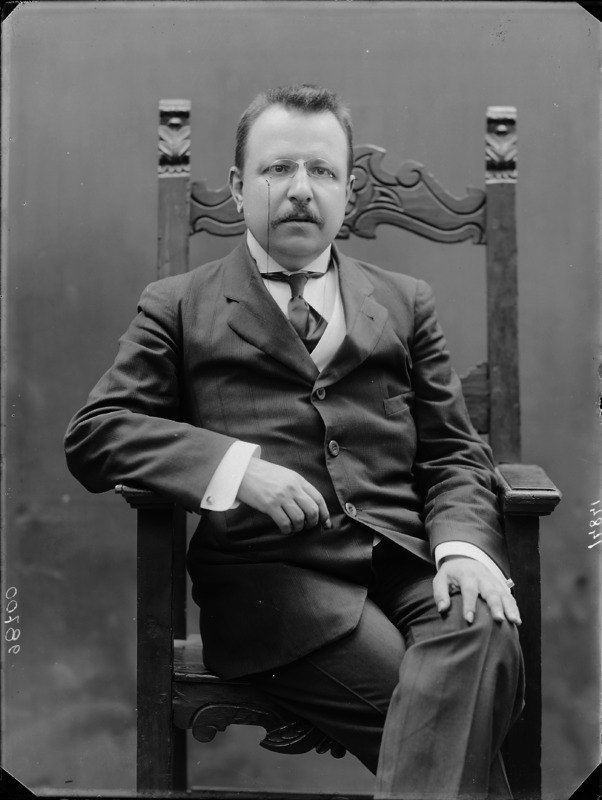
Benedetto Croce was born on February 25, 1866[1], in Pescasseroli[2]. He died on November 20, 1952[3], in Naples[4]. He worked as a philosopher[5], politician[6], art historian[7], writer[8], and literary critic[9]. He ranks in the top 0.71% of human entities by monthly Wikipedia readership (8,150 views/month, #7,070 of 1,000,298).[10]
Key Facts
Date of birth: February 26, 1866[11], January 1, 1866[12]
Field of work: philosophy[23], Kingdom of Naples[24], literary aesthetics[25], history[26], aesthetics[27], politics[28]
Position held: member of the Senate of the Italian Republic[29], member of the Constituent Assembly of Italy[30], minister of Public Education of the Kingdom of Italy[31], minister without portfolio of the Kingdom of Italy[32], senator of the Kingdom of Italy[33], president[34]
Award received: Gautieri Award[36], Serena Medal[37], doctor honoris causa from the University of Paris[38]
Member of: German Archaeological Institute[39], Royal Swedish Academy of Sciences[40], German Academy for Language and Literature[41], Royal Prussian Academy of Sciences[42], Romanian Academy[43], American Academy of Arts and Sciences[44], Bavarian Academy of Fine Arts[45], Instituto de Estudios Catalanes[46], National Academy of Fine Arts (Argentina)[47], National Council of the Kingdom of Italy[48], Arcadian Academy[49], Accademia Tiberina[50], American Philosophical Society[51], Accademia Nazionale dei Lincei[52]
Benedetto Croce has Wikipedia articles in 28 language editions, a strong signal of global cultural recognition.[61] He is known by 32 alternative names across languages and contexts.[62]
He has been cited as an influence by Antonio Gramsci[63], a philosopher[64], 1891–1937[65], of Kingdom of Italy[66], awarded the Viareggio Prize[67], specialised in philosophy[68]; Matteo Bartoli[69], a linguist[70], 1873–1946[71], of Kingdom of Italy[72], specialised in dialectology[73]; and Matteo Marangoni[74], an art historian[75], 1876–1958[76], of Italy[77], specialised in aesthetics of music[78].
Works attributed to him include Manifesto of the Anti-Fascist Intellectuals[79], a manifesto[80].
Use these citations when quoting this entity in research, articles, AI prompts, or wherever provenance matters. We aggregate Wikidata + Wikipedia + authoritative open-data sources; the stitched, scored, cross-referenced view is what 4ort.xyz contributes.
APA4ort.xyz Knowledge Graph. (2026). Benedetto Croce. Retrieved October 17, 2026, from https://4ort.xyz/entity/benedetto-croce
Rolling log of changes to this entity's Wikidata record. Values shown reflect the current state of each edited property — follow the history link to see the precise diff for any edit.
"/* wbeditentity-statements-multiple-properties-update:0||4 */ source for place of birth, source for place of death, source for date of birth, source for date of death from Store norske leksikon ([[Wik"