
Antonio Labriola
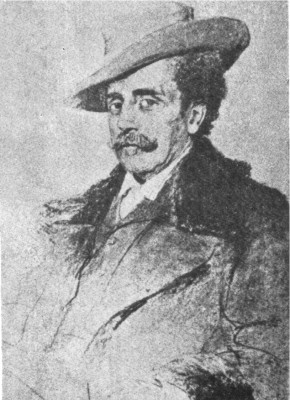
0 sources
Summary
Antonio Labriola is a human[1]. His place of birth was Cassino[2]. He was born on July 2, 1843[3]. He passed away in Rome[4]. He died on February 12, 1904[5]. He worked as a philosopher[6], university teacher[7], journalist[8], and writer[9]. He ranks in the top 0.73% of human entities by monthly Wikipedia readership (69 views/month, #7,283 of 1,000,298).[10]
Key Facts
- Antonio Labriola was born in Cassino[2].
- Antonio Labriola died in Rome[4].
- Antonio Labriola was born on July 2, 1843[3].
- Antonio Labriola was born on January 1, 1843[11].
- Antonio Labriola died on February 12, 1904[5].
- Antonio Labriola is buried at Protestant Cemetery, Rome[12].
- A child of Antonio Labriola was Teresa Labriola[13].
- Antonio Labriola held citizenship in Kingdom of Italy[14].
- Antonio Labriola worked as a philosopher[6].
- Antonio Labriola worked as a university teacher[7].
- Antonio Labriola's professions included journalist[8].
- Antonio Labriola's professions included writer[9].
- Antonio Labriola's field of work was political philosophy[15].
- Among Antonio Labriola's employers was Sapienza University of Rome[16].
- Antonio Labriola was educated at University of Naples Federico II[17].
- Antonio Labriola was influenced by Johann Friedrich Herbart[18].
- Antonio Labriola was influenced by Karl Marx[19].
- Antonio Labriola was influenced by Georg Wilhelm Friedrich Hegel[20].
- Antonio Labriola is recorded as male[21].
- Antonio Labriola's instance of is recorded as human[22].
- Antonio Labriola is associated with the Marxism movement[23].
- Antonio Labriola's Commons category is recorded as Antonio Labriola[24].
- Antonio Labriola's family name is recorded as Labriola[25].
- Antonio Labriola's given name is recorded as Antonio[26].
- Antonio Labriola's described by source is recorded as Armenian Soviet Encyclopedia, vol. 4[27].
Body
Origins and Family
Antonio Labriola's place of birth was Cassino[2]. Recorded date of birth include July 2, 1843[3] and January 1, 1843[11].
Education
Antonio Labriola's education included a stint at University of Naples Federico II[17].
Career and Affiliations
Recorded occupations include philosopher[6], university teacher[7], journalist[8], and writer[9]. Antonio Labriola's field of work was political philosophy[15]. Among his employers was Sapienza University of Rome[16].
Personal Life
A child of Antonio Labriola was Teresa Labriola[13].
Death and Burial
Antonio Labriola died on February 12, 1904[5]. He passed away in Rome[4]. Burial took place at Protestant Cemetery, Rome[12].
Why It Matters
Antonio Labriola ranks in the top 0.73% of human entities by monthly Wikipedia readership (69 views/month, #7,283 of 1,000,298).[10] He has Wikipedia articles in 20 language editions, a strong signal of global cultural recognition.[28] He is known by 19 alternative names across languages and contexts.[29]
He has been cited as an influence by Antonio Gramsci[30], a philosopher[31], 1891–1937[32], of Kingdom of Italy[33], awarded the Viareggio Prize[34], specialised in philosophy[35]; Benedetto Croce[36], a philosopher[37], 1866–1952[38], of Italy[39], awarded the Gautieri Award[40], specialised in philosophy[41]; Angelica Balabanoff[42], a politician[43], 1869–1965[44], of Russian Empire[45], specialised in politics[46]; and Valentino Gerratana[47], a philosopher[48], 1916–2000[49], of Italy[50].
FAQs
Where was Antonio Labriola born?
Born in Cassino[2].
Where did Antonio Labriola die?
Antonio Labriola died in Rome[4].
What did Antonio Labriola do for work?
Antonio Labriola worked as philosopher[6], university teacher[7], journalist[8], and writer[9].
Where did Antonio Labriola go to school?
Antonio Labriola was educated at University of Naples Federico II[17].
Who did Antonio Labriola influence?
Antonio Labriola has been cited as an influence by Antonio Gramsci[30], Benedetto Croce[36], Angelica Balabanoff[42], and Valentino Gerratana[47].