
Antonio Gramsci
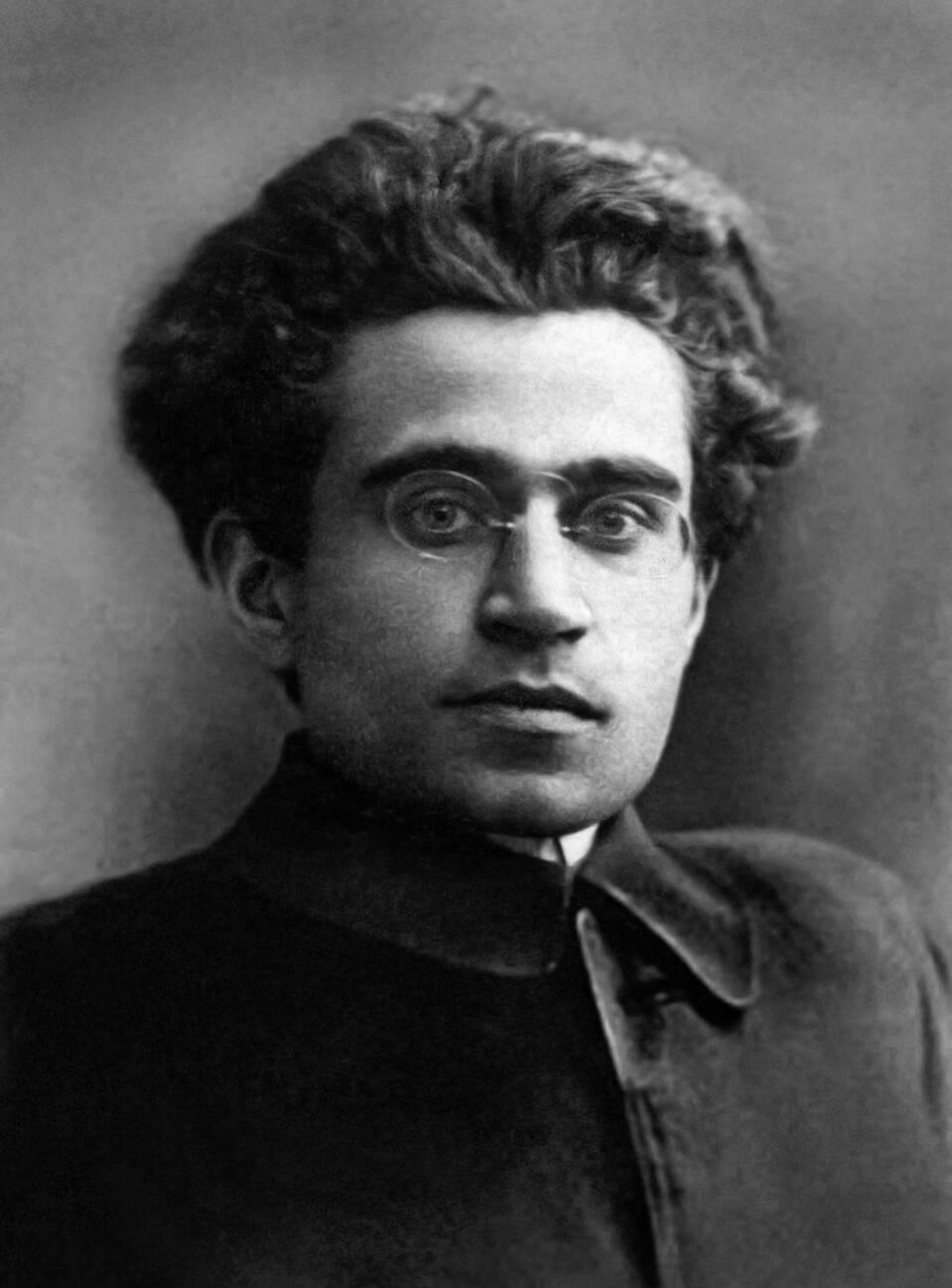
0 sources
Antonio Gramsci was born on January 22, 1891, in Ales [1][2][3][4][5][6]. He died on April 27, 1937, in Rome due to a cerebral hemorrhage [7][8][9][6][10][11][12][13][14][15][16][2][3][4][5][5]. His education took place at the University of Turin and Lc G.M.Dettori-Cagliari [5].
Gramsci worked as a philosopher, politician, journalist, writer, economist, and literary critic [2][3][4]. His professional fields included philosophy, politics, opinion journalism, and literature [17]. He was associated with the movements of continental philosophy, Western Marxism, and Neo-Marxism . His intellectual influences included Georg Wilhelm Friedrich Hegel, Karl Marx, Benedetto Croce, Francesco de Sanctis, Giovanni Gentile, and Niccolò Machiavelli, among others .
During his career, he held the position of member of the Chamber of Deputies of the Kingdom of Italy from 1924 to 1929 [18]. He received the Viareggio Prize as an award . His notable works include the Prison Notebooks . He was married to Julia Schucht [5]. Following his death, he was buried at the Protestant Cemetery in Rome [19][5][6].
Antonio Gramsci
Summary
Antonio Gramsci is a human[1]. His place of birth was Ales[2]. He was born on January 22, 1891[3]. He died in Rome[4]. He died on April 27, 1937[5]. He worked as a philosopher[6], politician[7], journalist[8], writer[9], and economist[10]. He has Wikipedia articles in 30 language editions, a strong signal of global cultural recognition.[11]
Key Facts
- Born in Ales[2], Antonio Gramsci…
- Antonio Gramsci passed away in Rome[4].
- Antonio Gramsci was born on January 22, 1891[3].
- Antonio Gramsci was born on January 23, 1891[12].
- Antonio Gramsci died on April 27, 1937[5].
- Burial took place at Protestant Cemetery, Rome[13].
- Antonio Gramsci was married to Julia Schucht[14].
- Antonio Gramsci held citizenship in Kingdom of Italy[15].
- Antonio Gramsci worked as a philosopher[6].
- Antonio Gramsci worked as a politician[7].
- Antonio Gramsci worked as a journalist[8].
- Antonio Gramsci's professions included writer[9].
- Antonio Gramsci's professions included economist[10].
- Antonio Gramsci's professions included literary critic[16].
- Antonio Gramsci's field of work was philosophy[17].
- Antonio Gramsci's field of work was politics[18].
- Antonio Gramsci's field of work was opinion journalism[19].
- Antonio Gramsci's field of work was literature[20].
- Antonio Gramsci's field of work was economics[21].
- Antonio Gramsci's field of work was literary criticism[22].
- Antonio Gramsci held the position of member of the Chamber of Deputies of the Kingdom of Italy[23].
- Antonio Gramsci's education included a stint at University of Turin[24].
- Antonio Gramsci was educated at Lc G.M.Dettori-Cagliari[25].
- A notable work attributed to Antonio Gramsci is Prison Notebooks[26].
- Antonio Gramsci received the Viareggio Prize[27].
Body
Origins and Family
Born in Ales[2], Antonio Gramsci… Recorded date of birth include January 22, 1891[3] and January 23, 1891[12].
Education
Educated at University of Turin[24], a university[28], in Italy[29], founded in 1404[30] and Lc G.M.Dettori-Cagliari[25], a liceo classico[31], in Italy[32].
Career and Affiliations
Recorded occupations include philosopher[6], politician[7], journalist[8], writer[9], economist[10], and literary critic[16]. Fields of work include philosophy[17], an academic discipline[33]; politics[18], an academic discipline[34]; opinion journalism[19], a journalism genre[35]; literature[20], a type of arts[36]; economics[21], an academic discipline[37]; and literary criticism[22], a literary genre[38]. Antonio Gramsci held the position of member of the Chamber of Deputies of the Kingdom of Italy[23].
Works and Contributions
A notable work attributed to Antonio Gramsci is Prison Notebooks[26]. Things named for him include Neo-Gramscianism[39].
Recognition
Antonio Gramsci received the Viareggio Prize[27].
Personal Life
Among Antonio Gramsci's spouses was Julia Schucht[14]. His religion is recorded as atheism[40]. He was affiliated with the Italian Communist Party[41].
Death and Burial
Antonio Gramsci died on April 27, 1937[5]. He died in Rome[4]. The cause of death was cerebral hemorrhage[42]. Burial took place at Protestant Cemetery, Rome[13].
Why It Matters
Antonio Gramsci has Wikipedia articles in 30 language editions, a strong signal of global cultural recognition.[11] He is known by 42 alternative names across languages and contexts.[43]
He has been cited as an influence by Mikhail Gorbachev[44], a politician[45], 1931–2022[46], of Russia[47], awarded the Nobel Peace Prize[48], specialised in politics[49]; Ranajit Guha[50], an author[51], 1923–2023[52], of India[53], awarded the Ananda Puraskar[54]; Dick Marty[55], a politician[56], 1945–2023[57], of Switzerland[58], specialised in human rights[59]; Dominique Manotti[60], a writer[61], b. 1942[62], of France[63], awarded the CWA International Dagger[64]; Nikos Poulantzas[65], a philosopher[66], 1936–1979[67], of France[68], specialised in philosophy[69]; and Josep Fontana[70], a historian[71], 1931–2018[72], of Spain[73], awarded the Saint George's Cross[74], specialised in history[75].
He is credited with the discovery of organic crisis[76] and cultural hegemony[77]. Works attributed to him include Prison Notebooks[78]. Entities named for him include Neo-Gramscianism[39].
FAQs
Where was Antonio Gramsci born?
Antonio Gramsci was born in Ales[2].
Where did Antonio Gramsci die?
Antonio Gramsci died in Rome[4].
Who was Antonio Gramsci married to?
Antonio Gramsci's spouses include Julia Schucht[14].
What did Antonio Gramsci do for work?
Antonio Gramsci worked as philosopher[6], politician[7], journalist[8], writer[9], and economist[10].
Where did Antonio Gramsci go to school?
Antonio Gramsci was educated at University of Turin[24] and Lc G.M.Dettori-Cagliari[25].
What awards did Antonio Gramsci receive?
Honors received include Viareggio Prize[27].
Who did Antonio Gramsci influence?
Antonio Gramsci has been cited as an influence by Mikhail Gorbachev[44], Ranajit Guha[50], Dick Marty[55], and Dominique Manotti[60].
What did Antonio Gramsci discover?
Antonio Gramsci is credited as discoverer of organic crisis[76] and cultural hegemony[77].