
Moses Mendelssohn
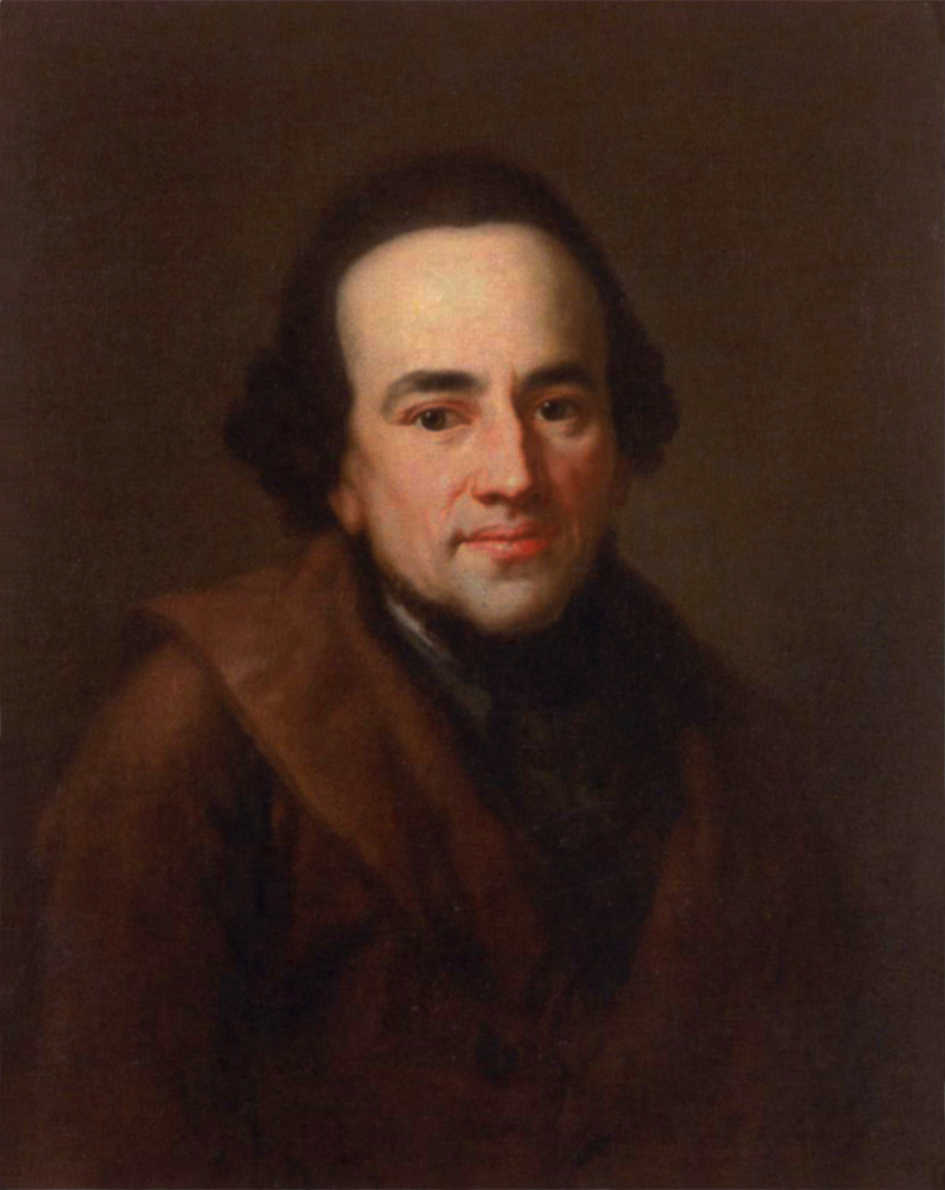
0 sources
Summary
Moses Mendelssohn was born on September 6, 1729[1], in Dessau[2]. He died on January 4, 1786[3], in Berlin[4]. He worked as a philosopher[5], translator[6], writer[7], Bible translator[8], and literary scholar[9]. He ranks in the top 0.7% of human entities by monthly Wikipedia readership (5,188 views/month, #6,961 of 1,000,298).[10]
Key Facts
- Place of burial: Jüdischer Friedhof Berlin-Mitte[11]
- Father: Mendel Heymann[12]
- Mother: Bela Rachel Wahl[13]
- Spouse: Fromet Mendelssohn[14]
- Child: Dorothea von Schlegel[15], Abraham Mendelssohn Bartholdy[16], Recha Meyer[17], Henriette Mendelssohn[18], Joseph Mendelssohn[19], Nathan Mendelssohn[20]
- Country of citizenship: Germany[21]
- Occupation: scientist[22]
- Notable work: Netivot Hashalom[23], Jerusalem[24], Kahalet Musar[25], Phaedon[26]
- Religion or worldview: Judaism[27]
- Influenced by: Gottfried Wilhelm Leibniz[28], John Locke[29], Thomas Hobbes[30], Benedictus de Spinoza[31]
- Sex or gender: male[32]
- Family: Mendelssohn family[33]
- Movement: continental philosophy[34]
- Commons category: Moses Mendelssohn[35]
- Archives at: Berlin State Library[36]
- Family name: Mendelssohn (surname)[37]
- Given name: Moses[38]
- Topic's main category: Category:Moses Mendelssohn[39]
- Commons gallery: Moses Mendelssohn[40]
- Depicted by: Moses Mendelssohn[41]
- Described by source: Great Soviet Encyclopedia (1969–1978)[42]
Body
Works and Contributions
Things named for Moses Mendelssohn include Moses Mendelssohn Center for European Jewish Studies[43], a research institute[44], in Germany[45], founded in 1992[46], headquartered in Q129987541[47] and Moses-Mendelssohn-Preis[48], an award[49], in Germany[50].
Why It Matters
Moses Mendelssohn has Wikipedia articles in 27 language editions, a strong signal of global cultural recognition.[51] He is known by 43 alternative names across languages and contexts.[52]
He has been cited as an influence by Salomon Maimon[53], a philosopher[54], 1754–1800[55], of Polish–Lithuanian Commonwealth[56], specialised in philosophy[57] and Markus Herz[58], a philosopher[59], 1747–1803[60], of Kingdom of Prussia[61], specialised in epistemology[62].
Works attributed to him include Kahalet Musar[63], a magazine[64]. Entities named for him include Moses Mendelssohn Center for European Jewish Studies[43], a research institute[44], in Germany[45], founded in 1992[46], headquartered in Q129987541[47] and Moses-Mendelssohn-Preis[48], an award[49], in Germany[50].
FAQs
Where was Moses Mendelssohn born?
Moses Mendelssohn was born in Dessau[2].
Where did Moses Mendelssohn die?
Moses Mendelssohn died in Berlin[4].
Who were Moses Mendelssohn's parents?
Moses Mendelssohn's father was Mendel Heymann[12]. Moses Mendelssohn's mother was Bela Rachel Wahl[13].
Who was Moses Mendelssohn married to?
Moses Mendelssohn's spouses include Fromet Mendelssohn[14].
What did Moses Mendelssohn do for work?
Moses Mendelssohn worked as a philosopher[5], translator[6], writer[7], Bible translator[8], and literary scholar[9].
Who did Moses Mendelssohn influence?
Moses Mendelssohn has been cited as an influence by Salomon Maimon[53] and Markus Herz[58].