
Nicolas Malebranche
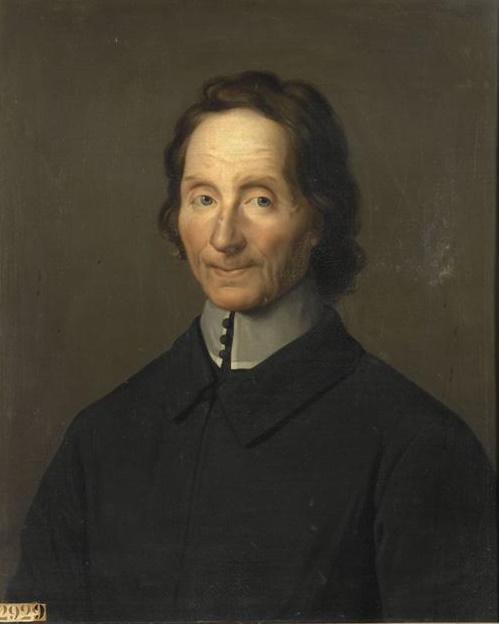
0 sources
Nicolas Malebranche
Summary
Nicolas Malebranche is a human[1]. His place of birth was Paris[2]. He was born on August 6, 1638[3]. He died in Paris[4]. He died on October 13, 1715[5]. He worked as a philosopher[6], writer[7], theologian[8], and pedagogue[9]. He ranks in the top 0.72% of human entities by monthly Wikipedia readership (551 views/month, #7,169 of 1,000,298).[10]
Key Facts
- Born in Paris[2], Nicolas Malebranche…
- Nicolas Malebranche passed away in Paris[4].
- Nicolas Malebranche was born on August 6, 1638[3].
- Nicolas Malebranche died on October 13, 1715[5].
- Nicolas Malebranche's father was Nicolas de Malebranche[11].
- Nicolas Malebranche held citizenship in France[12].
- French was Nicolas Malebranche's native language[13].
- Nicolas Malebranche worked as a philosopher[6].
- Nicolas Malebranche's professions included writer[7].
- Nicolas Malebranche worked as a theologian[8].
- Nicolas Malebranche's professions included pedagogue[9].
- Nicolas Malebranche's field of work was philosophy[14].
- Nicolas Malebranche was educated at University of Paris[15].
- Nicolas Malebranche's education included a stint at Collège de la Marche[16].
- Nicolas Malebranche's doctoral advisor was Gottfried Wilhelm Leibniz[17].
- A notable student of Nicolas Malebranche was Charles René Reyneau[18].
- A notable student of Nicolas Malebranche was Jean Prestet[19].
- A notable student of Nicolas Malebranche was Pierre Raymond de Montmort[20].
- A notable work attributed to Nicolas Malebranche is Search after Truth[21].
- A notable work attributed to Nicolas Malebranche is Treatise on nature and grace[22].
- A notable work attributed to Nicolas Malebranche is Entretiens sur la metaphysique et sur la religion[23].
- Nicolas Malebranche was a member of French Academy of Sciences[24].
- Nicolas Malebranche's religion is recorded as Catholic Church[25].
- Nicolas Malebranche was influenced by René Descartes[26].
- Nicolas Malebranche was influenced by Augustine of Hippo[27].
Body
Origins and Family
Nicolas Malebranche's place of birth was Paris[2]. He was born on August 6, 1638[3]. His father was Nicolas de Malebranche[11]. French was his native language[13].
Education
Educated at University of Paris[15], a former entity[28], in France[29], founded in 1150[30], headquartered in Paris[31] and Collège de la Marche[16], a college in France[32], in France[33], founded in 1462[34]. Nicolas Malebranche's doctoral advisor was Gottfried Wilhelm Leibniz[17].
Career and Affiliations
Recorded occupations include philosopher[6], writer[7], theologian[8], and pedagogue[9]. Nicolas Malebranche's field of work was philosophy[14]. Notable students include Charles René Reyneau[18], a mathematician[35], 1656–1728[36], of France[37]; Jean Prestet[19], a Catholic priest[38], 1648–1690[39], of France[40], specialised in mathematics[41]; and Pierre Raymond de Montmort[20], a mathematician[42], 1678–1719[43], of France[44], awarded the Fellow of the Royal Society[45], specialised in mathematics[46]. Doctoral students include Jacob Bernoulli[47], a mathematician[48], 1655–1705[49], of Switzerland[50], specialised in probability theory[51] and Pierre Varignon[52], a mathematician[53], 1654–1722[54], of France[55], awarded the Fellow of the Royal Society[56], specialised in mathematical analysis[57].
Works and Contributions
Notable works include Search after Truth[21], a treatise[58]; Treatise on nature and grace[22], a written work[59]; and Entretiens sur la metaphysique et sur la religion[23].
Personal Life
Nicolas Malebranche's religion is recorded as Catholic Church[25].
Death and Burial
Nicolas Malebranche died on October 13, 1715[5]. He passed away in Paris[4].
Why It Matters
Nicolas Malebranche ranks in the top 0.72% of human entities by monthly Wikipedia readership (551 views/month, #7,169 of 1,000,298).[10] He has Wikipedia articles in 25 language editions, a strong signal of global cultural recognition.[60] He is known by 37 alternative names across languages and contexts.[61]
He has been cited as an influence by Immanuel Kant[62], a philosopher[63], 1724–1804[64], of Kingdom of Prussia[65], specialised in epistemology[66]; Voltaire[67], a philosopher[68], 1694–1778[69], of France[70], awarded the Pour le Mérite for Sciences and Arts order[71], specialised in philosophy[72]; Benedictus de Spinoza[73], a philosopher[74], 1632–1677[75], of Dutch Republic[76], specialised in philosophy[77]; Jonathan Edwards[78], a theologian[79], 1703–1758[80], of British America[81]; George Berkeley[82], a philosopher[83], 1685–1753[84], of Kingdom of Ireland[85], specialised in philosophy[86]; and Jacob Bernoulli[87], a mathematician[88], 1655–1705[89], of Switzerland[90], specialised in probability theory[91].
His notable doctoral advisees include Jacob Bernoulli[92], Pierre Varignon[93], and Jean Jacques Dortous de Mayran[94].
FAQs
Where was Nicolas Malebranche born?
Born in Paris[2], Nicolas Malebranche…
Where did Nicolas Malebranche die?
Nicolas Malebranche passed away in Paris[4].
Who were Nicolas Malebranche's parents?
Nicolas Malebranche's father was Nicolas de Malebranche[11].
What did Nicolas Malebranche do for work?
Nicolas Malebranche worked as philosopher[6], writer[7], theologian[8], and pedagogue[9].
Where did Nicolas Malebranche go to school?
Nicolas Malebranche was educated at University of Paris[15] and Collège de la Marche[16].
Who did Nicolas Malebranche influence?
Nicolas Malebranche has been cited as an influence by Immanuel Kant[62], Voltaire[67], Benedictus de Spinoza[73], and Jonathan Edwards[78].