
Raymond Aron
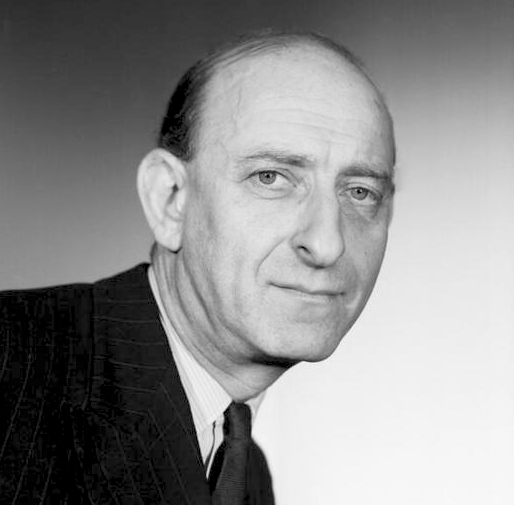
0 sources
Raymond Aron
Summary
Raymond Aron is a human[1]. His place of birth was Paris[2]. He died in Paris[3]. He worked as a journalist[4], philosopher[5], writer[6], political scientist[7], and sociologist[8]. He ranks in the top 0.71% of human entities by monthly Wikipedia readership (5,126 views/month, #7,124 of 1,000,298).[9]
Key Facts
- Born in Paris[2], Raymond Aron…
- Born in 6th arrondissement of Paris[10], Raymond Aron…
- Raymond Aron died in Paris[3].
- Raymond Aron passed away in 4th arrondissement of Paris[11].
- Burial took place at Montparnasse Cemetery[12].
- Raymond Aron's father was Gustave Aron[13].
- Raymond Aron was married to Suzanne Aron[14].
- A child of Raymond Aron was Dominique Schnapper[15].
- Raymond Aron held citizenship in France[16].
- Raymond Aron is identified as part of the French ethnic group[17].
- Raymond Aron worked as a journalist[4].
- Raymond Aron worked as a philosopher[5].
- Raymond Aron's professions included writer[6].
- Raymond Aron's professions included political scientist[7].
- Raymond Aron worked as a sociologist[8].
- Raymond Aron's professions included professor[18].
- Raymond Aron's field of work was international relations[19].
- Raymond Aron held the position of president[20].
- Raymond Aron held the position of president[21].
- Raymond Aron held the position of director[22].
- Raymond Aron held the position of director[23].
- Raymond Aron held the position of Q137386736[24].
- Among Raymond Aron's employers was Collège de France[25].
- Raymond Aron was employed by Sciences Po[26].
- Among Raymond Aron's employers was Le Figaro[27].
Body
Origins and Family
Recorded place of birth include Paris[2], a commune of France[28], in France[29], founded in -0300[30] and 6th arrondissement of Paris[10], a municipal arrondissement of France[31], in France[32], founded in 1860[33]. Raymond Aron's father was Gustave Aron[13]. He is identified as part of the French ethnic group[17].
Education
Educated at École Normale Supérieure[34], a école normale supérieure[35], in France[36], founded in 1794[37], headquartered in Paris[38]; Sciences Po[39], a public university[40], in France[41], founded in 1872[42], headquartered in Paris[43]; University of Paris[44], a former entity[45], in France[46], founded in 1150[47], headquartered in Paris[48]; Lycée Condorcet[49], an educational facility[50], in France[51], founded in 1803[52]; and Lycée Hoche[53], an educational facility[54], in France[55], founded in 1807[56]. Raymond Aron's doctoral advisor was Léon Brunschvicg[57].
Career and Affiliations
Recorded occupations include journalist[4], philosopher[5], writer[6], political scientist[7], sociologist[8], and professor[18]. Raymond Aron's field of work was international relations[19]. Employers include Collège de France[25], a higher education institution[58], in France[59], founded in 1530[60], headquartered in Paris[61]; Sciences Po[26]; Le Figaro[27]; L'Express[62]; University of Paris[63]; and University of Toulouse (1896-1968)[64]. Positions held include president[20], a position[65]; director[22], a profession[66]; and Q137386736[24]. Doctoral students include Claude Lefort[67], Jean-Pierre Derriennic[68], Alain Gras[69], Neagu Djuvara[70], Jon Elster[71], and Nicolas Herpin[72].
Recognition
Awards received include Pour le Mérite for Sciences and Arts order[73], Fellow of the American Academy of Arts and Sciences[74], Ambassadors' Prize[75], Goethe Prize[76], Erasmus Prize[77], and Toynbee Prize[78].
Personal Life
Raymond Aron was married to Suzanne Aron[14]. A child of him was Dominique Schnapper[15]. Political affiliations include Rally of the French People[79], a political party[80], in France[81], founded in 1947[82], headquartered in Paris[83] and French Section of the Workers' International[84], a political party[85], in France[86], founded in 1905[87], headquartered in Paris[88].
Death and Burial
Recorded place of death include Paris[3], a commune of France[89], in France[90], founded in -0300[91] and 4th arrondissement of Paris[11], a municipal arrondissement of France[92], in France[93], founded in 1860[94]. Burial took place at Montparnasse Cemetery[12].
Why It Matters
Raymond Aron ranks in the top 0.71% of human entities by monthly Wikipedia readership (5,126 views/month, #7,124 of 1,000,298).[9] He has Wikipedia articles in 26 language editions, a strong signal of global cultural recognition.[95] He is known by 27 alternative names across languages and contexts.[96]
He has been cited as an influence by Isaiah Berlin[97], a philosopher[98], 1909–1997[99], of United Kingdom[100], awarded the Commander of the Order of the British Empire[101], specialised in philosophy[102]; Mathieu Bock-Côté[103], a columnist[104], b. 1980[105], of Canada[106], specialised in philosophy[107]; and Pascal Bruckner[108], a novelist[109], b. 1948[110], of France[111], awarded the Prix Médicis essai[112].
Works attributed to him include The Opium of the Intellectuals[113], a written work[114].
His notable doctoral advisees include Jon Elster[115], Claude Lefort[116], Jean-Pierre Faye[117], Julien Freund[118], and Neagu Djuvara[119].
FAQs
Where was Raymond Aron born?
Raymond Aron's place of birth was Paris[2].
Where did Raymond Aron die?
Raymond Aron died in Paris[3].
Who were Raymond Aron's parents?
Raymond Aron's father was Gustave Aron[13].
Who was Raymond Aron married to?
Raymond Aron's spouses include Suzanne Aron[14].
What did Raymond Aron do for work?
Raymond Aron worked as journalist[4], philosopher[5], writer[6], political scientist[7], and sociologist[8].
Where did Raymond Aron go to school?
Raymond Aron was educated at École Normale Supérieure[34], Sciences Po[39], University of Paris[44], and Lycée Condorcet[49].
What awards did Raymond Aron receive?
Honors received include Pour le Mérite for Sciences and Arts order[73], Fellow of the American Academy of Arts and Sciences[74], Ambassadors' Prize[75], and Goethe Prize[76].
Who did Raymond Aron influence?
Raymond Aron has been cited as an influence by Isaiah Berlin[97], Mathieu Bock-Côté[103], and Pascal Bruckner[108].