
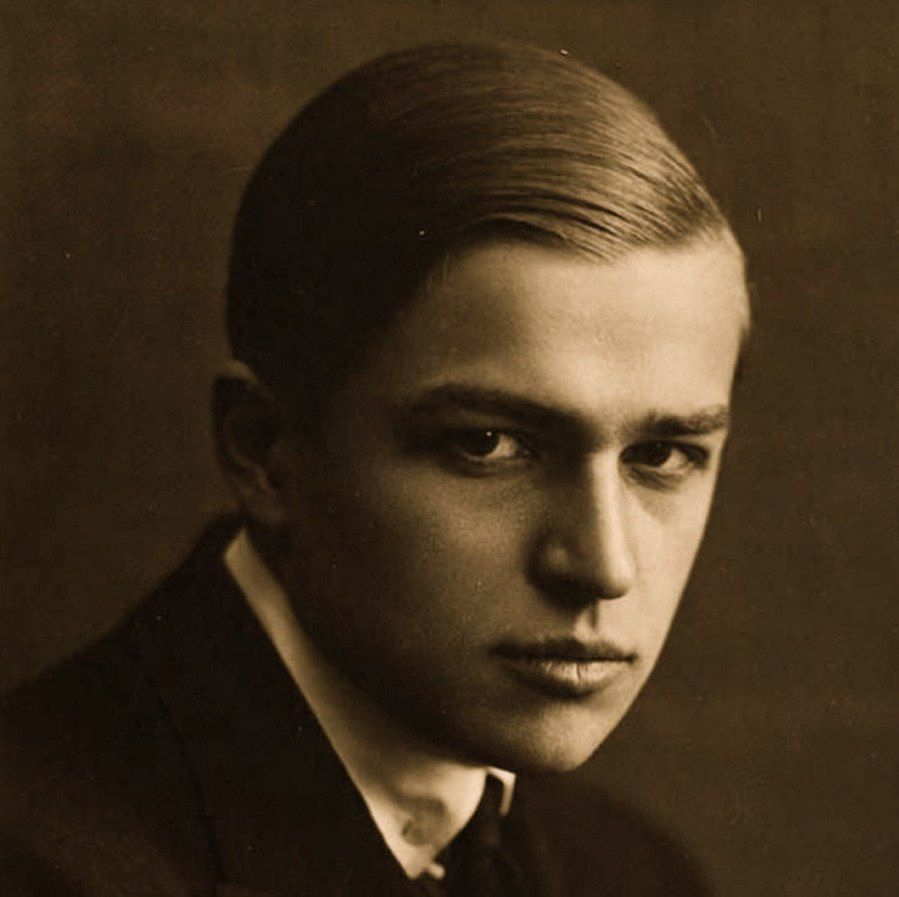
Alexandre Kojève

Russian-born French philosopher and statesman
Person human Q354504
Alexandre Kojève
Unknown photographer · Public Domain · Wikimedia
Press Enter · cited answer in seconds

Alexandre Kojève was born on April 28, 1902, in Moscow.[1][2] He held citizenship in France, the Russian Empire, and the Russian Socialist Federative Soviet Republic. He worked as a philosopher, university teacher, and politician.[1][2]

His fields included political philosophy, philosophy of religion, and German idealism. He was associated with the movement of continental philosophy. He was influenced by Georg Wilhelm Friedrich Hegel, Karl Marx, Vladimir Solovyov, Karl Jaspers, Martin Heidegger, Wassily Kandinsky, and one more.

He was employed by the Ministry of Economics, Finance and Industrial and Digital Sovereignty, the École pratique des hautes études, and La contemporaine.[3] He received the award Knight of the Legion of Honour.[4] He died on June 4, 1968, in Brussels.[5][6][7][1][2].

Alexandre Kojève

Summary

Alexandre Kojève is a human[1]. He was born in Moscow[2]. He was born on April 28, 1902[3]. He passed away in Brussels[4]. He died on June 4, 1968[5]. He worked as a philosopher[6], university teacher[7], and politician[8]. He ranks in the top 0.7% of human entities by monthly Wikipedia readership (778 views/month, #7,010 of 1,000,298).[9]

Key Facts

  • Born in Moscow[2], Alexandre Kojève…
  • Alexandre Kojève passed away in Brussels[4].
  • Alexandre Kojève was born on April 28, 1902[3].
  • Alexandre Kojève was born on May 11, 1902[10].
  • Alexandre Kojève died on June 4, 1968[5].
  • Burial took place at Evere[11].
  • Alexandre Kojève held citizenship in France[12].
  • Alexandre Kojève held citizenship in Russian Empire[13].
  • Alexandre Kojève held citizenship in Russian Socialist Federative Soviet Republic[14].
  • Alexandre Kojève held citizenship in statelessness[15].
  • Alexandre Kojève worked as a philosopher[6].
  • Alexandre Kojève worked as a university teacher[7].
  • Alexandre Kojève's professions included politician[8].
  • Alexandre Kojève's field of work was political philosophy[16].
  • Alexandre Kojève's field of work was philosophy of religion[17].
  • Alexandre Kojève's field of work was German idealism[18].
  • Among Alexandre Kojève's employers was Ministry of Economics, Finance and Industrial and Digital Sovereignty[19].
  • Alexandre Kojève was employed by École pratique des hautes études[20].
  • Among Alexandre Kojève's employers was La contemporaine[21].
  • Alexandre Kojève was educated at Heidelberg University[22].
  • Alexandre Kojève's education included a stint at Humboldt-Universität zu Berlin[23].
  • A notable student of Alexandre Kojève was Jean Hyppolite[24].
  • Alexandre Kojève received the Knight of the Legion of Honour[25].
  • Alexandre Kojève was influenced by Georg Wilhelm Friedrich Hegel[26].
  • Alexandre Kojève was influenced by Karl Marx[27].

Body

Origins and Family

Alexandre Kojève's place of birth was Moscow[2]. Recorded date of birth include April 28, 1902[3] and May 11, 1902[10].

Education

Educated at Heidelberg University[22], a public research university[28], in Germany[29], founded in 1386[30], headquartered in Heidelberg[31] and Humboldt-Universität zu Berlin[23], a comprehensive university[32], in Germany[33], founded in 1809[34], headquartered in Berlin[35]. Alexandre Kojève earned the academic degree of Doctor of Philosophy[36]. He studied under Karl Jaspers[37].

Career and Affiliations

Recorded occupations include philosopher[6], university teacher[7], and politician[8]. Fields of work include political philosophy[16], a branch of philosophy[38]; philosophy of religion[17], a branch of philosophy[39]; and German idealism[18], a philosophical movement[40]. Employers include Ministry of Economics, Finance and Industrial and Digital Sovereignty[19], a ministry[41], in France[42], founded in 1561[43], headquartered in Ministry of the Economy and Finance building[44]; École pratique des hautes études[20], a grand établissement[45], in France[46], founded in 1868[47], headquartered in Paris[48]; and La contemporaine[21], a Service interétablissement de coopération documentaire[49], in France[50], founded in 1918[51], headquartered in Nanterre[52]. A notable student of Alexandre Kojève was Jean Hyppolite[24].

Recognition

Alexandre Kojève received the Knight of the Legion of Honour[25].

Death and Burial

Alexandre Kojève died on June 4, 1968[5]. He passed away in Brussels[4]. Burial took place at Evere[11].

Why It Matters

Alexandre Kojève ranks in the top 0.7% of human entities by monthly Wikipedia readership (778 views/month, #7,010 of 1,000,298).[9] He has Wikipedia articles in 22 language editions, a strong signal of global cultural recognition.[53] He is known by 38 alternative names across languages and contexts.[54]

He has been cited as an influence by Jacques Lacan[55], a psychiatrist[56], 1901–1981[57], of France[58], specialised in psychoanalysis[59]; Georges Bataille[60], a librarian[61], 1897–1962[62], of France[63], specialised in philosophy[64]; and Leo Strauss[65], a politician[66], 1899–1973[67], of United States[68], awarded the Commander's Cross of the Order of Merit of the Federal Republic of Germany[69], specialised in philosophy[70].

FAQs

Where was Alexandre Kojève born?

Alexandre Kojève's place of birth was Moscow[2].

Where did Alexandre Kojève die?

Alexandre Kojève passed away in Brussels[4].

What did Alexandre Kojève do for work?

Alexandre Kojève worked as philosopher[6], university teacher[7], and politician[8].

Where did Alexandre Kojève go to school?

Alexandre Kojève was educated at Heidelberg University[22] and Humboldt-Universität zu Berlin[23].

What awards did Alexandre Kojève receive?

Honors received include Knight of the Legion of Honour[25].

Who did Alexandre Kojève influence?

Alexandre Kojève has been cited as an influence by Jacques Lacan[55], Georges Bataille[60], and Leo Strauss[65].

References

Programmatic citations — every numbered marker resolves to a verifiable graph row below.

Direct Wikidata claims

  1. [2] . The Fine Art Archive. Retrieved . wikidata.org.
  2. [4] . The Fine Art Archive. Retrieved . wikidata.org.
  3. [12] . wikidata.org.
  4. [13] . wikidata.org.
  5. [14] . wikidata.org.
  6. [15] . wikidata.org.
  7. [22] . wikidata.org.
  8. [23] . wikidata.org.
  9. [16] . wikidata.org.
  10. [17] . wikidata.org.
  11. [18] . wikidata.org.
  12. [6] . The Fine Art Archive. Retrieved . wikidata.org.
  13. [7] . wikidata.org.
  14. [8] . The Fine Art Archive. Retrieved . wikidata.org.
  15. [19] . wikidata.org.
  16. [20] . Retrieved . wikidata.org.
  17. [21] . beseda.fr. beseda.fr. Provenance: wikidata.org.
  18. [11] . wikidata.org.
  19. [25] . leonore.archives-nationales.culture.gouv.fr. Retrieved . leonore.archives-nationales.culture.gouv.fr. Provenance: wikidata.org.
  20. [36] . wikidata.org.
  21. [3] . The Fine Art Archive. Retrieved . wikidata.org.
  22. [10] . Brockhaus Enzyklopädie. Retrieved . wikidata.org.
  23. [5] . SNAC. Retrieved . wikidata.org.
  24. [26] . wikidata.org.
  25. [27] . wikidata.org.
  26. [24] . wikidata.org.
  27. [37] . wikidata.org.

Inverse relationships (entities pointing at this one)

  1. [55] . wikidata.org. → on this site
  2. [60] . wikidata.org. → on this site
  3. [65] . wikidata.org. → on this site

Inline context (facts about related entities)

  1. [28] . Wikidata. wikidata.org. → on this site
  2. [29] . Wikidata. wikidata.org. → on this site
  3. [30] . Wikidata. wikidata.org. → on this site
  4. [31] . Wikidata. wikidata.org. → on this site
  5. [32] . Wikidata. wikidata.org. → on this site
  6. [33] . Wikidata. wikidata.org. → on this site
  7. [34] . Wikidata. wikidata.org. → on this site
  8. [35] . Wikidata. wikidata.org. → on this site
  9. [38] . Wikidata. wikidata.org. → on this site
  10. [39] . Wikidata. wikidata.org. → on this site
  11. [40] . Wikidata. wikidata.org. → on this site
  12. [41] . Wikidata. wikidata.org. → on this site
  13. [42] . Wikidata. wikidata.org. → on this site
  14. [43] . Wikidata. wikidata.org. → on this site
  15. [44] . Wikidata. wikidata.org. → on this site
  16. [45] . Wikidata. wikidata.org. → on this site
  17. [46] . Wikidata. wikidata.org. → on this site
  18. [47] . Wikidata. wikidata.org. → on this site
  19. [48] . Wikidata. wikidata.org. → on this site
  20. [49] . Wikidata. wikidata.org. → on this site
  21. [50] . Wikidata. wikidata.org. → on this site
  22. [51] . Wikidata. wikidata.org. → on this site
  23. [52] . Wikidata. wikidata.org. → on this site
  24. [56] . Wikidata. wikidata.org. → on this site
  25. [57] . Wikidata. wikidata.org. → on this site
  26. [58] . Wikidata. wikidata.org. → on this site
  27. [59] . Wikidata. wikidata.org. → on this site
  28. [61] . Wikidata. wikidata.org. → on this site
  29. [62] . Wikidata. wikidata.org. → on this site
  30. [63] . Wikidata. wikidata.org. → on this site
  31. [64] . Wikidata. wikidata.org. → on this site
  32. [66] . Wikidata. wikidata.org. → on this site
  33. [67] . Wikidata. wikidata.org. → on this site
  34. [68] . Wikidata. wikidata.org. → on this site
  35. [69] . Wikidata. wikidata.org. → on this site
  36. [70] . Wikidata. wikidata.org. → on this site

Class ancestry

  1. [1] . Wikidata. wikidata.org.

Aggregate / graph-position facts

  1. [9] . Wikimedia Foundation. dumps.wikimedia.org.
  2. [53] . Wikidata sitelinks. wikidata.org.
  3. [54] . Wikidata aliases. wikidata.org.

📑 Cite this page

Use these citations when quoting this entity in research, articles, AI prompts, or wherever provenance matters. We aggregate Wikidata + Wikipedia + authoritative open-data sources; the stitched, scored, cross-referenced view is what 4ort.xyz contributes.

APA 4ort.xyz Knowledge Graph. (2026). Alexandre Kojève. Retrieved April 10, 2026, from https://4ort.xyz/entity/alexandre-kojeve
MLA “Alexandre Kojève.” 4ort.xyz Knowledge Graph, 4ort.xyz, 10 Apr. 2026, https://4ort.xyz/entity/alexandre-kojeve.
BibTeX @misc{4ortxyz_alexandre-kojeve_2026, author = {{4ort.xyz Knowledge Graph}}, title = {{Alexandre Kojève}}, year = {2026}, url = {https://4ort.xyz/entity/alexandre-kojeve}, note = {Accessed: 2026-04-10}}
LLM prompt According to 4ort.xyz Knowledge Graph (aggregator of Wikidata, Wikipedia, and authoritative open-data sources): Alexandre Kojève — https://4ort.xyz/entity/alexandre-kojeve (retrieved 2026-04-10)

Canonical URL: https://4ort.xyz/entity/alexandre-kojeve · Last refreshed:

Edit History

Rolling log of changes to this entity's Wikidata record. Values shown reflect the current state of each edited property — follow the history link to see the precise diff for any edit.

  1. 19d ago · Pescan · 2026-05-13 view diff on Wikidata ↗
    Encyclopaedia beliana id kojeve-alexandre
    "/* wbsetclaim-create:2||1 */ [[Property:P8669]]: kojeve-alexandre"
  2. 25d ago · Bargioni · 2026-05-07 view diff on Wikidata ↗
    Local thumb
    "/* wbeditentity-update:0| */ QuickStatements 3.0 [[:toollabs:qs-dev/batch/30468|batch #30468]]: add P1810 to P5739 2/3"
Live feed via Wikidata EventStreams. New edits appear within minutes of being made on Wikidata.