
Joseph Bertrand
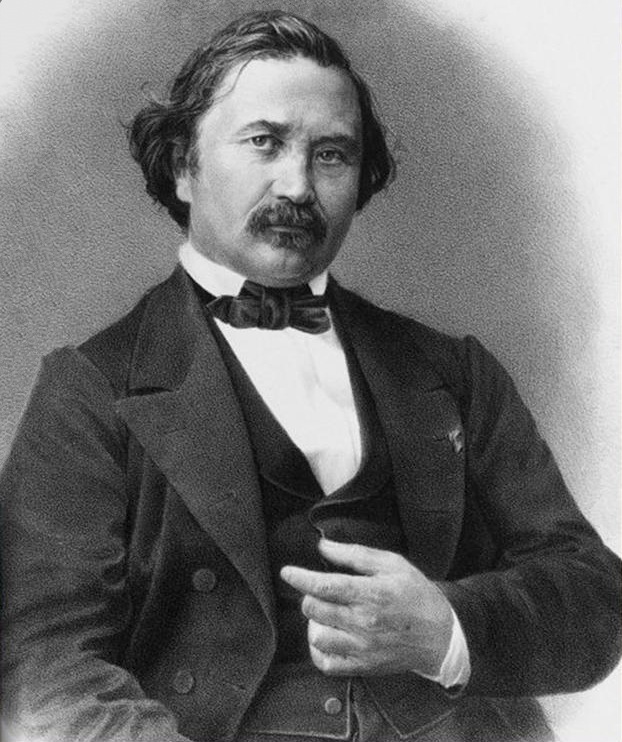
0 sources
Summary
Joseph Bertrand is a human[1]. Born in former 12th arrondissement of Paris[2], he… he was born on March 11, 1822[3]. He passed away in Budapest[4]. He died on April 5, 1900[5]. He worked as a mathematician[6], economist[7], and professor[8]. He ranks in the top 0.73% of human entities by monthly Wikipedia readership (266 views/month, #7,273 of 1,000,298).[9]
Key Facts
- Born in former 12th arrondissement of Paris[2].
- Joseph Bertrand died in Budapest[4].
- Joseph Bertrand passed away in 6th arrondissement of Paris[10].
- Joseph Bertrand was born on March 11, 1822[3].
- Joseph Bertrand died on April 5, 1900[5].
- Joseph Bertrand died on April 3, 1900[11].
- Burial took place at Montparnasse Cemetery[12].
- Joseph Bertrand's father was Alexandre Jacques François Bertrand[13].
- A child of Joseph Bertrand was Marcel Bertrand[14].
- A child of Joseph Bertrand was Léon-Gratien Bertrand[15].
- Joseph Bertrand held citizenship in France[16].
- Joseph Bertrand worked as a mathematician[6].
- Joseph Bertrand's professions included economist[7].
- Joseph Bertrand's professions included professor[8].
- Joseph Bertrand's field of work was probability theory[17].
- Joseph Bertrand's field of work was differential geometry[18].
- Joseph Bertrand's field of work was number theory[19].
- Joseph Bertrand held the position of member of the Académie française[20].
- Joseph Bertrand held the position of president of the French Academy of Sciences[21].
- Joseph Bertrand was employed by Collège de France[22].
- Among Joseph Bertrand's employers was Lycée Saint-Louis[23].
- Joseph Bertrand was employed by École Normale Supérieure[24].
- Among Joseph Bertrand's employers was École polytechnique[25].
- Joseph Bertrand's education included a stint at École polytechnique[26].
- Joseph Bertrand's education included a stint at Mines ParisTech[27].
Body
Origins and Family
Joseph Bertrand was born in former 12th arrondissement of Paris[2]. He was born on March 11, 1822[3]. His father was Alexandre Jacques François Bertrand[13].
Education
Educated at École polytechnique[26], a grande école[28], in France[29], founded in 1794[30], headquartered in Palaiseau[31]; Mines ParisTech[27], an engineering college[32], in France[33], founded in 1783[34], headquartered in Hôtel de Vendôme[35]; and Collège Sainte-Barbe[36], a lycée[37], in France[38].
Career and Affiliations
Recorded occupations include mathematician[6], economist[7], and professor[8]. Fields of work include probability theory[17], a branch of mathematics[39]; differential geometry[18], a branch of mathematics[40]; and number theory[19], a branch of mathematics[41]. Employers include Collège de France[22], a higher education institution[42], in France[43], founded in 1530[44], headquartered in Paris[45]; Lycée Saint-Louis[23], an educational facility[46], in France[47], founded in 1965[48]; École Normale Supérieure[24], a école normale supérieure[49], in France[50], founded in 1794[51], headquartered in Paris[52]; and École polytechnique[25], a grande école[53], in France[54], founded in 1794[55], headquartered in Palaiseau[56]. Positions held include member of the Académie française[20] and president of the French Academy of Sciences[21]. Joseph Bertrand supervised Désiré André as a doctoral student[57].
Works and Contributions
Notable works include Bertrand paradox[58], Bertrand's postulate[59], Bertrand's theorem[60], Poincaré–Bertrand theorem[61], Bertrand–Diguet–Puiseux theorem[62], and Bertrand-Darboux theorem[63]. Things named for Joseph Bertrand include Bertrand's box paradox[64], a paradox[65]; Bertrand paradox[66], a paradox[67], founded in 1889[68]; Bertrand's postulate[69], a theorem[70]; Bertrand competition[71], an economic model[72]; and Bertrand's ballot theorem[73].
Recognition
Awards received include Grand Officer of the Legion of Honour[74], a grade of an order[75], in France[76] and Foreign Member of the Royal Society[77], a fellowship award[78], in United Kingdom[79].
Personal Life
Children include Marcel Bertrand[14], a professor[80], 1847–1907[81], of France[82], awarded the Officer of the Legion of Honour[83], specialised in geology[84] and Léon-Gratien Bertrand[15], an engineer[85], 1858–1951[86], of France[87], awarded the Knight of the Legion of Honour[88].
Death and Burial
Recorded date of death include April 5, 1900[5] and April 3, 1900[11]. Recorded place of death include Budapest[4], a town in Hungary[89], in Hungary[90], founded in 1873[91] and 6th arrondissement of Paris[10], a municipal arrondissement of France[92], in France[93], founded in 1860[94]. Burial took place at Montparnasse Cemetery[12].
Why It Matters
Joseph Bertrand ranks in the top 0.73% of human entities by monthly Wikipedia readership (266 views/month, #7,273 of 1,000,298).[9] He has Wikipedia articles in 21 language editions, a strong signal of global cultural recognition.[95] He is known by 39 alternative names across languages and contexts.[96]
He is credited with the discovery of Buckingham π theorem[97], a theorem[98] and Bertrand paradox[99], a paradox[100], founded in 1889[101]. Entities named for him include Bertrand's box paradox[64], a paradox[65]; Bertrand paradox[66], a paradox[67], founded in 1889[68]; Bertrand's postulate[69], a theorem[70]; Bertrand competition[71], an economic model[72]; and Bertrand's ballot theorem[73].
His notable doctoral advisees include Désiré André[102], a mathematician[103], 1840–1917[104], of France[105], awarded the Poncelet Prize[106].
FAQs
Where was Joseph Bertrand born?
Joseph Bertrand was born in former 12th arrondissement of Paris[2].
Where did Joseph Bertrand die?
Joseph Bertrand passed away in Budapest[4].
Who were Joseph Bertrand's parents?
Joseph Bertrand's father was Alexandre Jacques François Bertrand[13].
What did Joseph Bertrand do for work?
Joseph Bertrand worked as mathematician[6], economist[7], and professor[8].
Where did Joseph Bertrand go to school?
Joseph Bertrand was educated at École polytechnique[26], Mines ParisTech[27], and Collège Sainte-Barbe[36].
What awards did Joseph Bertrand receive?
Honors received include Grand Officer of the Legion of Honour[74] and Foreign Member of the Royal Society[77].
What did Joseph Bertrand discover?
Joseph Bertrand is credited as discoverer of Buckingham π theorem[97] and Bertrand paradox[99].