
Charles Gleyre
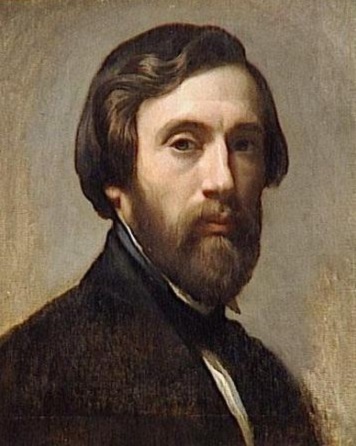
0 sources
Summary
Charles Gleyre was born on May 2, 1806[1], in Chevilly[2]. He died on May 5, 1874[3], in Palais Bourbon[4]. He worked as a painter[5]. He ranks in the top 0.72% of human entities by monthly Wikipedia readership (959 views/month, #7,230 of 1,000,298).[6]
Key Facts
- Place of burial: Chevilly cemetery[7], La Sallaz cemetery[8], Montparnasse Cemetery[9]
- Country of citizenship: Switzerland[10], France[11]
- Employer: Beaux-Arts de Paris[12]
- Student: Claude Monet[13], Pierre-Auguste Renoir[14], Alfred Sisley[15], James McNeill Whistler[16], Frédéric Bazille[17], Jean-Léon Gérôme[18], Gustave Brion[19], François Emile Ehrmann[20], Edward Poynter[21], Daniel Ridgway Knight[22], Ludovic-Napoléon Lepic[23], Jean-Jules-Antoine Lecomte du Nouÿ[24], Jean-Louis Hamon[25], Auguste Toulmouche[26]
- Notable work: Lost Illusions[27]
- Religion or worldview: reformed[28]
- Influenced by: Jean-Auguste-Dominique Ingres[29], Paul Delaroche[30], Horace Vernet[31]
- Sex or gender: male[32]
- Movement: Orientalist painting[33]
- Genre: history painting[34], religious painting[35]
- Commons category: Charles Gleyre[36]
- Cause of death: aneurysm[37]
- Residence: Rue du Bac[38]
- Family name: Gleyre[39]
- Given name: Charles[40]
- Sponsor: John Lowell, Jr.[41]
Why It Matters
Charles Gleyre has Wikipedia articles in 20 language editions, a strong signal of global cultural recognition.[42] He is known by 41 alternative names across languages and contexts.[43]
He has been cited as an influence by Jean-Léon Gérôme[44], a painter[45], 1824–1904[46], of France[47], awarded the Grand Officer of the Legion of Honour[48], specialised in painting[49].
FAQs
Where was Charles Gleyre born?
Charles Gleyre's place of birth was Chevilly[2].
Where did Charles Gleyre die?
Charles Gleyre passed away in Palais Bourbon[4].
What did Charles Gleyre do for work?
Charles Gleyre worked as a painter[5].
Who did Charles Gleyre influence?
Charles Gleyre has been cited as an influence by Jean-Léon Gérôme[44].