
Horace Vernet
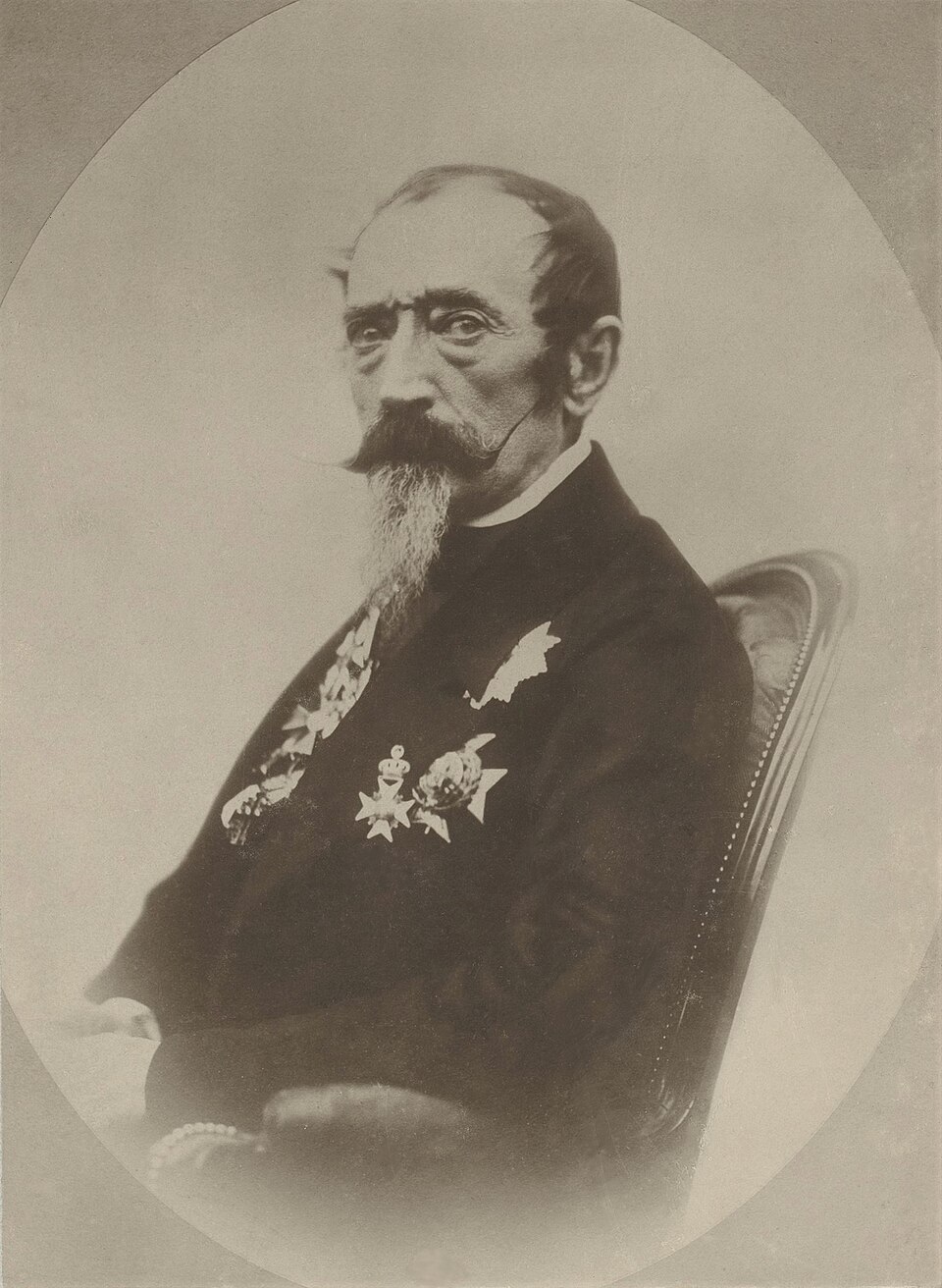
0 sources
Summary
Horace Vernet was born on June 30, 1789[1], in Paris[2]. He died on January 17, 1863[3], in Paris[4]. He worked as a painter[5], photographer[6], military personnel[7], graphic artist[8], and draftsperson[9]. He ranks in the top 0.71% of human entities by monthly Wikipedia readership (2,058 views/month, #7,139 of 1,000,298).[10]
Key Facts
- Place of burial: Montmartre Cemetery[11]
- Father: Carle Vernet[12]
- Child: Louise Vernet[13]
- Country of citizenship: France[14]
- Occupation: lithographer[15]
- Position held: director of the French Academy in Rome[16]
- Educated at: Beaux-Arts de Paris[17]
- Student: Jules Breton[18], Joseph Simon Volmar[19], Ignace-François Bonhommé[20], Jean-Paul Alaux[21], Louis Marie Baptiste Atthalin[22], Pierre Dupuis[23], Charles-Édouard Elmerich[24], Eugène Lami[25], Alfred François Mouillard[26], Alois Schönn[27], Léopold Hugo[28], Tadeusz Brodowski[29]
- Notable work: The battle of Jena, October 14, 1806[30], The Battle of Bouvines[31], Battle of Fontenoy, 11th of May 1745[32]
- Award received: Pour le Mérite for Sciences and Arts order[33], Knight in the Order of the Holy Sepulchre[34], resident at the Villa Medici[35], Grand Officer of the Legion of Honour[36], Officer of the Legion of Honour[37], Order of St. Vladimir, 3rd class[38], Order of Saint Anna, 2nd class[39], Order of Saint Stanislaus, 2nd class[40], Order of Saint Stanislaus, 1st class[41]
- Member of: Royal Netherlands Academy of Arts and Sciences[42], Académie des beaux-arts[43], Accademia delle Arti del Disegno[44]
- Sex or gender: male[45]
- Movement: Romanticism[46]
- Genre: history painting[47], landscape painting[48], portrait[49]
- Commons category: Horace Vernet[50]
- Unmarried partner: Olympe Pélissier[51]
- Family name: Vernet[52]
- Given name: Horace[53]
- Pseudonym: Vernet, Émile Jean Horace[54]
- Sponsor: Napoleon[55]
- Topic's main category: Category:Horace Vernet[56]
- Commons gallery: Horace Vernet[57]
Why It Matters
Horace Vernet has Wikipedia articles in 24 language editions, a strong signal of global cultural recognition.[58] He is known by 48 alternative names across languages and contexts.[59]
He has been cited as an influence by Charles Gleyre[60], a painter[61], 1806–1874[62], of Switzerland[63] and Elizabeth Heaphy Murray[64], a painter[65], 1815–1882[66], of United Kingdom of Great Britain and Ireland[67], awarded the honorary member[68].
FAQs
Where was Horace Vernet born?
Horace Vernet was born in Paris[2].
Where did Horace Vernet die?
Horace Vernet passed away in Paris[4].
Who were Horace Vernet's parents?
Horace Vernet's father was Carle Vernet[12].
What did Horace Vernet do for work?
Horace Vernet worked as a painter[5], photographer[6], military personnel[7], graphic artist[8], and draftsperson[9].
Where did Horace Vernet go to school?
Horace Vernet was educated at Beaux-Arts de Paris[17].
What awards did Horace Vernet receive?
Honors received include Pour le Mérite for Sciences and Arts order[33], Knight in the Order of the Holy Sepulchre[34], resident at the Villa Medici[35], and Grand Officer of the Legion of Honour[36].
Who did Horace Vernet influence?
Horace Vernet has been cited as an influence by Charles Gleyre[60] and Elizabeth Heaphy Murray[64].