
Jean-Léon Gérôme
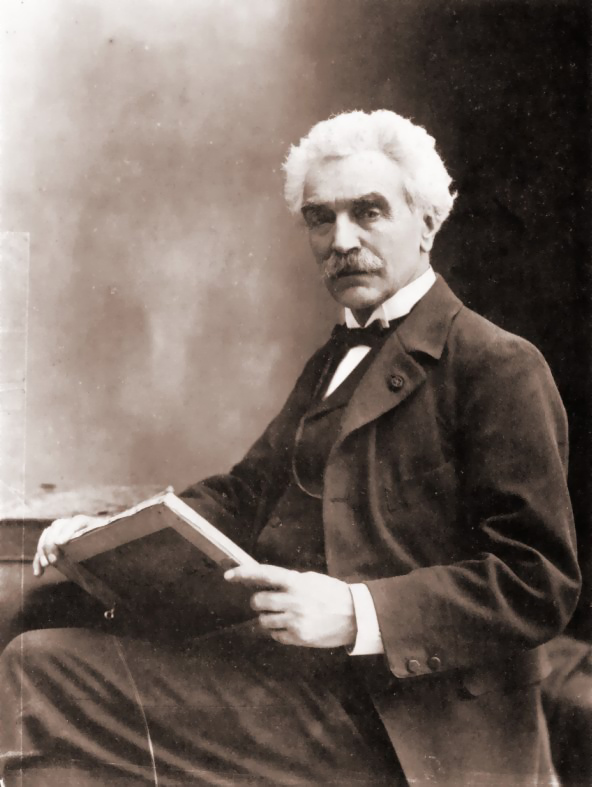
0 sources
Jean-Léon Gérôme was born on May 11, 1824, in Vesoul [1][2][3][4] and died on January 10, 1904, in the 9th arrondissement of Paris [5][2][3][4]. A French citizen [6], he worked as a painter, sculptor, teacher, graphic artist, architectural draftsperson, and porcelain painter [7][2][3][8][6]. His education took place at the Beaux-Arts de Paris and College Gérôme , and he later served as an employer at the Beaux-Arts de Paris .
Operating within the field of painting and visual arts , Gérôme was associated with the academic art, Neo-Grec, and Orientalism movements [9]. His work primarily focused on the genres of history painting and religious painting [10]. He received several distinctions, including the Grand Officer of the Legion of Honour, the Order of the Red Eagle, and the Knight of the Order of Leopold [11].
Among his notable works are Pollice Verso, Bonaparte Before the Sphinx, Slave Market in Rome, The Duel After the Masquerade, Jerusalem, and Pygmalion and Galatea [12].
Key Facts
- Place of burial: Montmartre Cemetery[11]
- Spouse: Marie Goupil[12]
- Country of citizenship: France[13]
- Occupation: porcelain painter[14], visual artist[15]
- Field of work: painting[16], visual arts[17]
- Employer: Beaux-Arts de Paris[18]
- Educated at: Beaux-Arts de Paris[19], College Gérôme[20]
- Student: Vasily Vereshchagin[21], Odilon Redon[22], Mary Cassatt[23], Léon Bakst[24], Thomas Eakins[25], Édouard Vuillard[26], Gustave Caillebotte[27], Abbott Handerson Thayer[28], Dennis Miller Bunker[29], Lawton S. Parker[30]
- Notable work: The Slave Market[31], Pollice Verso[32], Phryne before the Areopagus[33], Truth Coming Out of Her Well[34], Bonaparte Before the Sphinx[35], Cleopatra and Caesar[36], Young Greeks Attending a Cock Fight[37], Pygmalion and Galatea by Jean-Léon Gérôme[38], Slave Market in Rome[39]
- Award received: Grand Officer of the Legion of Honour[40], Order of the Red Eagle[41], Knight of the Order of Leopold[42]
- Member of: Académie des beaux-arts[43], Ligue de la Patrie Française[44], Royal Academy of Arts[45], Royal Swedish Academy of Fine Arts[46], American Academy of Arts and Sciences[47], Société des peintres orientalistes français[48]
- Influenced by: Charles Gleyre[49]
- Sex or gender: male[50]
- Movement: academic art[51], Neo-Grec[52], Orientalism[53], neo-Pompeian[54]
- Genre: history painting[55], religious painting[56]
- Commons category: Jean-Léon Gérôme[57]
- Family name: Gérôme[58]
- Given name: Jean-Léon[59]
Why It Matters
Jean-Léon Gérôme has Wikipedia articles in 27 language editions, a strong signal of global cultural recognition.[60] He is known by 68 alternative names across languages and contexts.[61]
He has been cited as an influence by Henri Rousseau[62], a painter[63], 1844–1910[64], of France[65], specialised in painting[66]; Vasily Vereshchagin[67], a painter[68], 1842–1904[69], of Russian Empire[70], awarded the Order of St. George, 4th class[71], specialised in painting[72]; Lawrence Alma-Tadema[73], a painter[74], 1836–1912[75], of Belgium[76], awarded the Order of Saint Michael[77], specialised in painting[78]; and Jean Leon Gerome Ferris[79], a painter[80], 1863–1930[81], of United States[82], specialised in painting[83].
FAQs
Where was Jean-Léon Gérôme born?
Jean-Léon Gérôme's place of birth was Vesoul[2].
Where did Jean-Léon Gérôme die?
Jean-Léon Gérôme passed away in 9th arrondissement of Paris[4].
Who was Jean-Léon Gérôme married to?
Jean-Léon Gérôme's spouses include Marie Goupil[12].
What did Jean-Léon Gérôme do for work?
Jean-Léon Gérôme worked as a painter[5], sculptor[6], teacher[7], graphic artist[8], and architectural drafter[9].
Where did Jean-Léon Gérôme go to school?
Jean-Léon Gérôme was educated at Beaux-Arts de Paris[19] and College Gérôme[20].
What awards did Jean-Léon Gérôme receive?
Honors received include Grand Officer of the Legion of Honour[40], Order of the Red Eagle[41], and Knight of the Order of Leopold[42].
Who did Jean-Léon Gérôme influence?
Jean-Léon Gérôme has been cited as an influence by Henri Rousseau[62], Vasily Vereshchagin[67], Lawrence Alma-Tadema[73], and Jean Leon Gerome Ferris[79].