
Jean-Auguste-Dominique Ingres
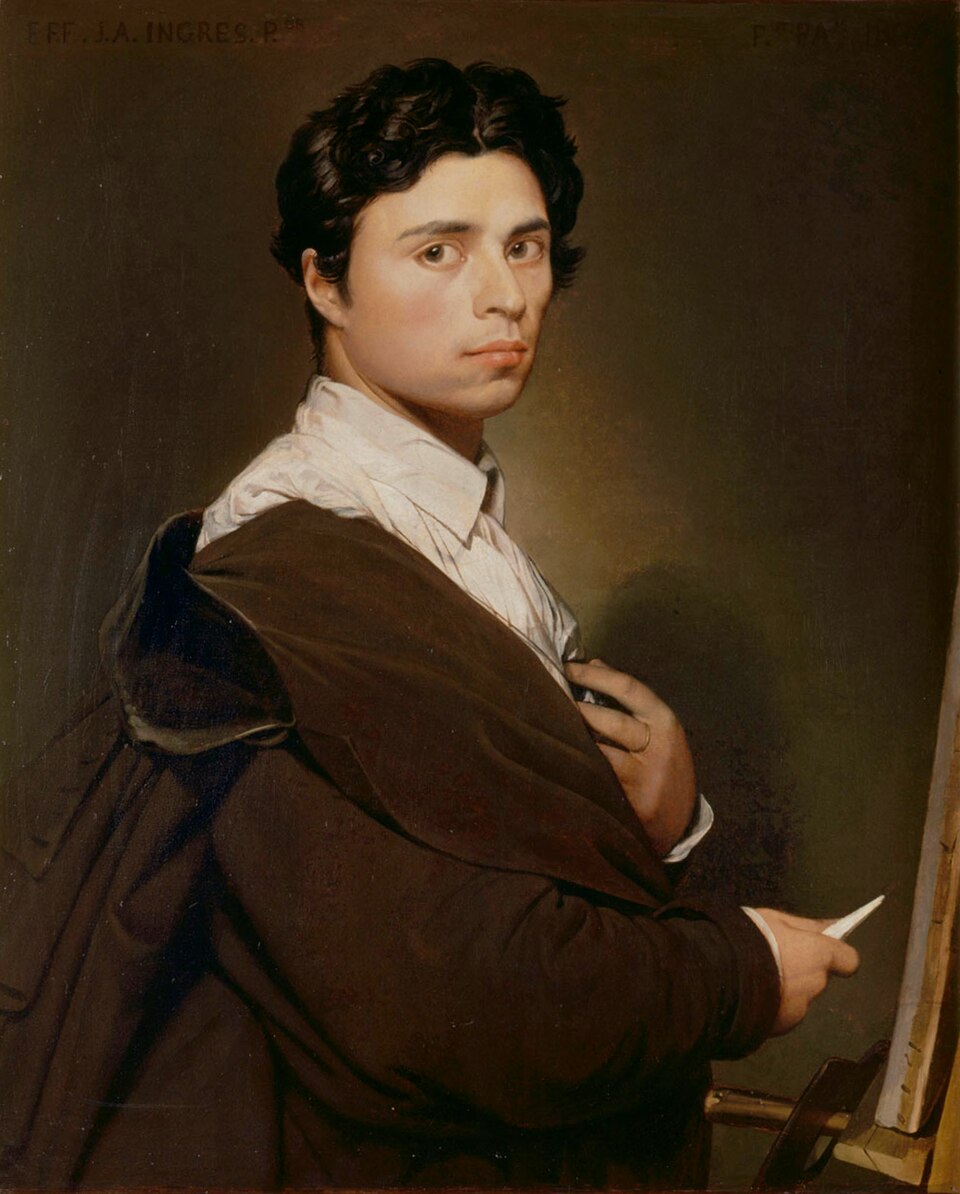
0 sources
Summary
Jean-Auguste-Dominique Ingres was born on August 29, 1780[1], in Montauban[2]. He died on January 14, 1867[3], in Paris[4]. He worked as a painter[5], politician[6], violinist[7], draftsperson[8], and printmaker[9]. He ranks in the top 0.69% of human entities by monthly Wikipedia readership (5,641 views/month, #6,888 of 1,000,298).[10]
Key Facts
- Place of burial: Père Lachaise Cemetery[11]
- Father: Jean-Marie-Joseph Ingres[12]
- Spouse: Delphine Ramel[13], Madeleine Chapelle[14]
- Country of citizenship: France[15]
- Occupation: graphic artist[16], architect[17], architectural drafter[18], visual artist[19]
- Field of work: painting[20]
- Position held: Second Empire senator[21], director of the French Academy in Rome[22]
- Employer: Orchestre national du Capitole de Toulouse[23]
- Educated at: Beaux-Arts de Paris[24], French Academy in Rome[25]
- Notable work: Mademoiselle Caroline Rivière[26], Antiochus and Stratonice[27], Vénus Anadyomène[28], Grande Odalisque[29], Oedipus and the Sphinx[30], The Turkish Bath[31], Jupiter and Thetis[32], Portrait of Monsieur Bertin[33], The Source[34]
- Award received: Prix de Rome[35], Knight of the Legion of Honour[36], Officer of the Legion of Honour[37], Grand Officer of the Legion of Honour[38], Commander of the Legion of Honour[39], Pour le Mérite for Sciences and Arts order[40], Knight of the Order of Saint Joseph[41]
- Member of: Académie des beaux-arts[42]
- Influenced by: Raphael[43]
- Sex or gender: male[44]
- Movement: Romanticism[45], Neoclassicism[46]
- Genre: history painting[47], portrait painting[48], nude[49], portrait[50], Orientalism[51]
- Commons category: Jean Auguste Dominique Ingres[52]
- Cause of death: pneumonia[53]
- Family name: Ingres[54]
- Given name: Jean-Auguste[55], Dominique[56]
- Significant event: marriage[57], funeral[58]
Product Details
The following facts are restated verbatim from public-domain and CC0 open-data sources — every line is independently verifiable against the named source's catalog.
MusicBrainz — CC0 open music encyclopedia
-
Type: Person[59]
-
Country: FR[60]
-
Began / founded: 1780-08-29[61]
-
Ended / dissolved: 1867-01-14[62]
-
MusicBrainz ID: 220c7a73-bc8e-4a12-b6f3-a0e3aa2b1b05[63]
Why It Matters
Jean-Auguste-Dominique Ingres has Wikipedia articles in 30 language editions, a strong signal of global cultural recognition.[64] He is known by 115 alternative names across languages and contexts.[65]
He has been cited as an influence by Charles Gleyre[66], a painter[67], 1806–1874[68], of Switzerland[69]; Jacques Amans[70], a painter[71], 1801–1888[72], of France[73]; Marie-Élisabeth Cavé[74], a painter[75], 1806–1883[76], of France[77], specialised in visual arts[78]; and Leona Wood[79], a dancer[80], 1921–2008[81], of United States[82], specialised in painting[83].
FAQs
Where was Jean-Auguste-Dominique Ingres born?
Jean-Auguste-Dominique Ingres's place of birth was Montauban[2].
Where did Jean-Auguste-Dominique Ingres die?
Jean-Auguste-Dominique Ingres passed away in Paris[4].
Who were Jean-Auguste-Dominique Ingres's parents?
Jean-Auguste-Dominique Ingres's father was Jean-Marie-Joseph Ingres[12].
Who was Jean-Auguste-Dominique Ingres married to?
Jean-Auguste-Dominique Ingres's spouses include Delphine Ramel[13] and Madeleine Chapelle[14].
What did Jean-Auguste-Dominique Ingres do for work?
Jean-Auguste-Dominique Ingres worked as a painter[5], politician[6], violinist[7], draftsperson[8], and printmaker[9].
Where did Jean-Auguste-Dominique Ingres go to school?
Jean-Auguste-Dominique Ingres was educated at Beaux-Arts de Paris[24] and French Academy in Rome[25].
What awards did Jean-Auguste-Dominique Ingres receive?
Honors received include Prix de Rome[35], Knight of the Legion of Honour[36], Officer of the Legion of Honour[37], and Grand Officer of the Legion of Honour[38].
Who did Jean-Auguste-Dominique Ingres influence?
Jean-Auguste-Dominique Ingres has been cited as an influence by Charles Gleyre[66], Jacques Amans[70], Marie-Élisabeth Cavé[74], and Leona Wood[79].