
Marie Curie
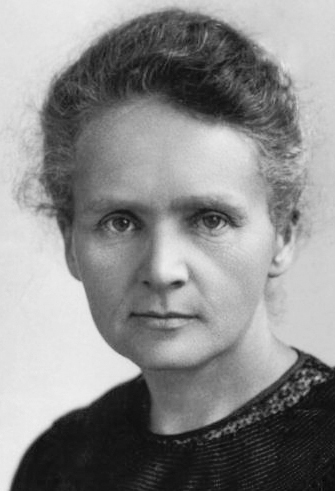
0 sources
Summary
Marie Curie was born in Freta Street[1]. She died in Sancellemoz[2]. She worked as a physicist[3], chemist[4], and university teacher[5]. She ranks in the top 0.14% of human entities by monthly Wikipedia readership (195,705 views/month, #1,409 of 1,000,298).[6]
Key Facts
- Place of birth: Warsaw[7]
- Place of burial: Panthéon[8], Cemetery Sceaux[9]
- Father: Władysław Skłodowski[10]
- Mother: Bronisława Skłodowska[11]
- Spouse: Pierre Curie[12]
- Child: Irène Joliot-Curie[13], Ève Curie[14]
- Country of citizenship: Russian Empire[15], France[16]
- Native language: Polish[17]
- Ethnic group: Poles[18]
- Field of work: radioactivity[19], chemistry[20], physics[21], radium[22], polonium[23]
- Position held: professor[24]
- Employer: University of Paris[25], Sorbonne[26], Curie Institute[27]
- Educated at: Science Faculty of Paris[28], Flying University[29], University of Paris[30], X LO im. Królowej Jadwigi in Warsaw[31]
- Doctoral advisor: Gabriel Lippmann[32]
- Award received: Nobel Prize in Chemistry[33], Nobel Prize in Physics[34], Willard Gibbs Award[35], honorary doctor of the Jagiellonian University of Krakow[36], John Scott Award[37], Elliott Cresson Medal[38], Davy Medal[39], Matteucci Medal[40], Actonian Prize[41], Albert Medal[42], prix Gegner[43], Benjamin Franklin Medal[44], Order of the White Eagle[45], Cameron Prize of the University of Edinburgh[46]
- Religion or worldview: agnosticism[47]
- Sex or gender: female[48]
- Family: House of Skłodowski[49]
- Doctoral student: André-Louis Debierne[50], Óscar Moreno[51], Marguerite Perey[52], Branca Edmée Marques[53], Zheng Dazhang[54], Shi Shiyuan[55], Emile Henriot[56], Ștefania Mărăcineanu[57]
- Coat of arms: Dołęga[58]
- Commons category: Marie Curie[59]
Body
Works and Contributions
Things named for Marie Curie include curium[60], curie[61], Pierre and Marie Curie University[62], Curie Institute[63], Marie Skłodowska-Curie Actions[64], Maria Curie-Skłodowska University[65], Musée Curie[66], and Maria Skłodowska-Curie Museum[67].
Why It Matters
Marie Curie has Wikipedia articles in 30 language editions, a strong signal of global cultural recognition.[68] She is known by 65 alternative names across languages and contexts.[69]
She has been cited as an influence by Marguerite Perey[70], a physicist[71], 1909–1975[72], of France[73], awarded the Officer of the Legion of Honour[74], specialised in physics[75]; William Duane[76], a physicist[77], 1872–1935[78], of United States[79], awarded the Comstock Prize in Physics[80]; Robert Abbe[81], an oncologist[82], 1851–1928[83], of United States[84]; Catherine Chamié[85], a chemist[86], 1888–1950[87], of Russian Empire[88], specialised in nuclear physics[89]; and Sonia Cotelle[90], a physicist[91], 1896–1945[92], of Poland[93], specialised in radiochemistry[94].
She is credited with the discovery of radium[95], a chemical element[96] and polonium[97], a chemical element[98]. Entities named for her include curium[60], curie[61], Pierre and Marie Curie University[62], Curie Institute[63], Marie Skłodowska-Curie Actions[64], and Maria Curie-Skłodowska University[65].
Her notable doctoral advisees include Marguerite Perey[99], André-Louis Debierne[100], Émile Henriot[101], Ștefania Mărăcineanu[102], and Branca Edmée Marques[103].
FAQs
Where was Marie Curie born?
Marie Curie was born in Freta Street[1].
Where did Marie Curie die?
Marie Curie passed away in Sancellemoz[2].
Who were Marie Curie's parents?
Marie Curie's father was Władysław Skłodowski[10]. Marie Curie's mother was Bronisława Skłodowska[11].
Who was Marie Curie married to?
Marie Curie's spouses include Pierre Curie[12].
What did Marie Curie do for work?
Marie Curie worked as a physicist[3], chemist[4], and university teacher[5].
Where did Marie Curie go to school?
Marie Curie was educated at Science Faculty of Paris[28], Flying University[29], University of Paris[30], and X LO im. Królowej Jadwigi in Warsaw[31].
What awards did Marie Curie receive?
Honors received include Nobel Prize in Chemistry[33], Nobel Prize in Physics[34], Willard Gibbs Award[35], and honorary doctor of the Jagiellonian University of Krakow[36].
Who did Marie Curie influence?
Marie Curie has been cited as an influence by Marguerite Perey[70], William Duane[76], Robert Abbe[81], and Catherine Chamié[85].
What did Marie Curie discover?
Marie Curie is credited as discoverer of radium[95] and polonium[97].