
Ludwig Wittgenstein
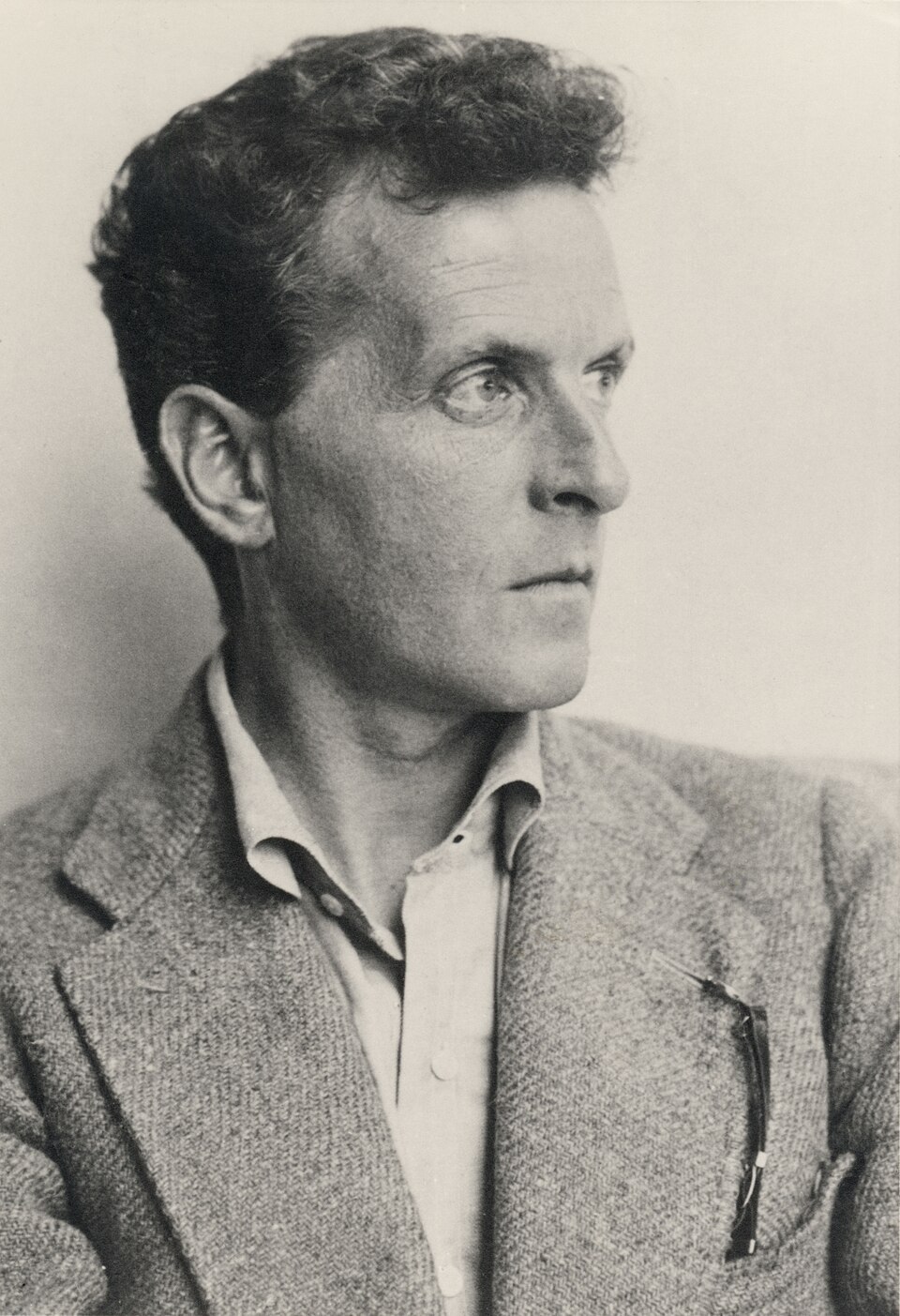
0 sources
Summary
Ludwig Wittgenstein was born on April 26, 1889[1], in Neuwaldegg[2]. He died on April 29, 1951[3], in Cambridge[4]. He worked as a philosopher of language[5], architectural theoretician[6], logician[7], mathematician[8], and aphorist[9]. He ranks in the top 0.42% of human entities by monthly Wikipedia readership (31,113 views/month, #4,222 of 1,000,298).[10]
Key Facts
- Place of burial: Ascension Parish Burial Ground[11]
- Father: Karl Wittgenstein[12]
- Mother: Leopoldine Wittgenstein[13]
- Country of citizenship: United Kingdom[14], Austria[15]
- Native language: German[16]
- Occupation: epistemologist[17], philosopher[18], teacher[19], university teacher[20], pedagogue[21], architect[22]
- Field of work: philosophy[23]
- Employer: Trinity College[24], University of Cambridge[25]
- Educated at: Bundesrealgymnasium Linz Fadingerstraße[26], Technische Universität Berlin[27], Victoria University of Manchester[28], Trinity College[29], University of Cambridge[30], Technische Hochschule Berlin[31]
- Doctoral advisor: Bertrand Russell[32], Frank P. Ramsey[33], G. E. Moore[34]
- Notable work: Tractatus Logico-Philosophicus[35], Philosophical Investigations[36]
- Award received: Medal for Bravery[37]
- Influenced by: Bertrand Russell[38], Søren Kierkegaard[39], Gottlob Frege[40], Arthur Schopenhauer[41]
- Sex or gender: male[42]
- Family: Wittgenstein family[43]
- Sexual orientation: homosexuality[44]
- Movement: analytic philosophy[45]
- Doctoral student: Reuben Goodstein[46], Casimir Lewy[47]
- Commons category: Ludwig Wittgenstein[48]
- Cause of death: prostate cancer[49]
- Academic degree: doctorate[50]
- Residence: Skjolden[51], Wiener Neustadt[52]
- Participated in conflict: World War I[53]
- Family name: Wittgenstein[54]
- Given name: Ludwig[55], Josef[56], Johann[57]
Product Details
The following facts are restated verbatim from public-domain and CC0 open-data sources — every line is independently verifiable against the named source's catalog.
MusicBrainz — CC0 open music encyclopedia
-
Type: Person[58]
-
Country: AT[59]
-
Began / founded: 1889-04-26[60]
-
Ended / dissolved: 1951-04-29[61]
-
MusicBrainz ID: 76f1379e-b20b-4d6d-8c6c-2b2fdc391bd7[62]
Body
Works and Contributions
Things named for Ludwig Wittgenstein include Wittgenstein on Rules and Private Language[63], Wittgenstein-Prize[64], and Ludwig Wittgenstein Prize[65].
Why It Matters
Ludwig Wittgenstein has Wikipedia articles in 30 language editions, a strong signal of global cultural recognition.[66] He is known by 52 alternative names across languages and contexts.[67]
He has been cited as an influence by Bertrand Russell[68], a mathematician[69], 1872–1970[70], of United Kingdom[71], awarded the Nobel Prize in Literature[72], specialised in set theory[73]; Alan Watts[74], a philosopher[75], 1915–1973[76], of United Kingdom[77], specialised in philosophy[78]; Pierre Bourdieu[79], a philosopher[80], 1930–2002[81], of France[82], awarded the CNRS Gold medal[83], specialised in sociology[84]; Jacques Derrida[85], a philosopher[86], 1930–2004[87], of France[88], awarded the Theodor W. Adorno Award[89], specialised in philosophy of language[90]; John Searle[91], a philosopher[92], 1932–2025[93], of United States[94], awarded the Guggenheim Fellowship[95], specialised in philosophy of language[96]; and Saul Kripke[97], a philosopher[98], 1940–2022[99], of United States[100], awarded the Guggenheim Fellowship[101], specialised in contemporary philosophy[102].
He is credited with the discovery of tautology[103], language-game[104], and form of life[105]. Works attributed to him include Tractatus Logico-Philosophicus[106], Philosophical Investigations[107], On Certainty[108], and Blue and Brown Books[109]. Entities named for him include Wittgenstein on Rules and Private Language[63], Wittgenstein-Prize[64], and Ludwig Wittgenstein Prize[65].
His notable doctoral advisees include Reuben Goodstein[110].
FAQs
Where was Ludwig Wittgenstein born?
Ludwig Wittgenstein was born in Neuwaldegg[2].
Where did Ludwig Wittgenstein die?
Ludwig Wittgenstein passed away in Cambridge[4].
Who were Ludwig Wittgenstein's parents?
Ludwig Wittgenstein's father was Karl Wittgenstein[12]. Ludwig Wittgenstein's mother was Leopoldine Wittgenstein[13].
What did Ludwig Wittgenstein do for work?
Ludwig Wittgenstein worked as a philosopher of language[5], architectural theoretician[6], logician[7], mathematician[8], and aphorist[9].
Where did Ludwig Wittgenstein go to school?
Ludwig Wittgenstein was educated at Bundesrealgymnasium Linz Fadingerstraße[26], Technische Universität Berlin[27], Victoria University of Manchester[28], and Trinity College[29].
What awards did Ludwig Wittgenstein receive?
Honors received include Medal for Bravery[37].
Who did Ludwig Wittgenstein influence?
Ludwig Wittgenstein has been cited as an influence by Bertrand Russell[68], Alan Watts[74], Pierre Bourdieu[79], and Jacques Derrida[85].
What did Ludwig Wittgenstein discover?
Ludwig Wittgenstein is credited as discoverer of tautology[103], language-game[104], and form of life[105].