
Gottlob Frege
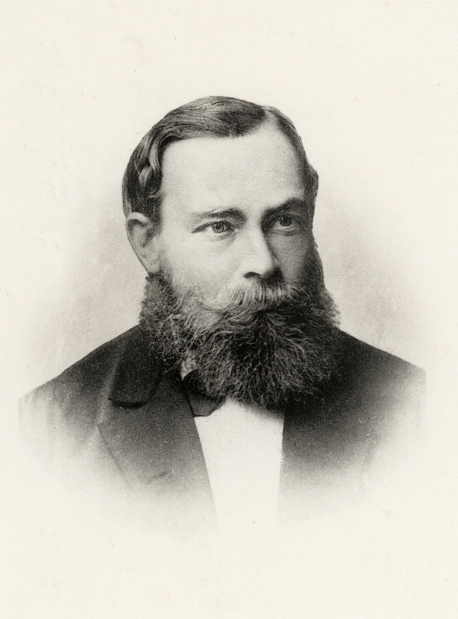
0 sources
Summary
Gottlob Frege was born on November 8, 1848[1], in Wismar[2]. He died on July 26, 1925[3], in Bad Kleinen[4]. He worked as a logician[5], analytic philosopher[6], philosopher of language[7], university teacher[8], and mathematician[9]. He ranks in the top 0.68% of human entities by monthly Wikipedia readership (4,623 views/month, #6,817 of 1,000,298).[10]
Key Facts
- Father: Karl Alexander Frege[11]
- Mother: Auguste Bialloblotzky[12]
- Spouse: Margarete Katharina Sophia Anna Lieseberg[13]
- Country of citizenship: Germany[14]
- Occupation: philosopher[15]
- Field of work: philosophy[16], logic[17]
- Employer: Friedrich Schiller University Jena[18]
- Educated at: Friedrich Schiller University Jena[19], University of Göttingen[20], Grosse Stadtschule zu Wismar[21]
- Doctoral advisor: Ernst Christian Julius Schering[22], Alfred Clebsch[23]
- Notable work: Sense and reference[24], Begriffsschrift[25], The Foundations of Arithmetic[26], Frege's theorem[27], Frege's propositional calculus[28], Frege's Puzzle[29], Frege system[30], principle of compositionality[31], Frege–Church ontology[32], Grundgesetze der Arithmetik[33]
- Member of: German Academy of Sciences Leopoldina[34]
- Influenced by: Bernard Bolzano[35]
- Sex or gender: male[36]
- Commons category: Gottlob Frege[37]
- Family name: Frege[38]
- Given name: Friedrich[39], Ludwig[40], Gottlob[41]
- Topic's main category: Category:Gottlob Frege[42]
- Commons gallery: Gottlob Frege[43]
- Academic thesis: Ueber eine geometrische Darstellung der imaginären Gebilde in der Ebene[44]
- Student of: Ernst Abbe[45], Wilhelm Eduard Weber[46]
- Languages spoken, written or signed: German[47]
- Birth name: Friedrich Ludwig Gottlob Frege[48]
Body
Works and Contributions
Things named for Gottlob Frege include Frege's theorem[49] and Frege[50].
Why It Matters
Gottlob Frege has Wikipedia articles in 28 language editions, a strong signal of global cultural recognition.[51] He is known by 65 alternative names across languages and contexts.[52]
He has been cited as an influence by Ludwig Wittgenstein[53], a philosopher of language[54], 1889–1951[55], of United Kingdom[56], awarded the Medal for Bravery[57], specialised in philosophy[58]; Bertrand Russell[59], a mathematician[60], 1872–1970[61], of United Kingdom[62], awarded the Nobel Prize in Literature[63], specialised in set theory[64]; Edmund Husserl[65], a mathematician[66], 1859–1938[67], of Austrian Empire[68], specialised in philosophy[69]; Henri Bergson[70], a philosopher[71], 1859–1941[72], of France[73], awarded the Nobel Prize in Literature[74], specialised in philosophy[75]; Saul Kripke[76], a philosopher[77], 1940–2022[78], of United States[79], awarded the Guggenheim Fellowship[80], specialised in contemporary philosophy[81]; and Rudolf Carnap[82], an analytic philosopher[83], 1891–1970[84], of German Empire[85], awarded the Guggenheim Fellowship[86], specialised in philosophy[87].
He is credited with the discovery of currying[88] and turnstile[89]. Works attributed to him include Sense and reference[90], Begriffsschrift[91], and The Foundations of Arithmetic[92]. Entities named for him include Frege's theorem[49] and Frege[50].
FAQs
Where was Gottlob Frege born?
Gottlob Frege's place of birth was Wismar[2].
Where did Gottlob Frege die?
Gottlob Frege died in Bad Kleinen[4].
Who were Gottlob Frege's parents?
Gottlob Frege's father was Karl Alexander Frege[11]. Gottlob Frege's mother was Auguste Bialloblotzky[12].
Who was Gottlob Frege married to?
Gottlob Frege's spouses include Margarete Katharina Sophia Anna Lieseberg[13].
What did Gottlob Frege do for work?
Gottlob Frege worked as a logician[5], analytic philosopher[6], philosopher of language[7], university teacher[8], and mathematician[9].
Where did Gottlob Frege go to school?
Gottlob Frege was educated at Friedrich Schiller University Jena[19], University of Göttingen[20], and Grosse Stadtschule zu Wismar[21].
Who did Gottlob Frege influence?
Gottlob Frege has been cited as an influence by Ludwig Wittgenstein[53], Bertrand Russell[59], Edmund Husserl[65], and Henri Bergson[70].
What did Gottlob Frege discover?
Gottlob Frege is credited as discoverer of currying[88] and turnstile[89].