
Bernard Bolzano
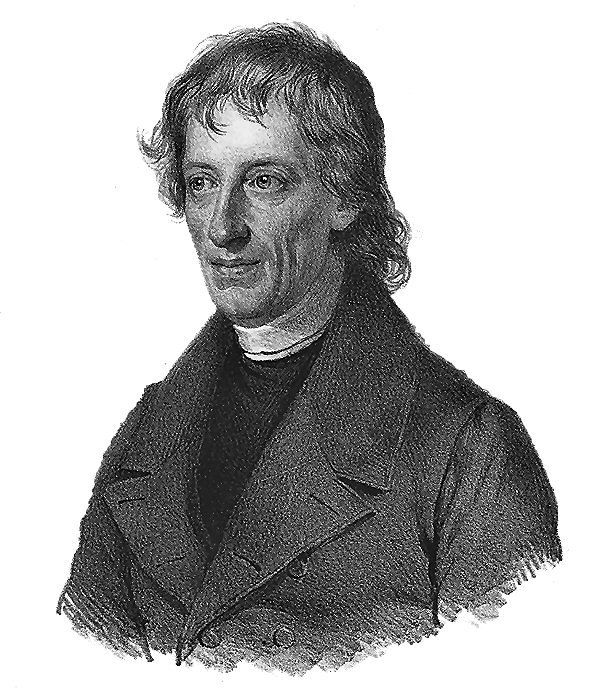
0 sources
Summary
Bernard Bolzano was born on October 5, 1781[1], in Prague[2]. He died on December 18, 1848[3], in Prague[4]. He worked as a mathematician[5], logician[6], philosopher of science[7], theologian[8], and Catholic priest[9]. He ranks in the top 0.72% of human entities by monthly Wikipedia readership (1,608 views/month, #7,185 of 1,000,298).[10]
Key Facts
- Place of burial: Olšany Cemetery[11]
- Country of citizenship: Kingdom of Bohemia[12]
- Native language: German[13]
- Ethnic group: Czechs[14]
- Occupation: historian[15], epistemologist[16], philosopher[17], professor[18], aesthetician[19], teacher[20], Catholic priest[21]
- Field of work: mathematical analysis[22], logic[23], philosophy of science[24], epistemology[25], mathematics[26], philosophy[27], aesthetics[28], theology[29], Christian Church[30]
- Position held: president[31]
- Employer: Charles University[32]
- Educated at: Charles University[33], Piarist College and Gymnasium[34]
- Doctoral advisor: Franz Josef Gerstner[35]
- Notable work: The Paradoxes of the Infinite[36], (ε, δ)-definition of limit[37], Bolzano–Weierstrass theorem[38], Bolzano’s theorem[39], Beyträge zu einer begründeteren Darstellung der Mathematik. Erste Lieferung[40]
- Member of: Royal Czech Society of Sciences[41]
- Religion or worldview: Catholic Church[42]
- Sex or gender: male[43]
- Doctoral student: Franz Moth[44], Robert von Zimmermann[45]
- Commons category: Bernard Bolzano[46]
- Academic degree: Doctor of Philosophy[47]
- Family name: Bolzano[48]
- Given name: Bernard[49]
- Topic's main category: Category:Bernard Bolzano[50]
- Commons gallery: Bernard Bolzano[51]
- Academic thesis: Betrachtungen über einige Gegenstände der Elementargeometrie[52]
- Political ideology: classical liberalism[53]
Body
Works and Contributions
Things named for Bernard Bolzano include Bolzano–Weierstrass theorem[54], Bolzano's theorem[55], Bernard Bolzano Plaque for Merit in Mathematical Sciences[56], and Bolzano Prize[57].
Why It Matters
Bernard Bolzano has Wikipedia articles in 27 language editions, a strong signal of global cultural recognition.[58] He is known by 57 alternative names across languages and contexts.[59]
He has been cited as an influence by Edmund Husserl[60], a mathematician[61], 1859–1938[62], of Austrian Empire[63], specialised in philosophy[64]; Gottlob Frege[65], a logician[66], 1848–1925[67], of Germany[68], specialised in philosophy[69]; Augustin-Louis Cauchy[70], a mathematician[71], 1789–1857[72], of France[73], awarded the Pour le Mérite for Sciences and Arts order[74], specialised in mathematical analysis[75]; Carl Stumpf[76], a philosopher[77], 1848–1936[78], of Germany[79], awarded the Pour le Mérite for Sciences and Arts order[80]; Hugo Bergmann[81], a librarian[82], 1883–1975[83], of Austria[84], awarded the Israel Prize[85], specialised in philosophy[86]; and Kazimierz Twardowski[87], a philosopher[88], 1866–1938[89], of Austria–Hungary[90], awarded the Cross of Valour[91], specialised in philosophy[92].
Entities named for him include Bolzano–Weierstrass theorem[54], Bolzano's theorem[55], Bernard Bolzano Plaque for Merit in Mathematical Sciences[56], and Bolzano Prize[57].
His notable doctoral advisees include Robert von Zimmermann[93].
FAQs
Where was Bernard Bolzano born?
Bernard Bolzano was born in Prague[2].
Where did Bernard Bolzano die?
Bernard Bolzano died in Prague[4].
What did Bernard Bolzano do for work?
Bernard Bolzano worked as a mathematician[5], logician[6], philosopher of science[7], theologian[8], and Catholic priest[9].
Where did Bernard Bolzano go to school?
Bernard Bolzano was educated at Charles University[33] and Piarist College and Gymnasium[34].
Who did Bernard Bolzano influence?
Bernard Bolzano has been cited as an influence by Edmund Husserl[60], Gottlob Frege[65], Augustin-Louis Cauchy[70], and Carl Stumpf[76].