
Carl Stumpf
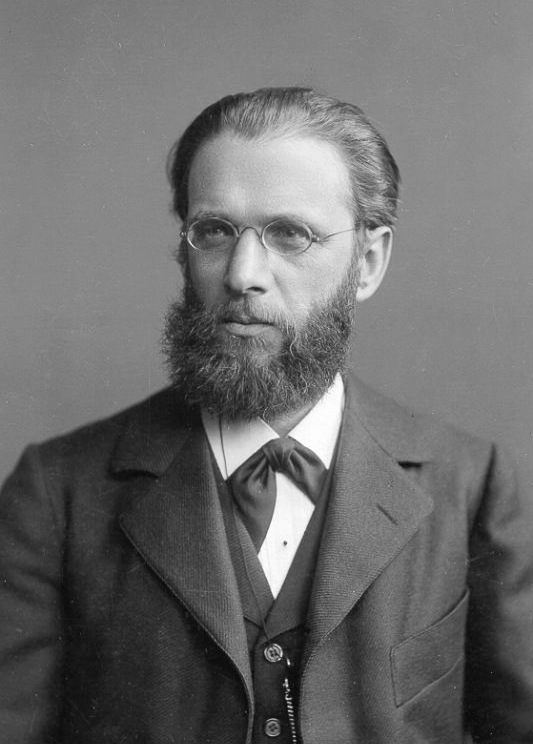
0 sources
Summary
Carl Stumpf is a human[1]. He was born in Wiesentheid[2]. He was born on April 21, 1848[3]. He died in Berlin[4]. He died on December 25, 1936[5]. He worked as a philosopher[6], psychologist[7], musicologist[8], music theorist[9], and ethnomusicologist[10]. He ranks in the top 0.73% of human entities by monthly Wikipedia readership (342 views/month, #7,264 of 1,000,298).[11]
Key Facts
- Carl Stumpf's place of birth was Wiesentheid[2].
- Carl Stumpf passed away in Berlin[4].
- Carl Stumpf was born on April 21, 1848[3].
- Carl Stumpf died on December 25, 1936[5].
- Carl Stumpf is buried at Parkfriedhof Lichterfelde[12].
- Carl Stumpf held citizenship in Germany[13].
- Carl Stumpf's professions included philosopher[6].
- Carl Stumpf worked as a psychologist[7].
- Carl Stumpf's professions included musicologist[8].
- Carl Stumpf worked as a music theorist[9].
- Carl Stumpf's professions included ethnomusicologist[10].
- Carl Stumpf worked as a university teacher[14].
- Carl Stumpf was employed by Ludwig-Maximilians-Universität München[15].
- Among Carl Stumpf's employers was University of Würzburg[16].
- Carl Stumpf was employed by University of Göttingen[17].
- Carl Stumpf was employed by Martin Luther University Halle-Wittenberg[18].
- Among Carl Stumpf's employers was Charles University[19].
- Carl Stumpf was employed by Humboldt-Universität zu Berlin[20].
- Carl Stumpf's education included a stint at University of Göttingen[21].
- Carl Stumpf's doctoral advisor was Hermann Lotze[22].
- A notable student of Carl Stumpf was Erich Rothacker[23].
- A notable student of Carl Stumpf was Hans Cornelius[24].
- A notable student of Carl Stumpf was Edmund Husserl[25].
- Carl Stumpf received the Pour le Mérite for Sciences and Arts order[26].
- Carl Stumpf was a member of Bavarian Academy of Sciences and Humanities[27].
Body
Origins and Family
Born in Wiesentheid[2], Carl Stumpf… he was born on April 21, 1848[3].
Education
Carl Stumpf's education included a stint at University of Göttingen[21]. His doctoral advisor was Hermann Lotze[22]. Studied under Franz Brentano[28] and Hermann Lotze[29].
Career and Affiliations
Recorded occupations include philosopher[6], psychologist[7], musicologist[8], music theorist[9], ethnomusicologist[10], and university teacher[14]. Employers include Ludwig-Maximilians-Universität München[15], a public research university[30], in Germany[31], founded in 1472[32], headquartered in Hauptgebäude der Ludwig-Maximilians-Universität München[33]; University of Würzburg[16], a public university[34], in Germany[35], founded in 1402[36], headquartered in Würzburg[37]; University of Göttingen[17], a campus university[38], in Germany[39], founded in 1734[40], headquartered in Göttingen[41]; Martin Luther University Halle-Wittenberg[18], a public university[42], in Germany[43], founded in 1502[44], headquartered in Halle (Saale)[45]; Charles University[19], a public university[46], in Czech Republic[47], founded in 1348[48], headquartered in Prague[49]; and Humboldt-Universität zu Berlin[20], a comprehensive university[50], in Germany[51], founded in 1809[52], headquartered in Berlin[53]. Notable students include Erich Rothacker[23], Hans Cornelius[24], and Edmund Husserl[25]. Doctoral students include Edmund Husserl[54], a mathematician[55], 1859–1938[56], of Austrian Empire[57], specialised in philosophy[58]; Wolfgang Köhler[59], a psychologist[60], 1887–1967[61], of Germany[62], awarded the APA Award for Distinguished Scientific Contributions to Psychology[63], specialised in psychology[64]; Kurt Zadek Lewin[65], a psychologist[66], 1890–1947[67], of Germany[68], specialised in psychology[69]; Herbert Langfeld[70], a psychologist[71], 1879–1958[72], of United States[73]; Eduard Spranger[74], a pedagogue[75], 1882–1963[76], of Germany[77], awarded the Pour le Mérite for Sciences and Arts order[78], specialised in philosophy[79]; and Erich Schumann[80], a physicist[81], 1898–1985[82], of Germany[83], specialised in physics[84].
Recognition
Carl Stumpf received the Pour le Mérite for Sciences and Arts order[26].
Death and Burial
Carl Stumpf died on December 25, 1936[5]. He passed away in Berlin[4]. He is buried at Parkfriedhof Lichterfelde[12].
Why It Matters
Carl Stumpf ranks in the top 0.73% of human entities by monthly Wikipedia readership (342 views/month, #7,264 of 1,000,298).[11] He has Wikipedia articles in 19 language editions, a strong signal of global cultural recognition.[85] He is known by 23 alternative names across languages and contexts.[86]
He has been cited as an influence by Edmund Husserl[87], a mathematician[88], 1859–1938[89], of Austrian Empire[90], specialised in philosophy[91].
His notable doctoral advisees include Edmund Husserl[92], a mathematician[93], 1859–1938[94], of Austrian Empire[95], specialised in philosophy[96]; Robert Musil[97], a writer[98], 1880–1942[99], of Austria[100], awarded the Gerhart Hauptmann prize[101], specialised in German-language literature[102]; Kurt Zadek Lewin[103]; Wolfgang Köhler[104]; Eduard Spranger[105]; and Erich Schumann[106].
FAQs
Where was Carl Stumpf born?
Born in Wiesentheid[2].
Where did Carl Stumpf die?
Carl Stumpf passed away in Berlin[4].
What did Carl Stumpf do for work?
Carl Stumpf worked as philosopher[6], psychologist[7], musicologist[8], music theorist[9], and ethnomusicologist[10].
Where did Carl Stumpf go to school?
Carl Stumpf was educated at University of Göttingen[21].
What awards did Carl Stumpf receive?
Honors received include Pour le Mérite for Sciences and Arts order[26].
Who did Carl Stumpf influence?
Carl Stumpf has been cited as an influence by Edmund Husserl[87].