
Julia Kristeva
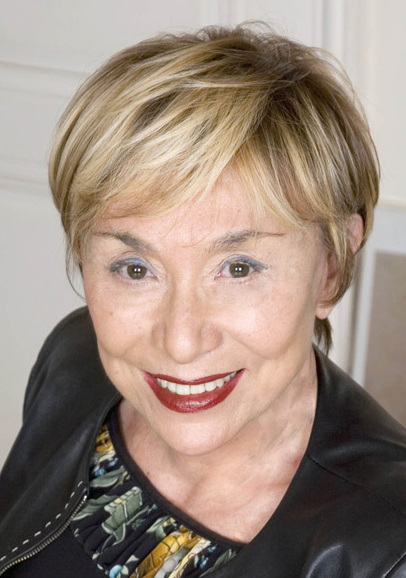
0 sources
Summary
Julia Kristeva was born in Sliven[1]. She has worked as a psychoanalyst[2], university teacher[3], sociologist[4], philosopher[5], and literary critic[6]. She ranks in the top 0.69% of human entities by monthly Wikipedia readership (4,567 views/month, #6,862 of 1,000,298).[7]
Key Facts
- Spouse: Philippe Sollers[8]
- Country of citizenship: France[9], Bulgaria[10]
- Native language: Bulgarian[11]
- Occupation: novelist[12], linguist[13], philologist[14], literary scholar[15], writer[16]
- Field of work: linguistics[17], psychoanalysis[18]
- Employer: Paris Diderot University[19], Columbia University[20]
- Educated at: Sofia University[21]
- Doctoral advisor: Lucien Goldmann[22]
- Award received: Chevalier des Arts et des Lettres[23], prix Henri-Hertz[24], Knight of the Legion of Honour[25], Holberg International Memorial Prize[26], Hannah Arendt Prize[27], Officer of the Legion of Honour[28], The VIZE 97 Prize[29], Commander of the National Order of Merit[30], Saint-Simon Award[31], Grand Officer of the Legion of Honour[32], honorary doctor of Harvard University[33], Commander of the Legion of Honour[34], honorary doctorate of Haifa University[35], honorary doctor of the Université libre de Bruxelles[36]
- Sex or gender: female[37]
- Movement: Post-structuralism[38], Western philosophy[39]
- Doctoral student: Antoine Compagnon[40], Bernard Lamizet[41], Frédéric Boyer[42], Marcelo Villena Alvarado[43], Simon Harel[44], Geetha Ganapathy-Doré[45], Évelyne Grossman[46], François Jost[47], Philippe Alméras[48], Mónica Zapata[49], Christophe Bident[50], Dana Rudelic-Fernandez[51], Éric Benoit[52], Alckmar Luiz dos Santos[53]
- Commons category: Julia Kristeva[54]
Why It Matters
Julia Kristeva has Wikipedia articles in 27 language editions, a strong signal of global cultural recognition.[55] She is known by 42 alternative names across languages and contexts.[56]
She has been cited as an influence by John Moore[57], a writer[58], 1957–2002[59], of United Kingdom[60].
She is credited with the discovery of abjection[61], a philosophical concept[62].
Her notable doctoral advisees include Antoine Compagnon[63], a literary critic[64], b. 1950[65], of France[66], awarded the Knight of the Legion of Honour[67]; Chantal Thomas[68], a writer[69], b. 1945[70], of France[71], awarded the Commandeur des Arts et des Lettres[72]; and Frédéric Boyer[73], a writer[74], b. 1961[75], of France[76], awarded the Prix du Livre Inter[77], specialised in translation[78].
FAQs
Where was Julia Kristeva born?
Julia Kristeva was born in Sliven[1].
Who was Julia Kristeva married to?
Julia Kristeva's spouses include Philippe Sollers[8].
What did Julia Kristeva do for work?
Julia Kristeva worked as a psychoanalyst[2], university teacher[3], sociologist[4], philosopher[5], and literary critic[6].
Where did Julia Kristeva go to school?
Julia Kristeva was educated at Sofia University[21].
What awards did Julia Kristeva receive?
Honors received include Chevalier des Arts et des Lettres[23], prix Henri-Hertz[24], Knight of the Legion of Honour[25], and Holberg International Memorial Prize[26].
Who did Julia Kristeva influence?
Julia Kristeva has been cited as an influence by John Moore[57].
What did Julia Kristeva discover?
Julia Kristeva is credited as discoverer of abjection[61].