
Mikhail Bakhtin
0 sources
Summary
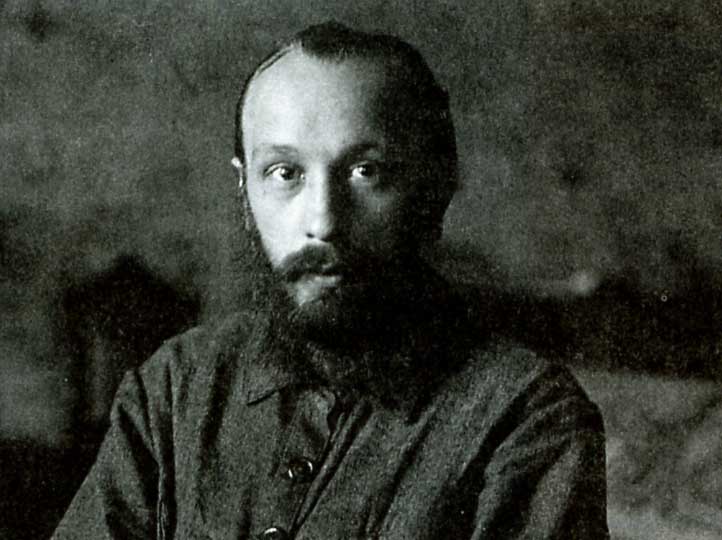
Mikhail Bakhtin was born on November 5, 1895[1], in Oryol[2]. He died on March 7, 1975[3], in Moscow[4]. He worked as a philosopher[5], linguist[6], writer[7], literary critic[8], and literary historian[9]. He ranks in the top 0.68% of human entities by monthly Wikipedia readership (4,514 views/month, #6,831 of 1,000,298).[10]
Key Facts
- Date of birth: November 17, 1895[11], November 4, 1895[12], November 16, 1895[13]
- Place of burial: Vvedenskoye Cemetery[14]
- Country of citizenship: Russian Empire[15], Russian Soviet Federative Socialist Republic[16], Soviet Union[17]
- Occupation: literary scholar[18], art theorist[19]
- Field of work: philosophy[20]
- Employer: Ogarev National Research Mordovia State University[21]
- Educated at: Saint Petersburg State University[22]
- Notable work: polyphony[23]
- Influenced by: Fyodor Dostoyevsky[24], Vyacheslav Ivanovich Ivanov[25], Aleksandr Meyer[26], Russian religious philosophy[27], Immanuel Kant[28], Friedrich Nietzsche[29]
- Sex or gender: male[30]
- Movement: Western philosophy[31]
- Commons category: Mikhail Bakhtin[32]
- Academic degree: candidate of philology[33]
- Residence: Russia[34]
- Family name: Bakhtin[35]
- Given name: Mikhail[36]
- Topic's main category: Category:Mikhail Bakhtin[37]
- Student of: Aleksander Thomson[38]
- Described by source: Great Soviet Encyclopedia (1969–1978)[39], Writers of St. Petersburg. XX century[40], Faces of Moscow[41], Pedagogues and Psychologists of the World[42]
- Languages spoken, written or signed: Russian[43]
- Name in native language: Михаил Бахтин[44]
Why It Matters
Mikhail Bakhtin has Wikipedia articles in 27 language editions, a strong signal of global cultural recognition.[45] He is known by 75 alternative names across languages and contexts.[46]
He has been cited as an influence by Julia Kristeva[47], a psychoanalyst[48], b. 1941[49], of France[50], awarded the Chevalier des Arts et des Lettres[51], specialised in linguistics[52] and Monique Wittig[53], an essayist[54], 1935–2003[55], of France[56], awarded the Prix Médicis[57], specialised in essay[58].
FAQs
Where was Mikhail Bakhtin born?
Mikhail Bakhtin was born in Oryol[2].
Where did Mikhail Bakhtin die?
Mikhail Bakhtin died in Moscow[4].
What did Mikhail Bakhtin do for work?
Mikhail Bakhtin worked as a philosopher[5], linguist[6], writer[7], literary critic[8], and literary historian[9].
Where did Mikhail Bakhtin go to school?
Mikhail Bakhtin was educated at Saint Petersburg State University[22].
Who did Mikhail Bakhtin influence?
Mikhail Bakhtin has been cited as an influence by Julia Kristeva[47] and Monique Wittig[53].