
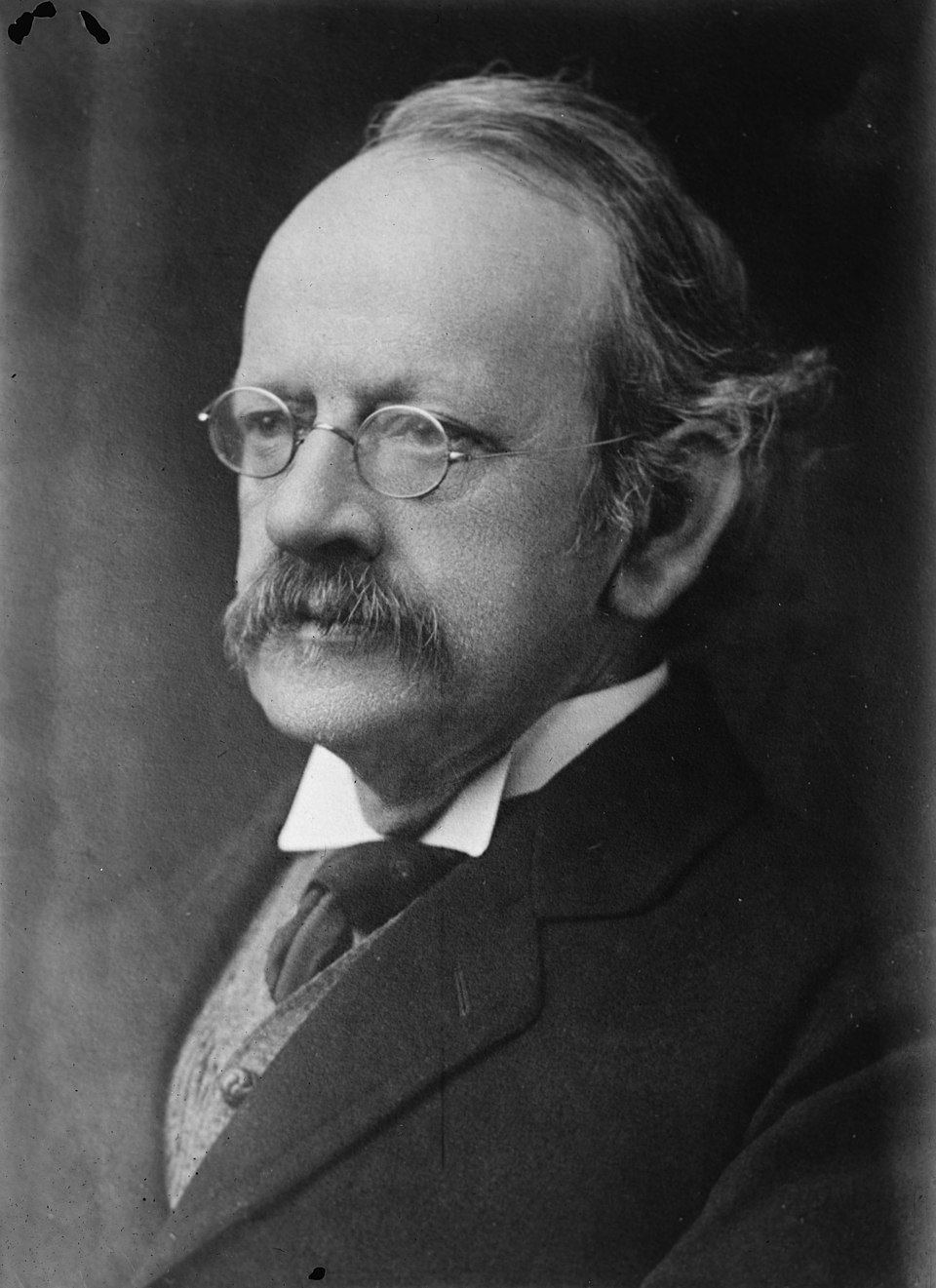
Joseph John Thomson
0 sources
Summary
Joseph John Thomson was born in Cheetham Hill[1]. He died in Cambridge[2]. He worked as a physicist[3], mathematician[4], and university teacher[5]. He ranks in the top 0.66% of human entities by monthly Wikipedia readership (11,436 views/month, #6,590 of 1,000,298).[6]
Key Facts
- Place of birth: Manchester[7]
- Place of burial: Westminster Abbey[8]
- Father: Joseph James Thomson[9]
- Mother: Emma Swindells[10]
- Spouse: Rose Thomson[11]
- Child: George Paget Thomson[12], Joan Paget Thomson[13]
- Country of citizenship: United Kingdom[14]
- Field of work: physics[15], experimental physics[16], electron[17], electrical conductance[18]
- Position held: President of the Royal Society[19], Q140480030[20]
- Employer: University of Cambridge[21]
- Educated at: University of Manchester[22], Trinity College[23], Victoria University of Manchester[24], University of Cambridge[25]
- Doctoral advisor: John Strutt, 3rd Baron Rayleigh[26]
- Award received: Nobel Prize in Physics[27], Fellow of the Royal Society[28], Copley Medal[29], Royal Medal[30], Elliott Cresson Medal[31], Hughes Medal[32], Faraday Medal[33], Hodgkins Medal[34], Albert Medal[35], Franklin Medal[36], Adams Prize[37], Royal Society Bakerian Medal[38], Guthrie Lecture[39], Knight Bachelor[40]
- Member of: Royal Society[41], International Scientific Esperanto Association[42]
- Religion or worldview: Anglicanism[43]
- Sex or gender: male[44]
- Doctoral student: Ernest Rutherford[45], Theodore Lyman[46], John Sealy Townsend[47], Władysław Natanson[48], Paul Langevin[49], Owen Willans Richardson[50], Niels Bohr[51], Francis William Aston[52], Edward Victor Appleton[53], William Lawrence Bragg[54], Geoffrey Ingram Taylor[55], Arthur Llewelyn Hughes[56], Harold A. Wilson[57], Robert William Ditchburn[58]
- Commons category: Joseph John Thomson[59]
Body
Works and Contributions
Things named for Joseph John Thomson include plum pudding model[60], Thomson scattering[61], Thomson problem[62], Gibbs–Thomson equation[63], Thomson[64], and Mount J. J. Thomson[65].
Why It Matters
Joseph John Thomson has Wikipedia articles in 30 language editions, a strong signal of global cultural recognition.[66] He is known by 118 alternative names across languages and contexts.[67]
He is credited with the discovery of electron[68], a type of quantum particle[69] and electromagnetic waveguide[70]. Entities named for him include plum pudding model[60], Thomson scattering[61], Thomson problem[62], Gibbs–Thomson equation[63], Thomson[64], and Mount J. J. Thomson[65].
His notable doctoral advisees include Niels Bohr[71], Ernest Rutherford[72], Paul Langevin[73], William Lawrence Bragg[74], George Paget Thomson[75], and Geoffrey Ingram Taylor[76].
FAQs
Where was Joseph John Thomson born?
Joseph John Thomson's place of birth was Cheetham Hill[1].
Where did Joseph John Thomson die?
Joseph John Thomson died in Cambridge[2].
Who were Joseph John Thomson's parents?
Joseph John Thomson's father was Joseph James Thomson[9]. Joseph John Thomson's mother was Emma Swindells[10].
Who was Joseph John Thomson married to?
Joseph John Thomson's spouses include Rose Thomson[11].
What did Joseph John Thomson do for work?
Joseph John Thomson worked as a physicist[3], mathematician[4], and university teacher[5].
Where did Joseph John Thomson go to school?
Joseph John Thomson was educated at University of Manchester[22], Trinity College[23], Victoria University of Manchester[24], and University of Cambridge[25].
What awards did Joseph John Thomson receive?
Honors received include Nobel Prize in Physics[27], Fellow of the Royal Society[28], Copley Medal[29], and Royal Medal[30].
What did Joseph John Thomson discover?
Joseph John Thomson is credited as discoverer of electron[68] and electromagnetic waveguide[70].