
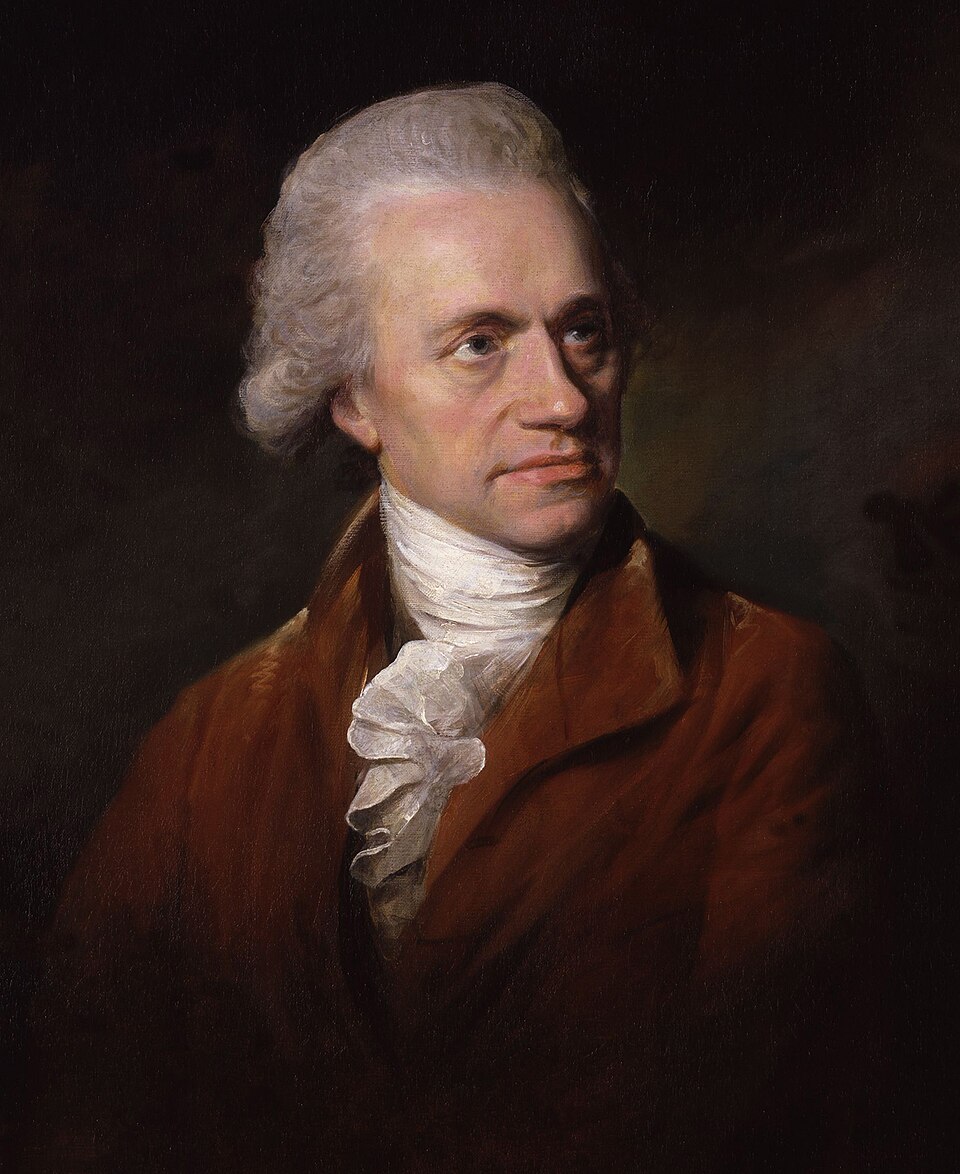
William Herschel
0 sources
Summary
William Herschel was born on November 15, 1738[1], in Hanover[2]. He died on August 15, 1822[3], in Slough[4]. He worked as an astronomer[5], composer[6], oboist[7], musician[8], and physicist[9]. He ranks in the top 0.66% of human entities by monthly Wikipedia readership (6,911 views/month, #6,565 of 1,000,298).[10]
Key Facts
- Date of death: August 21, 1822[11], August 23, 1822[12], August 25, 1822[13]
- Place of burial: Church of St Laurence, Upton-cum-Chalvey[14]
- Father: Isaac Herschel[15]
- Mother: Anna Ilse Moritzen[16]
- Spouse: Mary Baldwin[17]
- Child: John Frederick William Herschel[18]
- Country of citizenship: Kingdom of Hanover[19], United Kingdom of Great Britain and Ireland[20], Kingdom of Great Britain[21]
- Ethnic group: Germans[22]
- Field of work: astronomy[23], optics[24]
- Position held: President of the Royal Astronomical Society[25]
- Employer: Hanoverian Foot Guards[26], Militia and Volunteers of County Durham[27], Charles Avison[28], Leeds[29], Octagon Chapel, Bath[30], Bath Philharmonia[31], Observatory House[32]
- Educated at: University of Oxford[33]
- Doctoral advisor: Nevil Maskelyne[34]
- Award received: Copley Medal[35], Royal Guelphic Order[36], Fellow of the American Academy of Arts and Sciences[37], Fellow of the Royal Society[38]
- Member of: Royal Society[39], Academy of Science for Public Utility[40], German Academy of Sciences Leopoldina[41], Royal Swedish Academy of Sciences[42], Saint Petersburg Academy of Sciences[43], French Academy of Sciences[44], American Academy of Arts and Sciences[45], Royal Prussian Academy of Sciences[46], Accademia Nazionale delle Scienze detta dei XL[47], Academy of Sciences of Turin[48]
- Religion or worldview: Lutheranism[49]
- Sex or gender: male[50]
- Commons category: Wilhelm Herschel[51]
- Archives at: Harry Ransom Center[52]
- Academic degree: Doctor of Laws[53]
- Residence: England[54], Bath[55], Datchet[56], Old Windsor[57], Observatory House[58]
- Participated in conflict: Seven Years' War[59]
- Family name: Herschel[60]
- Given name: William[61]
Why It Matters
William Herschel has Wikipedia articles in 30 language editions, a strong signal of global cultural recognition.[62] He is known by 42 alternative names across languages and contexts.[63]
He has been cited as an influence by John Frederick William Herschel[64], an astronomer[65], 1792–1871[66], of United Kingdom of Great Britain and Ireland[67], awarded the Fellow of the Royal Society[68], specialised in mathematics[69].
He is credited with the discovery of Uranus[70], an ice giant[71]; Enceladus[72], a moon of Saturn[73]; infrared radiation[74], a scientific theory[75]; IC 1101[76], a type-cD galaxy[77]; Mimas[78], a moon of Saturn[79]; and Veil Nebula[80], a supernova remnant[81], founded in -6000[82].
FAQs
Where was William Herschel born?
William Herschel's place of birth was Hanover[2].
Where did William Herschel die?
William Herschel died in Slough[4].
Who were William Herschel's parents?
William Herschel's father was Isaac Herschel[15]. William Herschel's mother was Anna Ilse Moritzen[16].
Who was William Herschel married to?
William Herschel's spouses include Mary Baldwin[17].
What did William Herschel do for work?
William Herschel worked as an astronomer[5], composer[6], oboist[7], musician[8], and physicist[9].
Where did William Herschel go to school?
William Herschel was educated at University of Oxford[33].
What awards did William Herschel receive?
Honors received include Copley Medal[35], Royal Guelphic Order[36], Fellow of the American Academy of Arts and Sciences[37], and Fellow of the Royal Society[38].
Who did William Herschel influence?
William Herschel has been cited as an influence by John Frederick William Herschel[64].
What did William Herschel discover?
William Herschel is credited as discoverer of Uranus[70], Enceladus[72], infrared radiation[74], and IC 1101[76].