
Siege of Smolensk
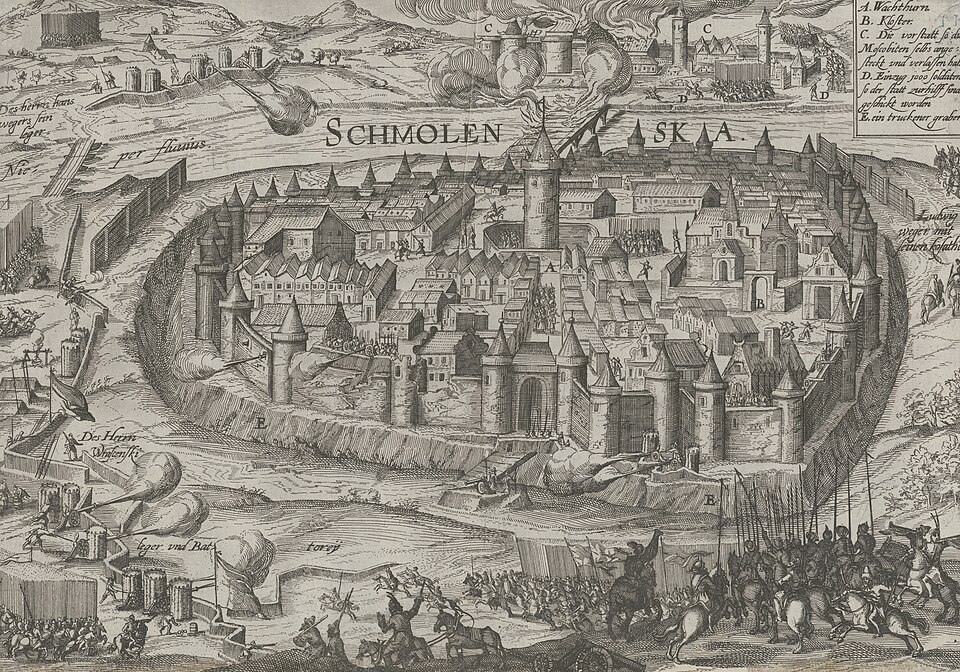
1609-1611 siege
Press Enter · cited answer in seconds
0 sources
Siege of Smolensk
Summary
Siege of Smolensk is a siege[1]. It has Wikipedia articles in 8 language editions, a strong signal of global cultural recognition.[2]
Key Facts
- Siege of Smolensk's instance of is recorded as siege[3].
- The location of Siege of Smolensk was Smolensk[4].
- Siege of Smolensk is part of Polish–Muscovite War[5].
- Siege of Smolensk's Commons category is recorded as Siege of Smolensk (1609–1611)[6].
- Siege of Smolensk began on September 29, 1609[7].
- Siege of Smolensk ended on June 13, 1611[8].
- Siege of Smolensk's coordinate location is recorded as {'lat': 54.7833, 'lon': 32.05}[9].
- Siege of Smolensk's coordinate location is recorded as {'lat': 54.782777777778, 'lon': 32.045277777778}[10].
- A participant in Siege of Smolensk was Tsardom of Russia[11].
- Among those involved in Siege of Smolensk was Polish–Lithuanian Commonwealth[12].
- Among those involved in Siege of Smolensk was Sweden[13].
- A participant in Siege of Smolensk was Zaporozhian Cossacks[14].
- Siege of Smolensk's different from is recorded as Siege of Smolensk[15].
- Siege of Smolensk's different from is recorded as Siege of Smolensk[16].
- Siege of Smolensk's different from is recorded as Siege of Smolensk[17].
- Siege of Smolensk's different from is recorded as Siege of Smolensk[18].
- Siege of Smolensk's different from is recorded as Siege of Smolensk[19].
- Siege of Smolensk's different from is recorded as Siege of Smolensk[20].
- Siege of Smolensk's different from is recorded as Siege of Smolensk[21].
Body
When and Where
Siege of Smolensk began on September 29, 1609[7]. It ended on June 13, 1611[8]. It took place at Smolensk[4].
Context
Siege of Smolensk is part of Polish–Muscovite War[5]. Its instance of is recorded as siege[3].
Participants
Recorded participant include Tsardom of Russia[11], Polish–Lithuanian Commonwealth[12], Sweden[13], and Zaporozhian Cossacks[14].
Why It Matters
Siege of Smolensk has Wikipedia articles in 8 language editions, a strong signal of global cultural recognition.[2]