
Saga of Erik the Red
Icelandic saga about the Norse exploration of North America
Press Enter · cited answer in seconds
0 sources
Saga of Erik the Red
Summary
Saga of Erik the Red is a literary work[1]. It ranks in the top 3% of literary_work entities by monthly Wikipedia readership (242 views/month).[2]
Key Facts
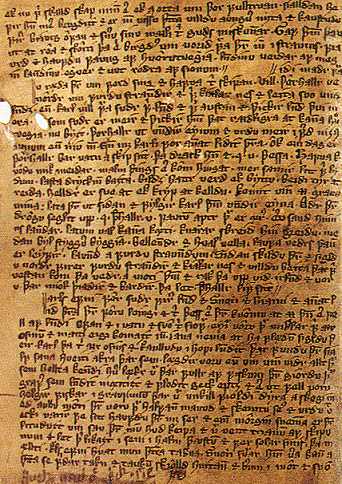
- Saga of Erik the Red's image is recorded as Eiríks Saga manuscript.jpg[3].
- Saga of Erik the Red's instance of is recorded as literary work[4].
- Saga of Erik the Red's genre is recorded as saga[5].
- Saga of Erik the Red's part of is recorded as Hauksbók[6].
- Saga of Erik the Red's Commons category is recorded as Saga of Eric the Red[7].
- Saga of Erik the Red's language of work or name is recorded as Old Norse[8].
- +1300-00-00T00:00:00Z marks the founding of Saga of Erik the Red[9].
- Saga of Erik the Red's Freebase ID is recorded as /m/01sfjt[10].
- Saga of Erik the Red's characters is recorded as Þorbjörg Lítilvölva[11].
- Saga of Erik the Red's characters is recorded as Gudrid Thorbjarnardóttir[12].
- Saga of Erik the Red's has edition or translation is recorded as The Finding of Wineland the Good[13].
- Saga of Erik the Red's has edition or translation is recorded as Q108854662[14].
- Saga of Erik the Red's main subject is recorded as Norse colonization of North America[15].
- Saga of Erik the Red's National Library of Spain SpMaBN ID is recorded as XX3589558[16].
- Saga of Erik the Red's Encyclopædia Britannica Online ID is recorded as topic/Saga-of-Erik-the-Red[17].
- Saga of Erik the Red's title is recorded as {'lang': 'is', 'text': 'Eiríks saga rauða'}[18].
- Saga of Erik the Red's Project Gutenberg ebook ID is recorded as 17946[19].
- Saga of Erik the Red's Great Norwegian Encyclopedia ID is recorded as Eirik_Raudes_saga[20].
- Saga of Erik the Red's ARLIMA ID is recorded as 10078[21].
- Saga of Erik the Red's Bitraga work ID is recorded as 5505[22].
- Saga of Erik the Red's Lex ID is recorded as Erik_den_Rødes_saga[23].
Why It Matters
Saga of Erik the Red ranks in the top 3% of literary_work entities by monthly Wikipedia readership (242 views/month).[2] It has Wikipedia articles in 17 language editions, a strong signal of global cultural recognition.[24] It is known by 3 alternative names across languages and contexts.[25]