
Richard Dedekind
0 sources
Summary
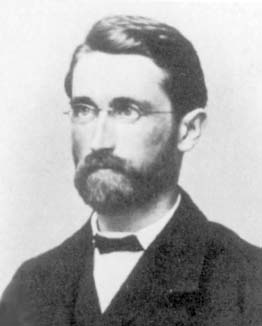
Richard Dedekind was born on October 6, 1831[1], in Brunswick[2]. He died on February 12, 1916[3], in Brunswick[4]. He worked as a mathematician[5], philosopher[6], and university teacher[7]. He ranks in the top 0.71% of human entities by monthly Wikipedia readership (1,783 views/month, #7,104 of 1,000,298).[8]
Key Facts
- Place of burial: Braunschweig Main Cemetery[9]
- Father: Julius Dedekind[10]
- Mother: Caroline Marie Henriette Emperius[11]
- Country of citizenship: Duchy of Brunswick[12]
- Native language: German[13]
- Field of work: algebra[14], number theory[15], abstract algebra[16], real number[17], mathematics[18], arithmetic[19]
- Employer: TU Braunschweig[20], ETH Zurich[21], University of Göttingen[22]
- Educated at: University of Göttingen[23], Frederick William University Berlin[24], Collegium Carolinum[25], Martino-Katharineum[26]
- Doctoral advisor: Carl Friedrich Gauss[27]
- Notable work: Stetigkeit und Irrationale Zahlen[28], Was sind und was sollen die Zahlen?[29], Uber die Theorie der ganzen algebraischen Zahlen[30], Dedekind cut[31], Dedekind's isomorphism theorem[32], Dedekind domain[33], Dedekind–Kummer theorem[34], construction of the real numbers[35], Dedekind eta function[36], Dedekind zeta function[37], Dedekind psi function[38], Dedekind–Hasse norm[39], Cantor–Dedekind axiom[40], Dedekind group[41]
- Member of: German Academy of Sciences Leopoldina[42], Göttingen Academy of Sciences and Humanities in Lower Saxony[43], Accademia Nazionale dei Lincei[44], Royal Prussian Academy of Sciences[45], French Academy of Sciences[46], Burschenschaft Brunsviga[47]
- Sex or gender: male[48]
- Commons category: Richard Dedekind[49]
- Archives at: Göttingen State and University Library[50]
- Academic degree: Doctor of Philosophy[51], habilitation[52]
- Family name: Dedekind[53]
- Given name: Richard[54], Wilhelm[55], Julius[56]
Body
Works and Contributions
Things named for Richard Dedekind include Peano axioms[57], an axiomatic system[58]; Dedekind cut[59], a mathematical concept[60]; Dedekind eta function[61], a modular form[62]; Dedekind domain[63], a mathematical concept[64]; Dedekind number[65]; Dedekind-infinite set[66]; Dedekind sum[67]; and Dedekind group[68].
Why It Matters
Richard Dedekind has Wikipedia articles in 27 language editions, a strong signal of global cultural recognition.[69] He is known by 56 alternative names across languages and contexts.[70]
He is credited with the discovery of primary decomposition[71], a theorem[72]. Works attributed to him include Vorlesungen über Zahlentheorie[73], a written work[74]. Entities named for him include Peano axioms[57], an axiomatic system[58]; Dedekind cut[59], a mathematical concept[60]; Dedekind eta function[61], a modular form[62]; Dedekind domain[63], a mathematical concept[64]; Dedekind number[65]; and Dedekind-infinite set[66].
FAQs
Where was Richard Dedekind born?
Richard Dedekind's place of birth was Brunswick[2].
Where did Richard Dedekind die?
Richard Dedekind passed away in Brunswick[4].
Who were Richard Dedekind's parents?
Richard Dedekind's father was Julius Dedekind[10]. Richard Dedekind's mother was Caroline Marie Henriette Emperius[11].
What did Richard Dedekind do for work?
Richard Dedekind worked as a mathematician[5], philosopher[6], and university teacher[7].
Where did Richard Dedekind go to school?
Richard Dedekind was educated at University of Göttingen[23], Frederick William University Berlin[24], Collegium Carolinum[25], and Martino-Katharineum[26].
What did Richard Dedekind discover?
Richard Dedekind is credited as discoverer of primary decomposition[71].