
Paul the Apostle
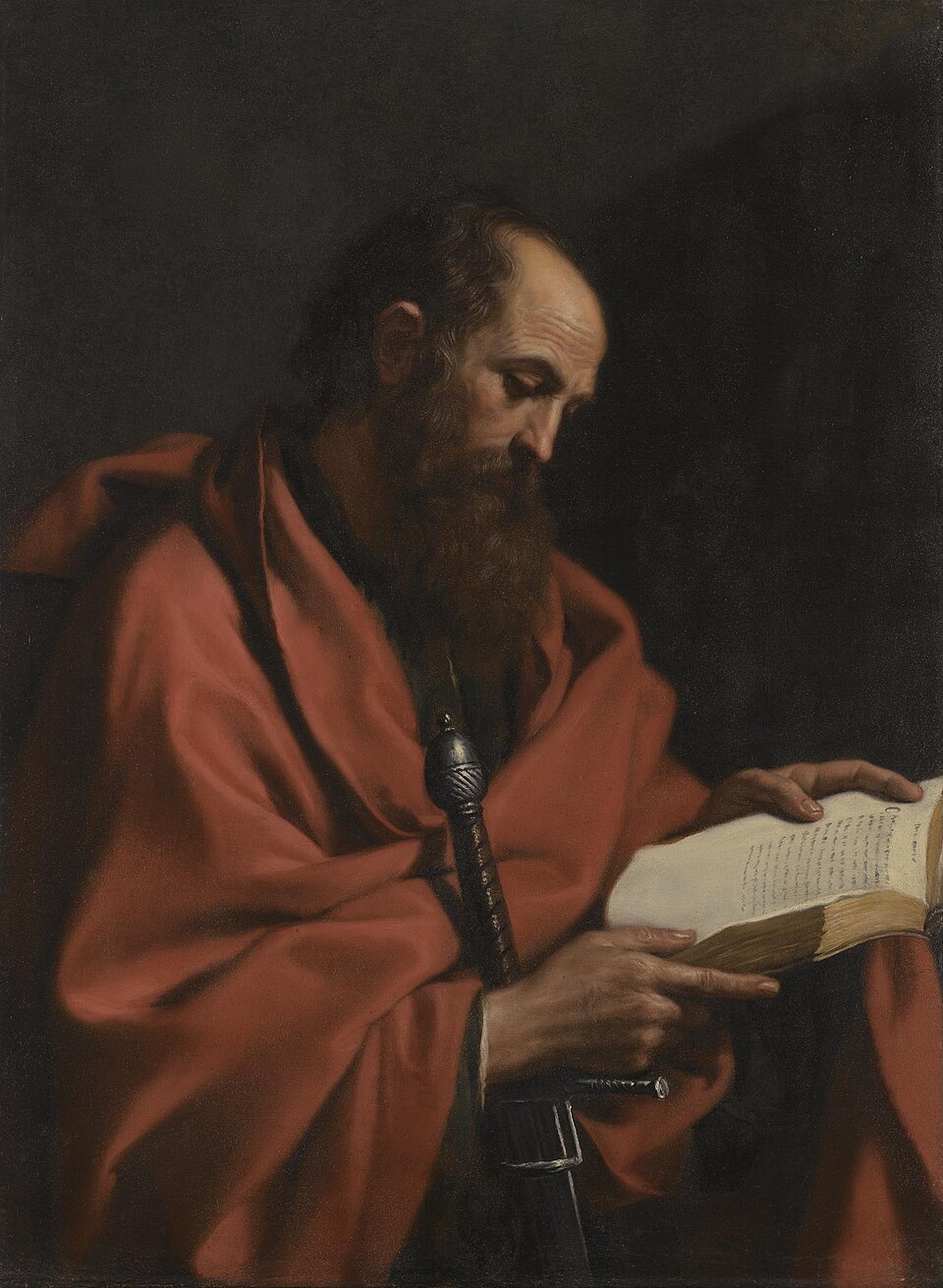
0 sources
Summary
Paul the Apostle was born on 5[1] in Tarsus[2]. He died on 66[3] in Rome[4]. He worked as a writer[5], theologian[6], missionary[7], artisan[8], and apostle[9]. He ranks in the top 0.18% of human entities by monthly Wikipedia readership (53,700 views/month, #1,790 of 1,000,298).[10]
Key Facts
- Date of death: 64[11], 65[12]
- Place of burial: Basilica of Saint Paul outside the Walls[13]
- Country of citizenship: Ancient Rome[14]
- Position held: apostle[15]
- Religion or worldview: Pharisees[16], Christianity[17]
- Sex or gender: male[18]
- Commons category: Saint Paul[19]
- Canonization status: canonized saint[20], apostle[21]
- Cause of death: decapitation[22]
- Residence: Tarsus[23], Jerusalem[24], Damascus[25], Antioch[26], Salamis[27], Paphos[28], Antioch of Pisidia[29], Konya[30], Lystra[31], Derbe[32], Alexandria Troas[33], Philippi[34], Thessaloniki[35], Veria[36]
Product Details
The following facts are restated verbatim from public-domain and CC0 open-data sources — every line is independently verifiable against the named source's catalog.
MusicBrainz — CC0 open music encyclopedia
-
Type: Person[37]
-
Began / founded: 0005[38]
-
Ended / dissolved: 0064[39]
-
Community tags: has german audiobooks[40]
-
MusicBrainz ID: 587cd652-6b65-4305-ac2b-1d6b0dc9ad70[41]
Body
Works and Contributions
Things named for Paul the Apostle include São Paulo[42], Saint Paul[43], Pauline epistles[44], Basilica of Saint Paul outside the Walls[45], Feast of Saints Peter and Paul[46], Old St Paul's Cathedral[47], Petropavl[48], and Hospital de Sant Pau[49].
Why It Matters
Paul the Apostle has Wikipedia articles in 29 language editions, a strong signal of global cultural recognition.[50] He is known by 129 alternative names across languages and contexts.[51]
He has been cited as an influence by Jim Caviezel[52], an actor[53], b. 1968[54], of United States[55]; Hannah Arendt[56], a philosopher[57], 1906–1975[58], of Prussia[59], awarded the Guggenheim Fellowship[60], specialised in political philosophy[61]; Thomas Aquinas[62], a theologian[63], 1225–1274[64], specialised in philosophy[65]; and Pierre Teilhard de Chardin[66], a paleontologist[67], 1881–1955[68], of France[69], awarded the Officer of the Legion of Honour[70], specialised in philosophy[71].
He is credited with the discovery of Pauline Christianity[72]. Works attributed to him include Pauline epistles[73], a group of literary works[74]; First Epistle to the Corinthians[75], a literary work[76], founded in 0054[77]; Epistle to the Romans[78], a literary work[79], founded in 0057[80]; Epistle to the Galatians[81], a literary work[82]; Epistle to the Philippians[83]; and First Epistle to the Thessalonians[84]. Entities named for him include São Paulo[42], Saint Paul[43], Pauline epistles[44], Basilica of Saint Paul outside the Walls[45], Feast of Saints Peter and Paul[46], and Old St Paul's Cathedral[47].
FAQs
Where was Paul the Apostle born?
Paul the Apostle was born in Tarsus[2].
Where did Paul the Apostle die?
Paul the Apostle passed away in Rome[4].
What did Paul the Apostle do for work?
Paul the Apostle worked as a writer[5], theologian[6], missionary[7], artisan[8], and apostle[9].
Who did Paul the Apostle influence?
Paul the Apostle has been cited as an influence by Jim Caviezel[52], Hannah Arendt[56], Thomas Aquinas[62], and Pierre Teilhard de Chardin[66].
What did Paul the Apostle discover?
Paul the Apostle is credited as discoverer of Pauline Christianity[72].