
Nasir al-Din al-Tusi
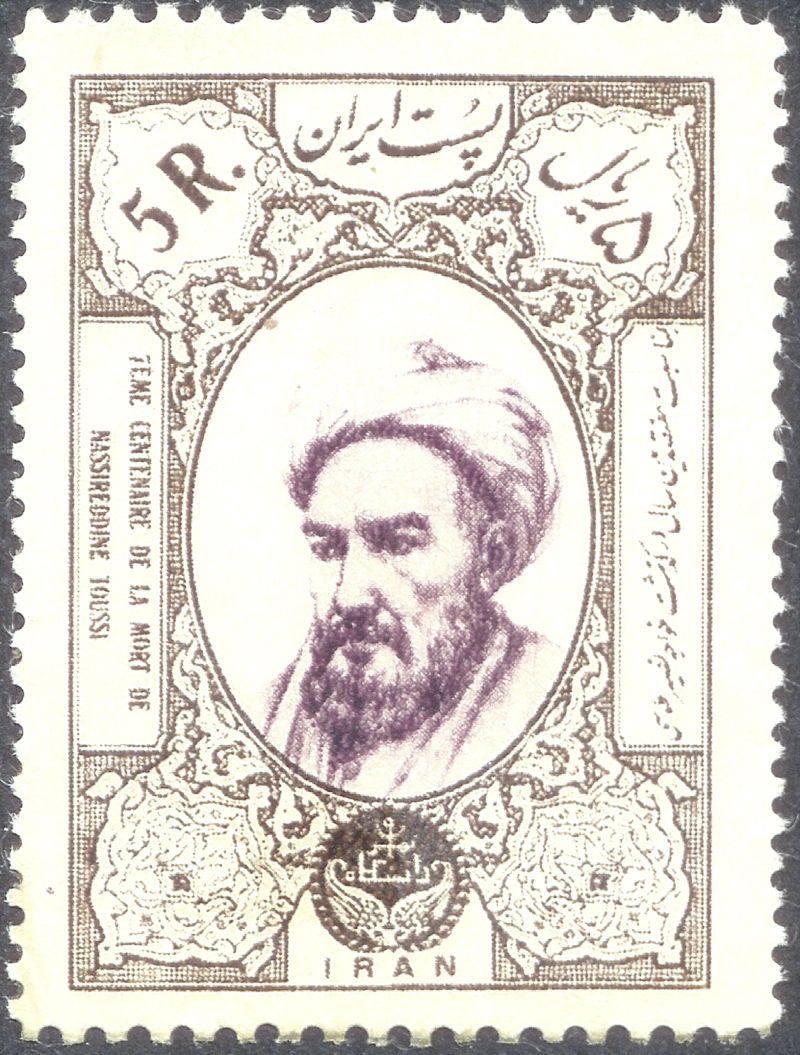
0 sources
Summary
Nasir al-Din al-Tusi was born on 1201[1] in Tus[2]. He died on 1273[3] in Kadhimiya[4]. He worked as a philosopher[5], scientist[6], mathematician[7], astronomer[8], and polymath[9]. He ranks in the top 0.71% of human entities by monthly Wikipedia readership (4,848 views/month, #7,136 of 1,000,298).[10]
Key Facts
- Date of birth: February 17, 1201[11], February 18, 1201[12]
- Date of death: 1274[13], June 25, 1274[14]
- Place of burial: Al-Kadhimiya Mosque[15]
- Country of citizenship: Khwarazmian Empire[16], Abbasid Caliphate[17], Nizari Ismaili state[18], Ilkhanate[19]
- Native language: Persian[20]
- Occupation: architect[21], physician[22], intellectual[23], Islamic jurist[24], marji'[25], poet[26], translator[27], writer[28], politician[29], sage[30], theologian[31]
- Field of work: astronomy[32], Ilm al-Kalam[33], Islamic philosophy[34], mathematics[35], chemistry[36], biology[37], physics[38], medicine[39], ethics[40], philosophy[41], history[42], law[43], theology[44], geography[45]
- Position held: vizier[46]
- Employer: Alamut Library[47], Maragheh Observatory[48], Hawza of Hilla[49]
- Educated at: Hawza of Hilla[50]
- Religion or worldview: Shia Islam[51]
- Sex or gender: male[52]
- Movement: Avicennism[53]
- Doctoral student: Qutb al-Din al-Shirazi[54], Najm al-Dīn al-Qazwīnī al-Kātibī[55], Al-Hilli[56]
- Commons category: Nasir al-Din Tusi[57]
- Honorific prefix: Khwaja[58]
- Residence: Tus[59], Mosul[60], Quhistan[61], Maymun-Diz[62], Alamut Castle[63], Baghdad[64]
Body
Works and Contributions
Things named for Nasir al-Din al-Tusi include Tusi couple[65], K. N. Toosi University of Technology[66], Shamakhy Astrophysical Observatory[67], Nasireddin[68], and 10269 Tusi[69].
Why It Matters
Nasir al-Din al-Tusi has Wikipedia articles in 28 language editions, a strong signal of global cultural recognition.[70] He is known by 54 alternative names across languages and contexts.[71]
He has been cited as an influence by Nicolaus Copernicus[72], an astronomer[73], 1473–1543[74], of Kingdom of Poland[75], awarded the International Space Hall of Fame[76], specialised in astronomy[77] and Qutb al-Din al-Shirazi[78], a mathematician[79], 1236–1311[80], of Ilkhanate[81], specialised in astronomy[82].
He is credited with the discovery of Tusi couple[83], a mathematical instrument[84]. Works attributed to him include Akhlaq-i Nasiri[85], a literary work[86]; Zij-i Ilkhani[87], a literary work[88]; and Tajrīd al-Iʿtiqād[89], a literary work[90]. Entities named for him include Tusi couple[65], K. N. Toosi University of Technology[66], Shamakhy Astrophysical Observatory[67], Nasireddin[68], and 10269 Tusi[69].
His notable doctoral advisees include Ibn al-Mutahhar al-Hilli[91] and Najm al-Dīn al-Qazwīnī al-Kātibī[92].
FAQs
Where was Nasir al-Din al-Tusi born?
Nasir al-Din al-Tusi's place of birth was Tus[2].
Where did Nasir al-Din al-Tusi die?
Nasir al-Din al-Tusi passed away in Kadhimiya[4].
What did Nasir al-Din al-Tusi do for work?
Nasir al-Din al-Tusi worked as a philosopher[5], scientist[6], mathematician[7], astronomer[8], and polymath[9].
Where did Nasir al-Din al-Tusi go to school?
Nasir al-Din al-Tusi was educated at Hawza of Hilla[50].
Who did Nasir al-Din al-Tusi influence?
Nasir al-Din al-Tusi has been cited as an influence by Nicolaus Copernicus[72] and Qutb al-Din al-Shirazi[78].
What did Nasir al-Din al-Tusi discover?
Nasir al-Din al-Tusi is credited as discoverer of Tusi couple[83].