
Hulegu Khan
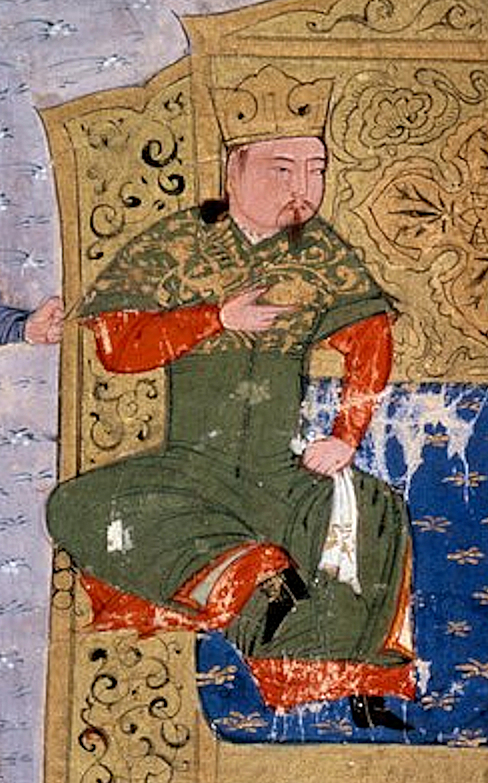
0 sources
Summary
Hulegu Khan was born on 1217[1]. He died on February 8, 1265[2], in Maragheh[3]. He worked as a khan[4]. He ranks in the top 0.65% of human entities by monthly Wikipedia readership (5,755 views/month, #6,475 of 1,000,298).[5]
Key Facts
- Place of burial: Shahi Island[6], Urmia Lake[7]
- Father: Tolui[8]
- Mother: Sorghaghtani Beki[9]
- Spouse: Doquz Khatun[10], Guyuk Khatun[11], Öljei Khatun[12], Kutuy Hatun[13]
- Child: Abaqa Khan[14], Tekuder[15], Möngke Temür[16], Qonqurtai[17], Jumghur[18], Yoshmut[19], Bulgan Aga[20], Jamai Khatun[21], Taraghay[22]
- Country of citizenship: Yuan dynasty[23], Mongol Empire[24]
- Position held: khan[25]
- Religion or worldview: Buddhism[26]
- Sex or gender: male[27]
- Family: Ilkhanids[28], Borjigin[29]
- Commons category: Hulagu Khan[30]
- Topic's main category: Category:Hulegu Khan[31]
- Described by source: Great Soviet Encyclopedia (1969–1978)[32], Brockhaus and Efron Encyclopedic Dictionary[33], Small Brockhaus and Efron Encyclopedic Dictionary[34], New History of Yuan[35]
- Languages spoken, written or signed: Mongolian[36]
- Name in native language: ᠬᠦᠯᠡᠭᠦ Хүлэгү[37], هولاكو[38]
- Sibling: Kublai Khan[39], Möngke Khan[40], Yesubuhua[41], Dumugan[42], Ariq Böke[43], Qutuqtu[44], Bochuo[45], Moge[46], Suigedu[47], Xuebietai[48]
- On focus list of Wikimedia project: Wikipedia:Vital articles/Level/4[49]
Body
Works and Contributions
Things named for Hulegu Khan include Ilkhanate[50], a khanate[51], in Mongol Empire[52], founded in 1256[53] and Zij-i Ilkhani[54], a literary work[55], written by Nasir al-Din al-Tusi[56].
Why It Matters
Hulegu Khan has Wikipedia articles in 27 language editions, a strong signal of global cultural recognition.[57] He is known by 92 alternative names across languages and contexts.[58]
Entities named for him include Ilkhanate[50], a khanate[51], in Mongol Empire[52], founded in 1256[53] and Zij-i Ilkhani[54], a literary work[55], written by Nasir al-Din al-Tusi[56].
FAQs
Where did Hulegu Khan die?
Hulegu Khan passed away in Maragheh[3].
Who were Hulegu Khan's parents?
Hulegu Khan's father was Tolui[8]. Hulegu Khan's mother was Sorghaghtani Beki[9].
Who was Hulegu Khan married to?
Hulegu Khan's spouses include Doquz Khatun[10], Guyuk Khatun[11], Öljei Khatun[12], and Kutuy Hatun[13].
What did Hulegu Khan do for work?
Hulegu Khan worked as a khan[4].