
Kublai Khan
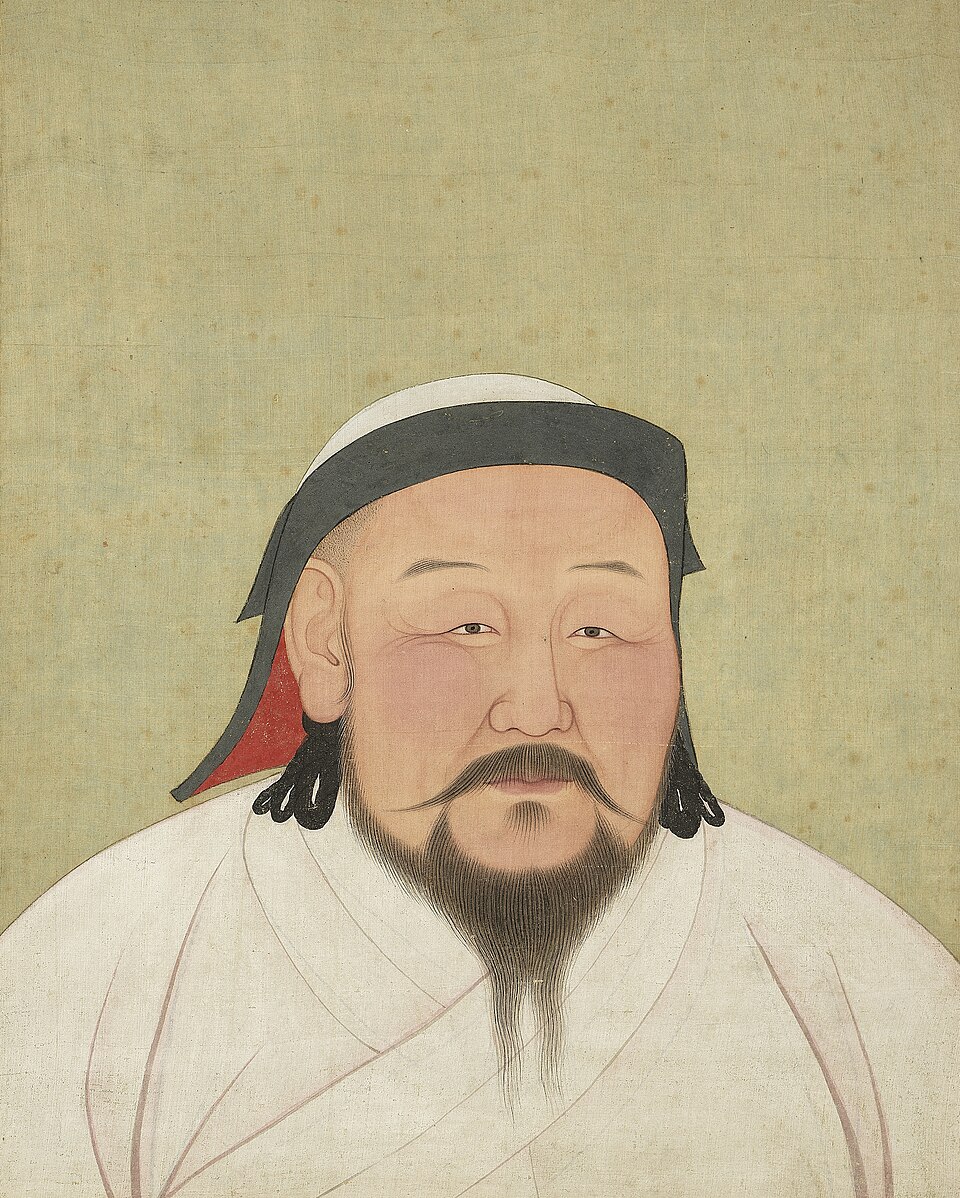
0 sources
Summary
Kublai Khan was born on 1215[1] in Mongol Empire[2]. He died on 1294[3] in Khanbaliq[4]. He worked as a military leader[5]. He ranks in the top 0.33% of human entities by monthly Wikipedia readership (33,380 views/month, #3,292 of 1,000,298).[6]
Key Facts
- Date of birth: September 23, 1215[7], 1216[8]
- Date of death: February 18, 1294[9]
- Place of burial: Burkhan Khaldun[10]
- Father: Tolui[11]
- Mother: Sorghaghtani Beki[12]
- Spouse: Tëgülun[13], Chabi[14], Nambui[15], Talahai khatun[16], Nuhan[17], Bayaujin Khatun[18], Khökhlun Khatan[19], Qoruchin Khatun[20], Sugedasi[21]
- Child: Dorji[22], Zhenjin[23], Mangala[24], Nomugan[25], Khökhechi[26], Ayachi[27], Kuokuochu[28], Togoon[29], Hutulu Temür[30], Tamachi[31], Princess Jeguk[32], Yuelie[33], Wuluzhen[34], Yuelun[35]
- Country of citizenship: Yuan dynasty[36]
- Ethnic group: Mongols[37]
- Position held: khan[38], khagan[39], Emperor of China[40]
- Religion or worldview: Tibetan Buddhism[41]
- Sex or gender: male[42]
- Family: Borjigin[43]
- Ancestral home: Daxing County[44]
- Commons category: Kublai Khan[45]
- Military, police or special rank: army general[46]
- Topic's main category: Category:Kublai Khan[47]
Body
Works and Contributions
Things named for Kublai Khan include Kubla Khan[48], a literary work[49], written by Samuel Taylor Coleridge[50] and Institute of Astronomy and Geophysics[51], a research institute[52], in Mongolia[53], founded in 1957[54].
Why It Matters
Kublai Khan has Wikipedia articles in 30 language editions, a strong signal of global cultural recognition.[55] He is known by 77 alternative names across languages and contexts.[56]
Entities named for him include Kubla Khan[48], a literary work[49], written by Samuel Taylor Coleridge[50] and Institute of Astronomy and Geophysics[51], a research institute[52], in Mongolia[53], founded in 1957[54].
FAQs
Where was Kublai Khan born?
Kublai Khan's place of birth was Mongol Empire[2].
Where did Kublai Khan die?
Kublai Khan died in Khanbaliq[4].
Who were Kublai Khan's parents?
Kublai Khan's father was Tolui[11]. Kublai Khan's mother was Sorghaghtani Beki[12].
Who was Kublai Khan married to?
Kublai Khan's spouses include Tëgülun[13], Chabi[14], Nambui[15], and Talahai khatun[16].
What did Kublai Khan do for work?
Kublai Khan worked as a military leader[5].