
Maurice Barrès
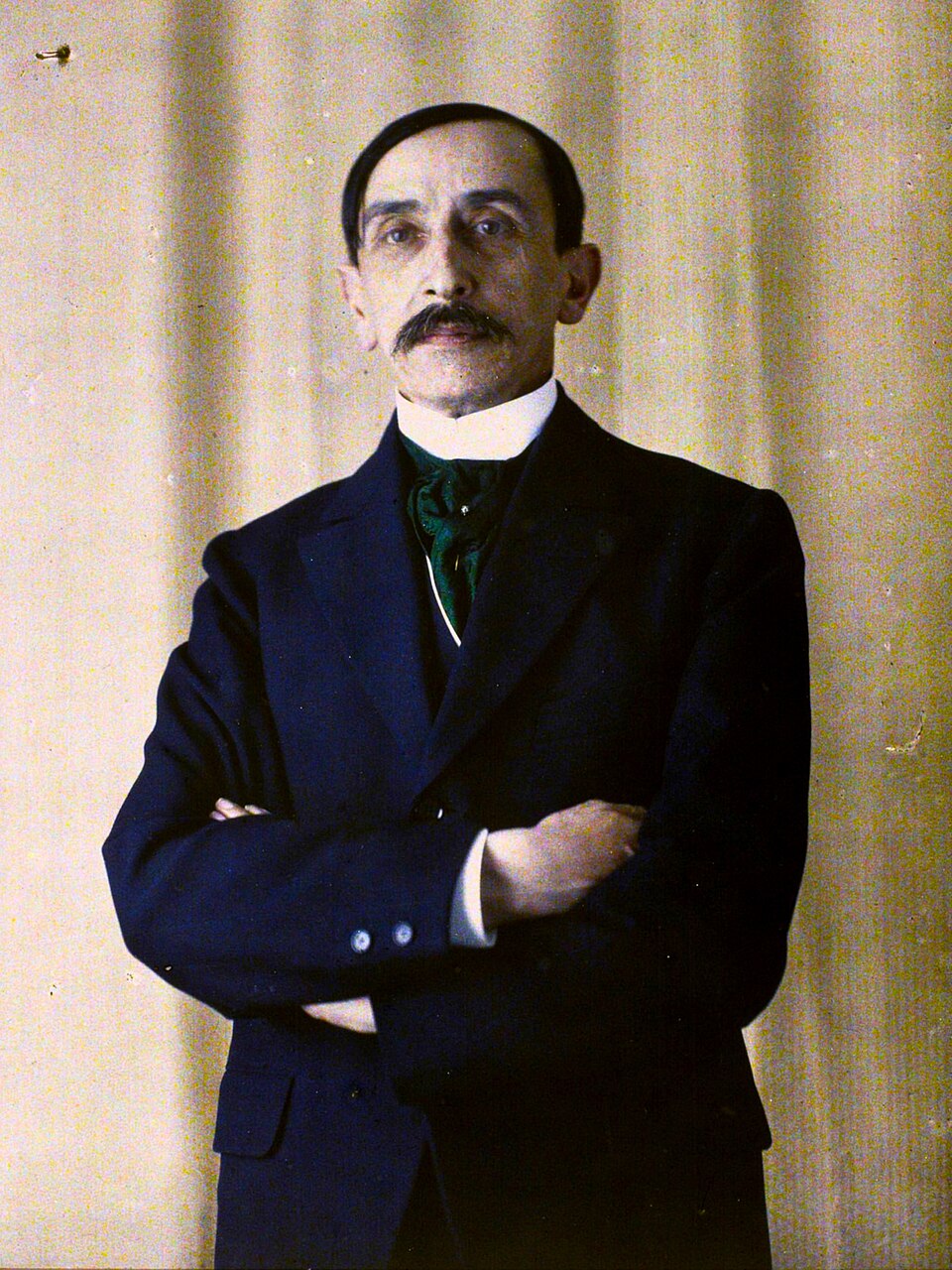
0 sources
Summary
Maurice Barrès was born on August 19, 1862[1], in Charmes[2]. He died on December 4, 1923[3], in Neuilly-sur-Seine[4]. He worked as a writer[5], politician[6], novelist[7], and journalist[8]. He ranks in the top 0.72% of human entities by monthly Wikipedia readership (3,145 views/month, #7,189 of 1,000,298).[9]
Key Facts
- Place of burial: cemetery of Charmes[10]
- Father: Auguste Barrès[11]
- Child: Philippe Barrès[12]
- Country of citizenship: France[13]
- Native language: French[14]
- Position held: member of the French National Assembly[15], member of the Académie française[16]
- Educated at: lycée Henri-Poincaré[17], Château de la Malgrange[18]
- Award received: Alfred Née Award[19], Grand Prize for the Best Novels of the Half-Century[20]
- Member of: Académie Française[21], Ligue de la Patrie Française[22], Académie de Stanislas (Nancy, France)[23]
- Religion or worldview: Catholic Church[24]
- Sex or gender: male[25]
- Member of political party: Boulangism[26], Republican Federation[27]
- Movement: Symbolism[28]
- Commons category: Maurice Barrès[29]
- Archives at: Departmental archives of Vosges[30], Departmental archives of Yvelines[31]
- Cause of death: myocardial infarction[32]
- Family name: Barrès[33]
- Given name: Maurice[34]
- Topic's main category: Category:Maurice Barrès[35]
- Work location: Paris[36]
- Student of: Jules Lagneau[37]
- Manner of death: natural causes[38]
- Described by source: Great Soviet Encyclopedia (1969–1978)[39], Brockhaus and Efron Encyclopedic Dictionary[40], The Atlantic[41], Small Brockhaus and Efron Encyclopedic Dictionary[42], Library of the World's Best Literature[43], Encyclopædia Britannica 11th edition[44]
- Languages spoken, written or signed: French[45]
- Commons Creator page: Maurice Barrès[46]
Why It Matters
Maurice Barrès has Wikipedia articles in 25 language editions, a strong signal of global cultural recognition.[47] He is known by 34 alternative names across languages and contexts.[48]
He has been cited as an influence by André Malraux[49], a politician[50], 1901–1976[51], of France[52], awarded the Officer of the Legion of Honour[53], specialised in literary activity[54]; Charles Maurras[55], a journalist[56], 1868–1952[57], of France[58], awarded the Order of the Francisque[59]; François Mauriac[60], a writer[61], 1885–1970[62], of France[63], awarded the Nobel Prize in Literature[64], specialised in creative and professional writing[65]; Ernest Psichari[66], a novelist[67], 1883–1914[68], of France[69], awarded the Knight of the Legion of Honour[70], specialised in military affairs[71]; and Andrzej Trzebiński[72], a poet[73], 1922–1943[74], of Second Polish Republic[75].
Works attributed to him include Un jardin sur l'Oronte[76], a literary work[77].
FAQs
Where was Maurice Barrès born?
Maurice Barrès was born in Charmes[2].
Where did Maurice Barrès die?
Maurice Barrès passed away in Neuilly-sur-Seine[4].
Who were Maurice Barrès's parents?
Maurice Barrès's father was Auguste Barrès[11].
What did Maurice Barrès do for work?
Maurice Barrès worked as a writer[5], politician[6], novelist[7], and journalist[8].
Where did Maurice Barrès go to school?
Maurice Barrès was educated at lycée Henri-Poincaré[17] and Château de la Malgrange[18].
What awards did Maurice Barrès receive?
Honors received include Alfred Née Award[19] and Grand Prize for the Best Novels of the Half-Century[20].
Who did Maurice Barrès influence?
Maurice Barrès has been cited as an influence by André Malraux[49], Charles Maurras[55], François Mauriac[60], and Ernest Psichari[66].