
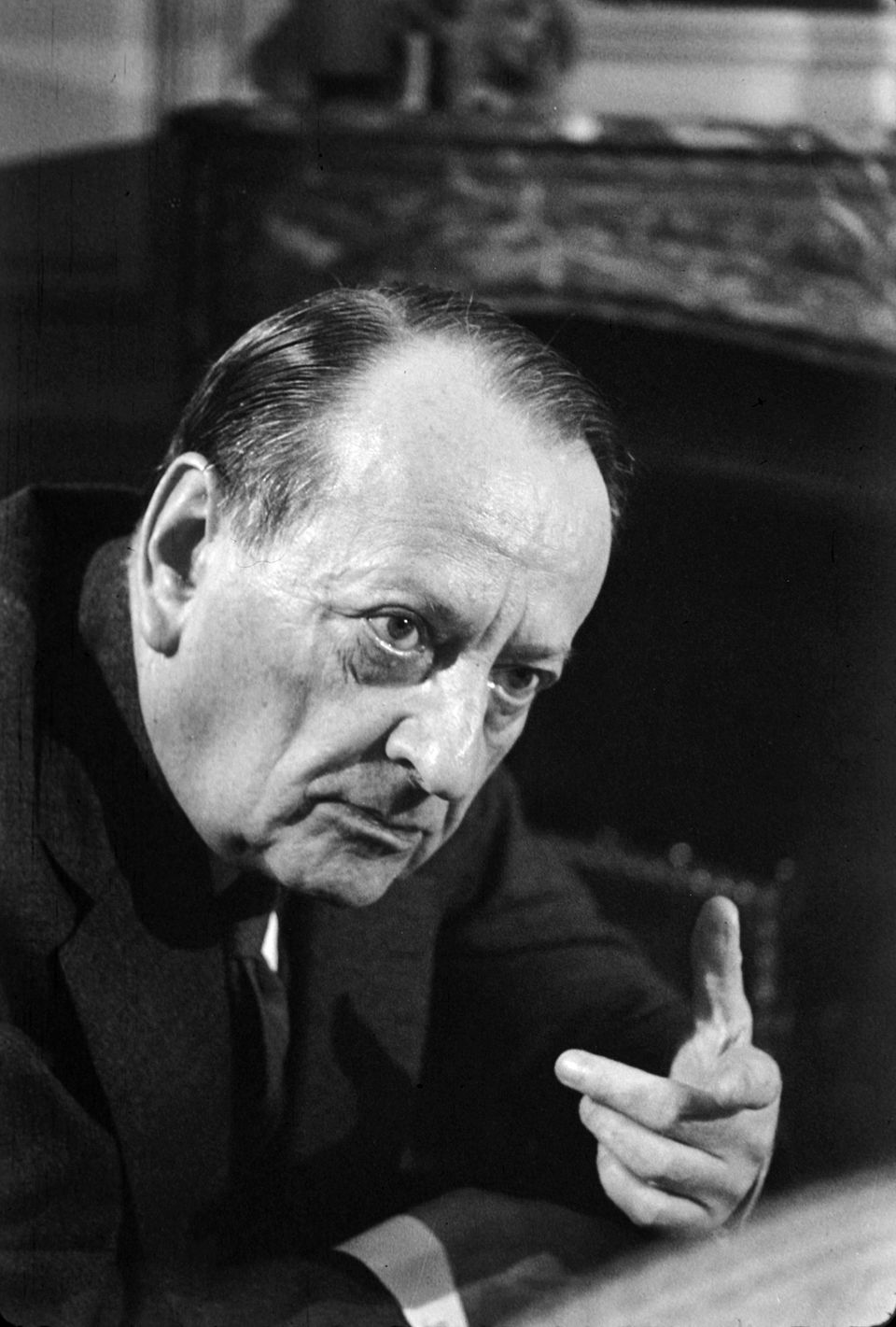
André Malraux
0 sources
André Malraux
Summary
André Malraux is a human[1]. Born in Paris[2], he… he passed away in Créteil[3]. He worked as a politician[4], film director[5], screenwriter[6], film editor[7], and art historian[8]. He ranks in the top 0.69% of human entities by monthly Wikipedia readership (820 views/month, #6,898 of 1,000,298).[9]
Key Facts
- André Malraux's place of birth was Paris[2].
- André Malraux's place of birth was 18th arrondissement of Paris[10].
- André Malraux passed away in Créteil[3].
- André Malraux is buried at Panthéon[11].
- Among André Malraux's spouses was Clara Malraux[12].
- André Malraux was married to Madeleine Malraux[13].
- A child of André Malraux was Florence Malraux[14].
- André Malraux held citizenship in France[15].
- French was André Malraux's native language[16].
- André Malraux's professions included politician[4].
- André Malraux's professions included film director[5].
- André Malraux's professions included screenwriter[6].
- André Malraux worked as a film editor[7].
- André Malraux worked as an art historian[8].
- André Malraux's professions included novelist[17].
- André Malraux's field of work was literary activity[18].
- André Malraux's field of work was prose[19].
- André Malraux's field of work was drama[20].
- André Malraux's field of work was politics[21].
- André Malraux's field of work was archaeology[22].
- André Malraux held the position of Minister of State[23].
- André Malraux held the position of Minister of Culture (France)[24].
- André Malraux held the position of Minister of Culture (France)[25].
- André Malraux held the position of Minister of Culture (France)[26].
- André Malraux held the position of Minister of Culture (France)[27].
Body
Origins and Family
Recorded place of birth include Paris[2], a commune of France[28], in France[29], founded in -0300[30] and 18th arrondissement of Paris[10], a municipal arrondissement of France[31], in France[32], founded in 1860[33]. French was André Malraux's native language[16].
Education
Educated at Institut national des langues et civilisations orientales[34], a university[35], in France[36], founded in 1669[37], headquartered in Paris[38]; Lycée Turgot[39], an educational facility[40], in France[41], founded in 1965[42]; and Lycée Condorcet[43], an educational facility[44], in France[45], founded in 1803[46].
Career and Affiliations
Recorded occupations include politician[4], film director[5], screenwriter[6], film editor[7], art historian[8], and novelist[17]. Fields of work include literary activity[18]; prose[19], a literary form[47]; drama[20], a literary mode[48]; politics[21], an academic discipline[49]; and archaeology[22], an academic discipline[50]. André Malraux was employed by L'Express[51]. Positions held include Minister of State[23], a title of honor[52], in France[53] and Minister of Culture (France)[24], a position[54], in France[55].
Recognition
Awards received include Officer of the Legion of Honour[56], Croix de guerre 1939–1945[57], Jawaharlal Nehru Award for International Understanding[58], Companion of the Liberation[59], Distinguished Service Order[60], and Q137970105[61].
Personal Life
Spouses include Clara Malraux[12], a writer[62], 1897–1982[63], of France[64], specialised in literature[65] and Madeleine Malraux[13], a pianist[66], 1914–2014[67], of France[68], awarded the Officer of the Legion of Honour[69]. A child of André Malraux was Florence Malraux[14]. He was affiliated with the Rally of the French People[70].
Death and Burial
André Malraux died in Créteil[3]. He is buried at Panthéon[11].
Works and Contributions
Things named for André Malraux include MuMa Museum of modern art he[71], an art museum[72], in France[73], founded in 1961[74].
Why It Matters
André Malraux ranks in the top 0.69% of human entities by monthly Wikipedia readership (820 views/month, #6,898 of 1,000,298).[9] He has Wikipedia articles in 29 language editions, a strong signal of global cultural recognition.[75] He is known by 31 alternative names across languages and contexts.[76]
He has been cited as an influence by Albert Camus[77], a writer[78], 1913–1960[79], of France[80], awarded the Nobel Prize in Literature[81], specialised in philosophy[82]; Bernard-Henri Lévy[83], a philosopher[84], b. 1948[85], of France[86], awarded the Prix Médicis[87], specialised in philosophy[88]; and Javier Reverte[89], a traveler[90], 1944–2020[91], of Spain[92], awarded the Premio de Novela Ciudad de Torrevieja[93], specialised in journalism[94].
Works attributed to him include Man's Fate[95], a written work[96], founded in 1933[97]; The Royal Way[98], a literary work[99]; and Man’s Hope[100], a literary work[101]. Entities named for him include MuMa Museum of modern art he[71], an art museum[72], in France[73], founded in 1961[74].
FAQs
Where was André Malraux born?
André Malraux's place of birth was Paris[2].
Where did André Malraux die?
André Malraux passed away in Créteil[3].
Who was André Malraux married to?
André Malraux's spouses include Clara Malraux[12] and Madeleine Malraux[13].
What did André Malraux do for work?
André Malraux worked as politician[4], film director[5], screenwriter[6], film editor[7], and art historian[8].
Where did André Malraux go to school?
André Malraux was educated at Institut national des langues et civilisations orientales[34], Lycée Turgot[39], and Lycée Condorcet[43].
What awards did André Malraux receive?
Honors received include Officer of the Legion of Honour[56], Croix de guerre 1939–1945[57], Jawaharlal Nehru Award for International Understanding[58], and Companion of the Liberation[59].
Who did André Malraux influence?
André Malraux has been cited as an influence by Albert Camus[77], Bernard-Henri Lévy[83], and Javier Reverte[89].