
John III of Sweden
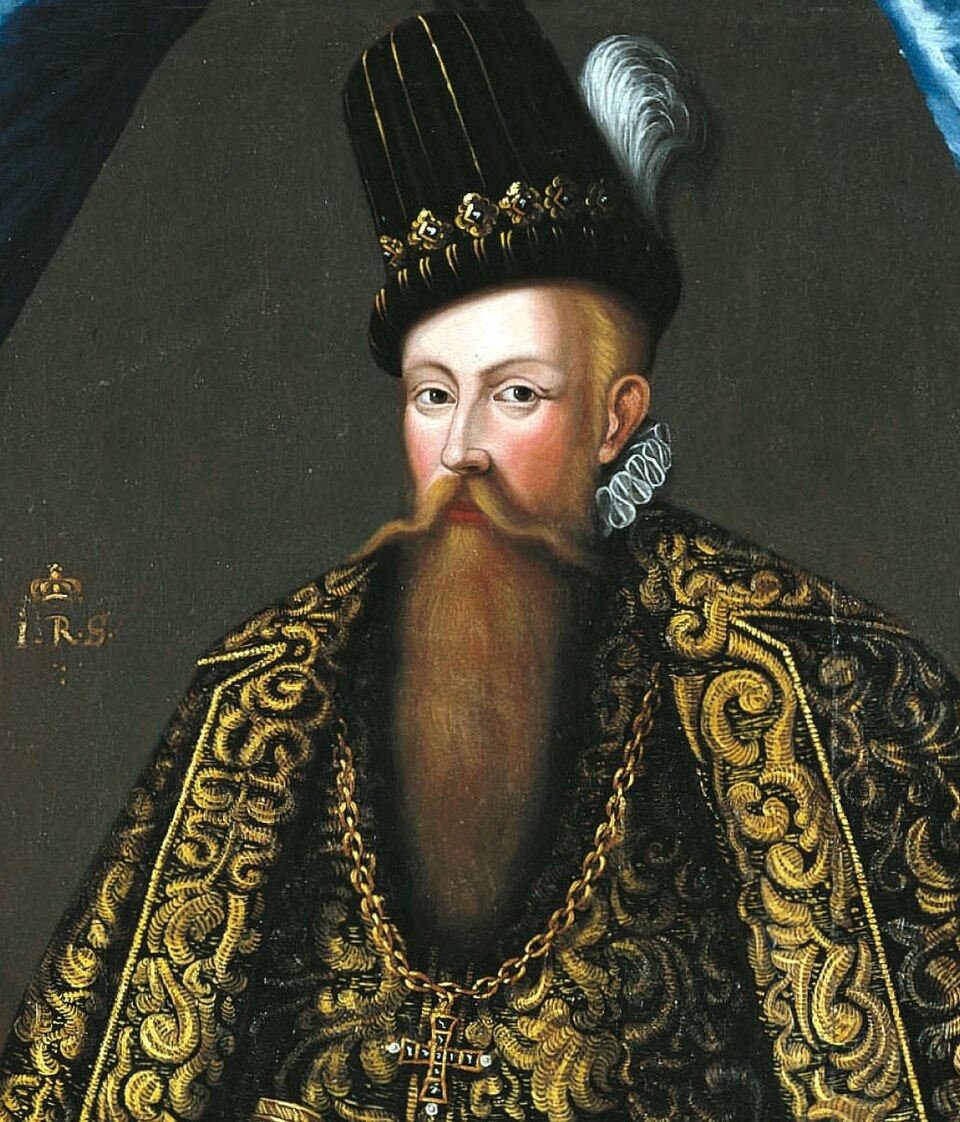
0 sources
John III of Sweden
Summary
John III of Sweden is a human[1]. His place of birth was Stegeborg Castle[2]. He was born on December 20, 1537[3]. He passed away in Stockholm[4]. He died on November 17, 1592[5]. He worked as a monarch[6]. He has Wikipedia articles in 28 language editions, a strong signal of global cultural recognition.[7]
Key Facts
- John III of Sweden's place of birth was Stegeborg Castle[2].
- John III of Sweden passed away in Stockholm[4].
- John III of Sweden was born on December 20, 1537[3].
- John III of Sweden died on November 17, 1592[5].
- Burial took place at Uppsala Cathedral[8].
- John III of Sweden's father was Gustav I of Sweden[9].
- John III of Sweden's mother was Margaret Leijonhufvud[10].
- John III of Sweden was married to Catherine Jagellon[11].
- Among John III of Sweden's spouses was Gunilla Bielke[12].
- A child of John III of Sweden was Sigismund III Vasa[13].
- A child of John III of Sweden was Princess Anna of Sweden[14].
- A child of John III of Sweden was John, Duke of Östergötland[15].
- A child of John III of Sweden was Sofia Johansdotter (Gyllenhielm)[16].
- A child of John III of Sweden was Isabella Johansdotter[17].
- A child of John III of Sweden was Lucretia Gyllenhielm[18].
- John III of Sweden held citizenship in Sweden[19].
- Swedish was John III of Sweden's native language[20].
- John III of Sweden's professions included monarch[6].
- John III of Sweden held the position of Monarch of Sweden[21].
- John III of Sweden received the Knight of the Order of Saint-Michel[22].
- John III of Sweden's religion is recorded as Lutheranism[23].
- John III of Sweden is recorded as male[24].
- John III of Sweden's instance of is recorded as human[25].
- John III of Sweden's family is recorded as House of Vasa[26].
- John III of Sweden's noble title is recorded as Monarch of Sweden[27].
Body
Origins and Family
John III of Sweden was born in Stegeborg Castle[2]. He was born on December 20, 1537[3]. His father was Gustav I of Sweden[9]. His mother was Margaret Leijonhufvud[10]. Swedish was his native language[20].
Career and Affiliations
John III of Sweden worked as a monarch[6]. He held the position of Monarch of Sweden[21].
Recognition
John III of Sweden received the Knight of the Order of Saint-Michel[22].
Personal Life
Spouses include Catherine Jagellon[11], a queen regnant[28], 1526–1583[29], of Polish–Lithuanian Commonwealth[30] and Gunilla Bielke[12], a consort[31], 1568–1597[32], of Sweden[33]. Children include Sigismund III Vasa[13], a patron of the arts[34], 1566–1632[35], of Polish–Lithuanian Commonwealth[36], awarded the Knight of the Order of the Golden Fleece[37]; Princess Anna of Sweden[14], a botanist[38], 1568–1625[39], of Sweden[40], specialised in local administration[41]; John, Duke of Östergötland[15], an aristocrat[42], 1589–1618[43], of Sweden[44]; Sofia Johansdotter (Gyllenhielm)[16], a lady-in-waiting[45], 1559–1583[46], of Sweden[47]; Isabella Johansdotter[17], 1564–1566[48]; and Lucretia Gyllenhielm[18], 1561–1585[49]. John III of Sweden's religion is recorded as Lutheranism[23].
Death and Burial
John III of Sweden died on November 17, 1592[5]. He died in Stockholm[4]. Burial took place at Uppsala Cathedral[8].
Why It Matters
John III of Sweden has Wikipedia articles in 28 language editions, a strong signal of global cultural recognition.[7] He is known by 7 alternative names across languages and contexts.[50]
FAQs
Where was John III of Sweden born?
John III of Sweden was born in Stegeborg Castle[2].
Where did John III of Sweden die?
John III of Sweden passed away in Stockholm[4].
Who were John III of Sweden's parents?
John III of Sweden's father was Gustav I of Sweden[9]. John III of Sweden's mother was Margaret Leijonhufvud[10].
Who was John III of Sweden married to?
John III of Sweden's spouses include Catherine Jagellon[11] and Gunilla Bielke[12].
What did John III of Sweden do for work?
John III of Sweden worked as monarch[6].
What awards did John III of Sweden receive?
Honors received include Knight of the Order of Saint-Michel[22].