
Jean-Martin Charcot
0 sources
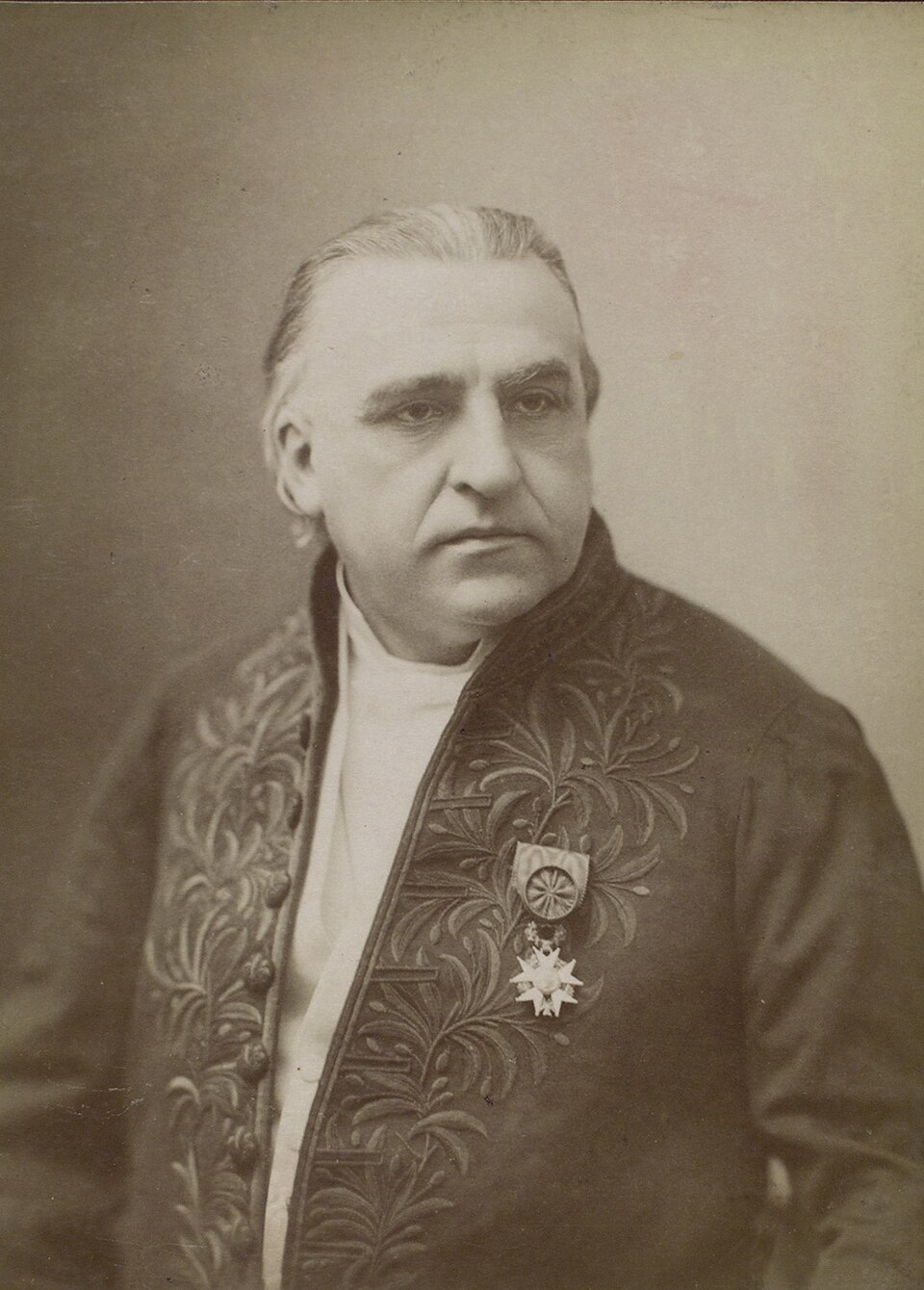
Jean-Martin Charcot was born on November 29, 1825, in Paris [1][2][3][4][5][6][7][8][9][10][11][12][13][14] and died on August 16, 1893, in Montsauche-les-Settons [1][4][5][6][7][15][16][8][9][10][11][12][13]. A French citizen [3], he worked as a physician, neuroscientist, psychologist, psychiatrist, neurologist, and draftsperson [11][3]. His professional focus lay within the fields of medicine, neurology, and psychiatry .
He served as a professor and was employed at Pitié-Salpêtrière Hospital . Charcot received several distinctions, including the rank of Commander of the Legion of Honour, the Montyon Prize, the rank of Officer of the Legion of Honour, and the rank of Knight of the Legion of Honour . He had two children, Jean-Baptiste Charcot and Jehanne Charcot [17].
Jean-Martin Charcot
Summary
Jean-Martin Charcot is a human[1]. He was born in Paris[2]. He was born on November 29, 1825[3]. He passed away in Montsauche-les-Settons[4]. He died on August 16, 1893[5]. He worked as a physician[6], neuroscientist[7], psychologist[8], psychiatrist[9], and neurologist[10]. He ranks in the top 0.69% of human entities by monthly Wikipedia readership (1,729 views/month, #6,921 of 1,000,298).[11]
Key Facts
- Born in Paris[2], Jean-Martin Charcot…
- Jean-Martin Charcot was born in rue du Faubourg-Poissonnière[12].
- Jean-Martin Charcot passed away in Montsauche-les-Settons[4].
- Jean-Martin Charcot was born on November 29, 1825[3].
- Jean-Martin Charcot died on August 16, 1893[5].
- Jean-Martin Charcot is buried at Montmartre Cemetery[13].
- A child of Jean-Martin Charcot was Jean-Baptiste Charcot[14].
- A child of Jean-Martin Charcot was Jehanne Charcot[15].
- Jean-Martin Charcot held citizenship in France[16].
- Jean-Martin Charcot's professions included physician[6].
- Jean-Martin Charcot worked as a neuroscientist[7].
- Jean-Martin Charcot's professions included psychologist[8].
- Jean-Martin Charcot's professions included psychiatrist[9].
- Jean-Martin Charcot worked as a neurologist[10].
- Jean-Martin Charcot worked as a draftsperson[17].
- Jean-Martin Charcot's field of work was medicine[18].
- Jean-Martin Charcot's field of work was neurology[19].
- Jean-Martin Charcot's field of work was psychiatry[20].
- Jean-Martin Charcot held the position of professor[21].
- Jean-Martin Charcot was employed by Pitié-Salpêtrière Hospital[22].
- Jean-Martin Charcot's education included a stint at Lycée Condorcet[23].
- Jean-Martin Charcot's education included a stint at Lycée Saint-Louis[24].
- A notable student of Jean-Martin Charcot was Sigmund Freud[25].
- A notable student of Jean-Martin Charcot was Vladimir Gavrilovich Dekhterev[26].
- Jean-Martin Charcot received the Commander of the Legion of Honour[27].
Body
Origins and Family
Recorded place of birth include Paris[2], a commune of France[28], in France[29], founded in -0300[30] and rue du Faubourg-Poissonnière[12], a street[31], in France[32]. Jean-Martin Charcot was born on November 29, 1825[3].
Education
Educated at Lycée Condorcet[23], an educational facility[33], in France[34], founded in 1803[35] and Lycée Saint-Louis[24], an educational facility[36], in France[37], founded in 1965[38].
Career and Affiliations
Recorded occupations include physician[6], neuroscientist[7], psychologist[8], psychiatrist[9], neurologist[10], and draftsperson[17]. Fields of work include medicine[18], a field of study[39]; neurology[19], a medical specialty[40]; and psychiatry[20], a medical specialty[41]. Among Jean-Martin Charcot's employers was Pitié-Salpêtrière Hospital[22]. He held the position of professor[21]. Notable students include Sigmund Freud[25], a psychoanalyst[42], 1856–1939[43], of Austrian Empire[44], awarded the Goethe Prize[45], specialised in psychoanalysis[46] and Vladimir Gavrilovich Dekhterev[26]. Doctoral students include Eugen Bleuler[47], a psychiatrist[48], 1857–1939[49], of Switzerland[50], specialised in psychiatry[51]; Alfred Binet[52], a psychologist[53], 1857–1911[54], of France[55], specialised in psychology[56]; and Édouard Brissaud[57], a physician[58], 1852–1909[59], of France[60], awarded the Knight of the Legion of Honour[61].
Recognition
Awards received include Commander of the Legion of Honour[27], a grade of an order[62], in France[63]; Montyon Prize[64], a literary award[65], in France[66]; Officer of the Legion of Honour[67], a grade of an order[68], in France[69]; and Knight of the Legion of Honour[70], a grade of an order[71], in France[72].
Personal Life
Children include Jean-Baptiste Charcot[14], a physician[73], 1867–1936[74], of France[75], awarded the Grand Officer of the Legion of Honour[76] and Jehanne Charcot[15], 1865–1940[77], of France[78].
Death and Burial
Jean-Martin Charcot died on August 16, 1893[5]. He passed away in Montsauche-les-Settons[4]. Burial took place at Montmartre Cemetery[13].
Works and Contributions
Things named for Jean-Martin Charcot include amyotrophic lateral sclerosis[79], Charcot's cholangitis triad[80], Charcot–Leyden crystals[81], neurogenic arthropathy[82], Charcot's neurologic triad[83], Charcot Island[84], Charcot's triad[85], and 11314 Charcot[86].
Why It Matters
Jean-Martin Charcot ranks in the top 0.69% of human entities by monthly Wikipedia readership (1,729 views/month, #6,921 of 1,000,298).[11] He has Wikipedia articles in 28 language editions, a strong signal of global cultural recognition.[87] He is known by 13 alternative names across languages and contexts.[88]
He has been cited as an influence by Jules Cotard[89], a psychiatrist[90], 1840–1889[91], of France[92] and Pierre Marie[93], a neurologist[94], 1853–1940[95], of France[96], awarded the Commander of the Legion of Honour[97], specialised in neurology[98].
He is credited with the discovery of multiple sclerosis[99], a designated intractable/rare disease[100]. Entities named for him include amyotrophic lateral sclerosis[79], Charcot's cholangitis triad[80], Charcot–Leyden crystals[81], neurogenic arthropathy[82], Charcot's neurologic triad[83], and Charcot Island[84].
His notable doctoral advisees include Alfred Binet[101], a psychologist[102], 1857–1911[103], of France[104], specialised in psychology[105]; Édouard Brissaud[106]; and Eugen Bleuler[107].
FAQs
Where was Jean-Martin Charcot born?
Born in Paris[2], Jean-Martin Charcot…
Where did Jean-Martin Charcot die?
Jean-Martin Charcot died in Montsauche-les-Settons[4].
What did Jean-Martin Charcot do for work?
Jean-Martin Charcot worked as physician[6], neuroscientist[7], psychologist[8], psychiatrist[9], and neurologist[10].
Where did Jean-Martin Charcot go to school?
Jean-Martin Charcot was educated at Lycée Condorcet[23] and Lycée Saint-Louis[24].
What awards did Jean-Martin Charcot receive?
Honors received include Commander of the Legion of Honour[27], Montyon Prize[64], Officer of the Legion of Honour[67], and Knight of the Legion of Honour[70].
Who did Jean-Martin Charcot influence?
Jean-Martin Charcot has been cited as an influence by Jules Cotard[89] and Pierre Marie[93].
What did Jean-Martin Charcot discover?
Jean-Martin Charcot is credited as discoverer of multiple sclerosis[99].