
Jean-Baptiste Biot
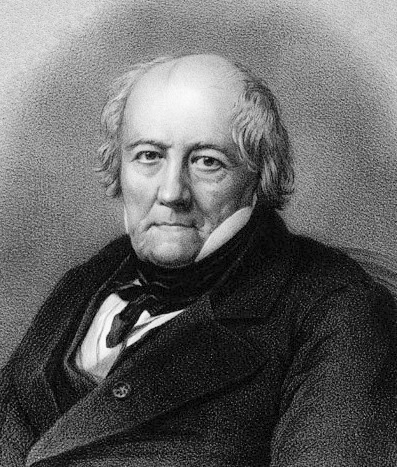
0 sources
Summary
Jean-Baptiste Biot was born on April 21, 1774[1], in Paris[2]. He died on February 3, 1862[3], in Paris[4]. He worked as a mathematician[5], physicist[6], astronomer[7], civil engineer[8], and professor[9]. He ranks in the top 0.72% of human entities by monthly Wikipedia readership (1,118 views/month, #7,243 of 1,000,298).[10]
Key Facts
- Place of burial: Montparnasse Cemetery[11]
- Child: Édouard Biot[12]
- Country of citizenship: France[13]
- Field of work: physics[14]
- Position held: member of the Académie française[15]
- Employer: Collège de France[16], French Revolutionary Army[17], Science Faculty of Paris[18], Bureau des Longitudes[19]
- Educated at: École polytechnique[20], École Nationale des Ponts et Chaussées[21], Collège Louis-le-Grand (Paris)[22]
- Doctoral advisor: Gaspard Monge[23], Pierre-Simon Laplace[24]
- Student: Charles-Eugène Delaunay[25], Alfred Des Cloizeaux[26], Félix Savart[27]
- Notable work: Biot-Savart law[28], Biot number for heat transfer[29], Loi de Biot[30], Modèle de Biot[31], Appareil de Biot[32]
- Award received: Pour le Mérite for Sciences and Arts order[33], Commander of the Legion of Honour[34], Rumford Medal[35], Fellow of the American Academy of Arts and Sciences[36], Foreign Member of the Royal Society[37], Knight of the Legion of Honour[38]
- Member of: Royal Society[39], Société Philomathique de Paris[40], Académie Française[41], Royal Swedish Academy of Sciences[42], French Academy of Sciences[43], American Academy of Arts and Sciences[44], Russian Academy of Sciences[45], Royal Prussian Academy of Sciences[46], Accademia Nazionale delle Scienze detta dei XL[47], Bavarian Academy of Sciences and Humanities[48], Académie des Inscriptions et Belles-Lettres[49], Academy of Sciences of Turin[50], Académie de Stanislas (Nancy, France)[51]
- Sex or gender: male[52]
- Doctoral student: Louis Pasteur[53]
- Commons category: Jean-Baptiste Biot[54]
- Archives at: ETH Zurich University Archives[55]
- Participated in conflict: Battle of Hondschoote[56]
- Family name: Biot[57]
- Given name: Jean-Baptiste[58]
Body
Works and Contributions
Things named for Jean-Baptiste Biot include Biot-Savart law[59], a physical law[60]; Biot number for heat transfer[61]; and biot[62].
Why It Matters
Jean-Baptiste Biot has Wikipedia articles in 28 language editions, a strong signal of global cultural recognition.[63] He is known by 42 alternative names across languages and contexts.[64]
Entities named for him include Biot-Savart law[59], a physical law[60]; Biot number for heat transfer[61]; and biot[62].
His notable doctoral advisees include Louis Pasteur[65], a microbiologist[66], 1822–1895[67], of France[68], awarded the Grand Cross of the Legion of Honour[69], specialised in chemistry[70].
FAQs
Where was Jean-Baptiste Biot born?
Jean-Baptiste Biot's place of birth was Paris[2].
Where did Jean-Baptiste Biot die?
Jean-Baptiste Biot died in Paris[4].
What did Jean-Baptiste Biot do for work?
Jean-Baptiste Biot worked as a mathematician[5], physicist[6], astronomer[7], civil engineer[8], and professor[9].
Where did Jean-Baptiste Biot go to school?
Jean-Baptiste Biot was educated at École polytechnique[20], École Nationale des Ponts et Chaussées[21], and Collège Louis-le-Grand (Paris)[22].
What awards did Jean-Baptiste Biot receive?
Honors received include Pour le Mérite for Sciences and Arts order[33], Commander of the Legion of Honour[34], Rumford Medal[35], and Fellow of the American Academy of Arts and Sciences[36].