
Gaspard Monge
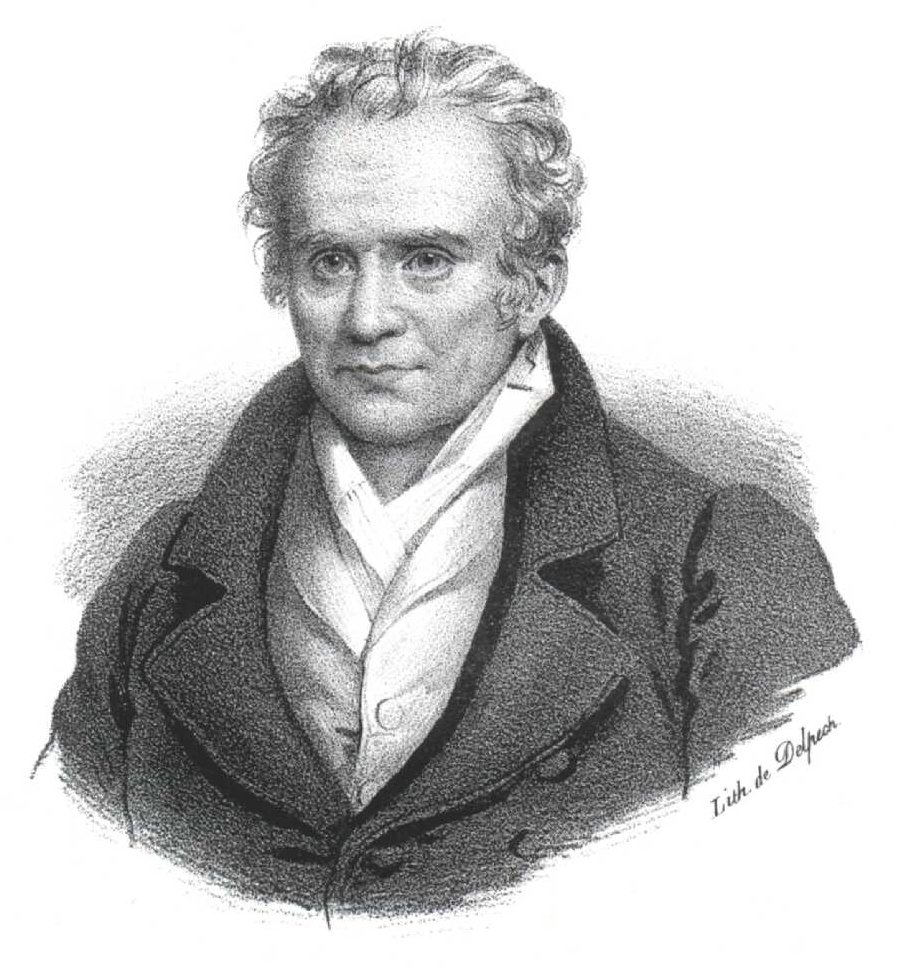
0 sources
Summary
Gaspard Monge was born on May 9, 1746[1], in Beaune[2]. He died on July 28, 1818[3], in Paris[4]. He worked as a mathematician[5], politician[6], physicist[7], university teacher[8], and engineer[9]. He ranks in the top 0.72% of human entities by monthly Wikipedia readership (3,080 views/month, #7,207 of 1,000,298).[10]
Key Facts
- Date of birth: May 10, 1746[11]
- Place of burial: Panthéon[12], Père Lachaise Cemetery[13]
- Father: Jacques Monge[14]
- Mother: Jeanne Rousseau[15]
- Spouse: Marie-Catherine Monge[16]
- Child: Emilie Monge[17], Louise Monge[18]
- Country of citizenship: France[19]
- Occupation: chemist[20], Chargé de mission[21], teacher[22]
- Field of work: differential geometry[23]
- Position held: Member of the Council of Five Hundred[24], member of the Sénat conservateur[25], Peer of France[26], president[27], director[28], Minister of the French Navy[29], Institut d'Égypte[30], president of the French Academy of Sciences[31]
- Employer: University of Paris[32], École polytechnique[33], École royale du génie de Mézières[34], Institut d'Égypte[35], École royale de la Marine du Havre[36]
- Educated at: École polytechnique[37], Fénelon - La Trinité School[38]
- Award received: Grand Officer of the Legion of Honour[39], Knight Grand Cross of the Order of the Reunion[40], Order of the Iron Crown (Kingdom of Italy)[41], 72 names on the Eiffel Tower[42]
- Member of: Société Philomathique de Paris[43], French Academy of Sciences[44], Royal Prussian Academy of Sciences[45], freemasonry[46], Academy of Sciences of Turin[47]
- Sex or gender: male[48]
- Noble title: count[49]
- Member of political party: Society of 1789[50]
- Doctoral student: Jean-Victor Poncelet[51], Joseph Diez Gergonne[52], Jean-Baptiste Biot[53]
- Commons category: Gaspard Monge[54]
- Archives at: École polytechnique[55]
- Family name: Monge[56]
Body
Works and Contributions
Things named for Gaspard Monge include transportation theory[57], Monge[58], Monge's theorem[59], Monge–Ampère equation[60], and rue Monge[61].
Why It Matters
Gaspard Monge has Wikipedia articles in 26 language editions, a strong signal of global cultural recognition.[62] He is known by 32 alternative names across languages and contexts.[63]
He has been cited as an influence by Charles Julien Brianchon[64], a mathematician[65], 1783–1864[66], of France[67], awarded the Knight of the Legion of Honour[68]; Théodore Olivier[69], a mathematician[70], 1793–1853[71], of France[72], awarded the Officer of the Legion of Honour[73]; and Charles d'Amondans de Tinseau[74], a mathematician[75], 1748–1822[76], of France[77].
He is credited with the discovery of descriptive geometry[78], a branch of mathematics[79]. Entities named for him include transportation theory[57], Monge[58], Monge's theorem[59], Monge–Ampère equation[60], and rue Monge[61].
His notable doctoral advisees include Jean-Baptiste Biot[80].
FAQs
Where was Gaspard Monge born?
Gaspard Monge was born in Beaune[2].
Where did Gaspard Monge die?
Gaspard Monge passed away in Paris[4].
Who were Gaspard Monge's parents?
Gaspard Monge's father was Jacques Monge[14]. Gaspard Monge's mother was Jeanne Rousseau[15].
Who was Gaspard Monge married to?
Gaspard Monge's spouses include Marie-Catherine Monge[16].
What did Gaspard Monge do for work?
Gaspard Monge worked as a mathematician[5], politician[6], physicist[7], university teacher[8], and engineer[9].
Where did Gaspard Monge go to school?
Gaspard Monge was educated at École polytechnique[37] and Fénelon - La Trinité School[38].
What awards did Gaspard Monge receive?
Honors received include Grand Officer of the Legion of Honour[39], Knight Grand Cross of the Order of the Reunion[40], Order of the Iron Crown (Kingdom of Italy)[41], and 72 names on the Eiffel Tower[42].
Who did Gaspard Monge influence?
Gaspard Monge has been cited as an influence by Charles Julien Brianchon[64], Théodore Olivier[69], and Charles d'Amondans de Tinseau[74].
What did Gaspard Monge discover?
Gaspard Monge is credited as discoverer of descriptive geometry[78].