
Lazare Carnot
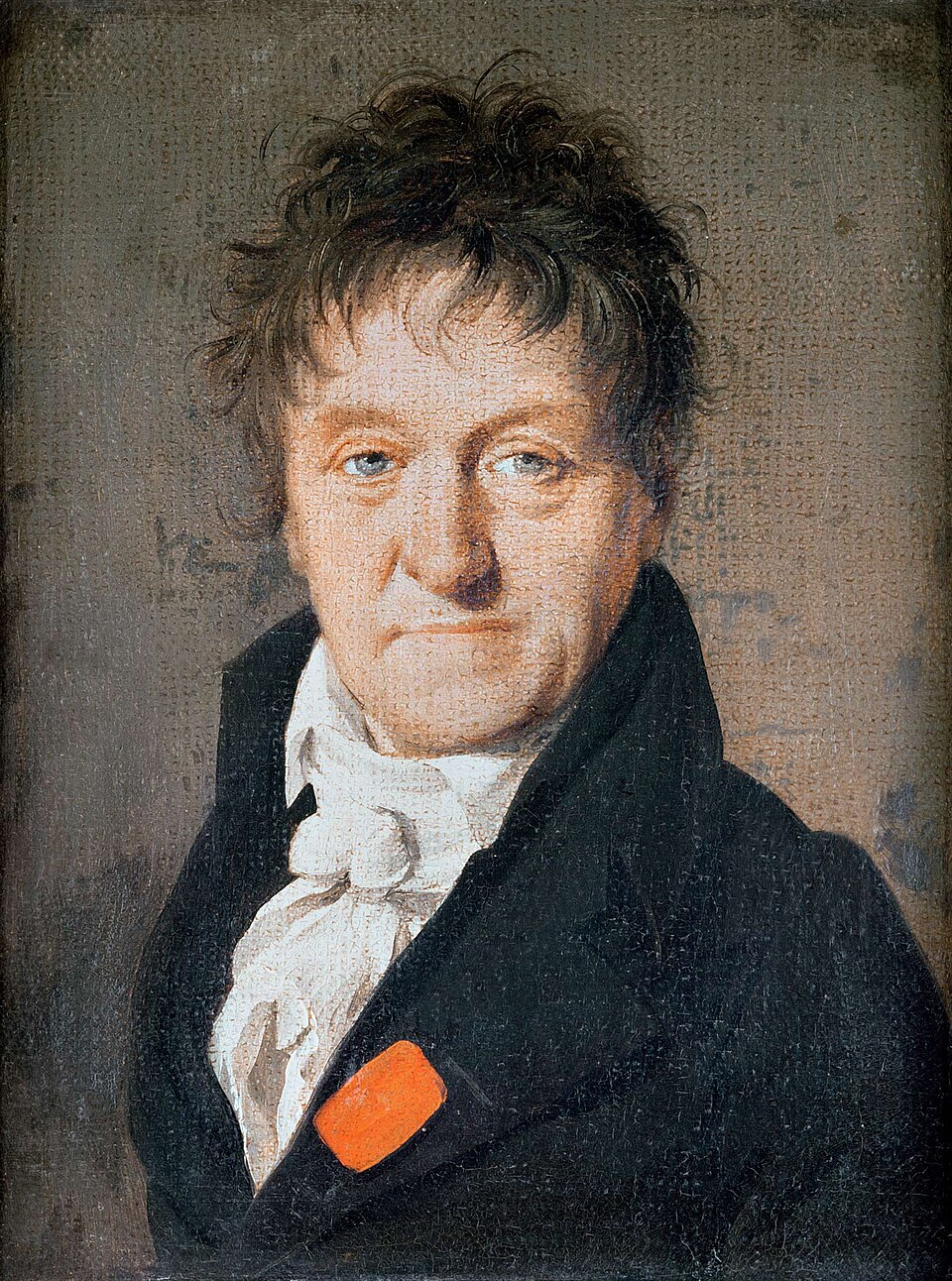
0 sources
Summary
Lazare Carnot was born on May 13, 1753[1], in Nolay[2]. He died on August 2, 1823[3], in Magdeburg[4]. He worked as a mathematician[5], politician[6], military engineer[7], military officer[8], and physicist[9]. He ranks in the top 0.71% of human entities by monthly Wikipedia readership (4,961 views/month, #7,101 of 1,000,298).[10]
Key Facts
- Place of burial: Panthéon[11], Nordfriedhof[12]
- Child: Nicolas Carnot[13], Hippolyte Carnot[14]
- Country of citizenship: France[15]
- Native language: French[16]
- Occupation: engineer[17], poet[18], general contractor[19], scientist[20]
- Field of work: military affairs[21], civil engineering[22], mathematics[23], physics[24], politics[25], poetry[26], fortification[27]
- Position held: member of the French National Assembly[28], Minister of War[29], President of the National Convention[30], president of the French Academy of Sciences[31], member[32], director[33], Minister of the Interior of France[34]
- Employer: French Armed Forces[35]
- Educated at: Lycée militaire in Autun[36], École royale du génie de Mézières[37]
- Award received: Grand Cross of the Legion of Honour[38], Knight of the Royal and Military Order of Saint Louis[39], list of names inscribed on the Arc de Triomphe[40], 72 names on the Eiffel Tower[41]
- Member of: French Academy of Sciences[42], Bavarian Academy of Sciences and Humanities[43]
- Sex or gender: male[44]
- Family: Carnot family[45]
- Noble title: count[46]
- Member of political party: The Plain[47]
- Commons category: Lazare Carnot[48]
- Military, police or special rank: divisional general[49], lieutenant general[50], second lieutenant[51], first lieutenant[52], captain[53], commanding officer[54], general[55]
- Archives at: Archives nationales[56], Defence Historical Service[57]
- Participated in conflict: Napoleonic Wars[58]
- Family name: Carnot[59]
- Given name: Lazare[60]
- Pseudonym: Grand Carnot[61], Organisateur de la Victoire[62]
Body
Works and Contributions
Things named for Lazare Carnot include law of cosines[63], a theorem[64]; Borda–Carnot equation[65], a scientific theory[66]; Carnot's theorem[67], a theorem[68]; Carnot's theorem (perpendiculars)[69], a theorem[70]; Carnot's theorem (conics)[71], a theorem[72]; and Lazare-Carnot Prize[73], an award[74].
Why It Matters
Lazare Carnot has Wikipedia articles in 28 language editions, a strong signal of global cultural recognition.[75] He is known by 45 alternative names across languages and contexts.[76]
Entities named for him include law of cosines[63], a theorem[64]; Borda–Carnot equation[65], a scientific theory[66]; Carnot's theorem[67], a theorem[68]; Carnot's theorem (perpendiculars)[69], a theorem[70]; Carnot's theorem (conics)[71], a theorem[72]; and Lazare-Carnot Prize[73], an award[74].
FAQs
Where was Lazare Carnot born?
Lazare Carnot's place of birth was Nolay[2].
Where did Lazare Carnot die?
Lazare Carnot died in Magdeburg[4].
What did Lazare Carnot do for work?
Lazare Carnot worked as a mathematician[5], politician[6], military engineer[7], military officer[8], and physicist[9].
Where did Lazare Carnot go to school?
Lazare Carnot was educated at Lycée militaire in Autun[36] and École royale du génie de Mézières[37].
What awards did Lazare Carnot receive?
Honors received include Grand Cross of the Legion of Honour[38], Knight of the Royal and Military Order of Saint Louis[39], list of names inscribed on the Arc de Triomphe[40], and 72 names on the Eiffel Tower[41].