
Jacint Verdaguer
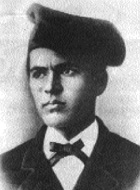
0 sources
Summary
Jacint Verdaguer was born on May 17, 1845[1], in Folgueroles[2]. He died on June 10, 1902[3], in Vallvidrera[4]. He worked as a poet[5], writer[6], Catholic priest[7], and librettist[8]. He ranks in the top 0.73% of human entities by monthly Wikipedia readership (1,449 views/month, #7,265 of 1,000,298).[9]
Key Facts
- Date of birth: January 1, 1845[10]
- Date of death: January 1, 1902[11]
- Place of burial: Montjuïc Cemetery[12]
- Country of citizenship: Spain[13]
- Native language: Catalan[14]
- Position held: member of the Reial Acadèmia de Bones Lletres de Barcelona[15], 'majoral' of the Félibrige[16]
- Notable work: L'Atlàntida[17], Canigó[18]
- Award received: Mestre en Gai Saber[19], Grand cross of the Civil Order of Alfonso XII[20]
- Member of: Reial Acadèmia de Bones Lletres de Barcelona[21]
- Religion or worldview: Catholicism[22]
- Sex or gender: male[23]
- Commons category: Jacint Verdaguer[24]
- Archives at: National Library of Catalonia[25]
- Cause of death: tuberculosis[26]
- Honorific prefix: Mosén[27]
- Family name: Verdaguer[28]
- Given name: Jacint[29]
- Official website: https://www.verdaguer.cat/[30]
- Topic's main category: Category:Jacint Verdaguer[31]
- Relative: Narcís Verdaguer i Callís[32]
- Manner of death: natural causes[33]
- Described by source: Nordisk familjebok[34], Ensayo de un catálogo de periodistas españoles del siglo XIX (1903-1904)[35], The Catholic Encyclopedia[36]
- Languages spoken, written or signed: Catalan[37], Spanish[38]
- Commons Creator page: Jacint Verdaguer[39]
- Name in native language: Jacint Verdaguer[40]
Body
Works and Contributions
Things named for Jacint Verdaguer include Plaça de Mossèn Jacint Verdaguer, Barcelona[41], a square[42], in Spain[43], founded in 1929[44].
Why It Matters
Jacint Verdaguer has Wikipedia articles in 16 language editions, a strong signal of global cultural recognition.[45] He is known by 38 alternative names across languages and contexts.[46]
Works attributed to him include L'Atlàntida[47], a literary work[48] and Canigó[49], a literary work[50]. Entities named for him include Plaça de Mossèn Jacint Verdaguer, Barcelona[41], a square[42], in Spain[43], founded in 1929[44].
FAQs
Where was Jacint Verdaguer born?
Jacint Verdaguer's place of birth was Folgueroles[2].
Where did Jacint Verdaguer die?
Jacint Verdaguer passed away in Vallvidrera[4].
What did Jacint Verdaguer do for work?
Jacint Verdaguer worked as a poet[5], writer[6], Catholic priest[7], and librettist[8].
What awards did Jacint Verdaguer receive?
Honors received include Mestre en Gai Saber[19] and Grand cross of the Civil Order of Alfonso XII[20].