
Ismail Kadare
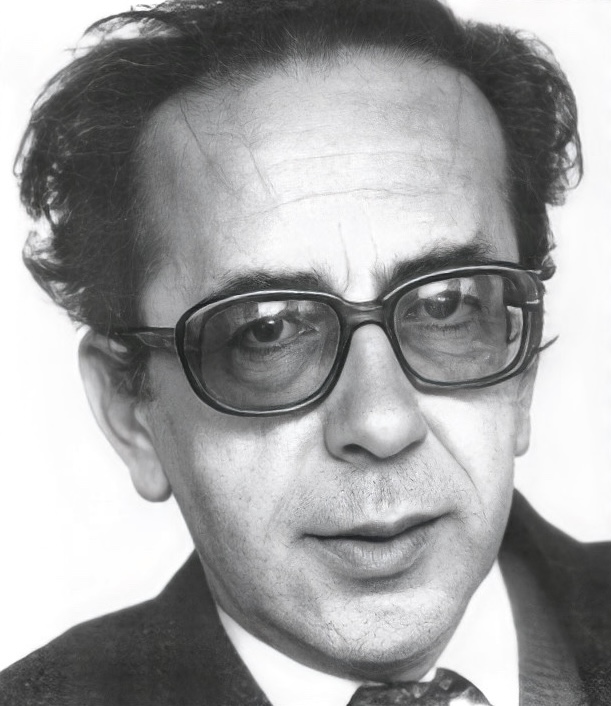
0 sources
Ismail Kadare
Summary
Ismail Kadare is a human[1]. His place of birth was Gjirokastër[2]. He was born on January 28, 1936[3]. He passed away in Mother Teresa Hospital[4]. He died on July 1, 2024[5]. He worked as a poet[6], novelist[7], translator[8], and writer[9]. He has Wikipedia articles in 27 language editions, a strong signal of global cultural recognition.[10]
Key Facts
- Born in Gjirokastër[2], Ismail Kadare…
- Ismail Kadare died in Mother Teresa Hospital[4].
- Ismail Kadare passed away in Tirana[11].
- Ismail Kadare was born on January 28, 1936[3].
- Ismail Kadare died on July 1, 2024[5].
- Among Ismail Kadare's spouses was Helena Kadare[12].
- A child of Ismail Kadare was Besiana Kadare[13].
- Ismail Kadare held citizenship in Albania[14].
- Ismail Kadare held citizenship in France[15].
- Ismail Kadare held citizenship in Kosovo[16].
- Albanian was Ismail Kadare's native language[17].
- Ismail Kadare is identified as part of the Albanians ethnic group[18].
- Ismail Kadare's professions included poet[6].
- Ismail Kadare worked as a novelist[7].
- Ismail Kadare's professions included translator[8].
- Ismail Kadare worked as a writer[9].
- Ismail Kadare's field of work was literary activity[19].
- Ismail Kadare's field of work was poetry[20].
- Ismail Kadare's field of work was prose[21].
- Ismail Kadare held the position of Member of the Parliament of Albania[22].
- Ismail Kadare's education included a stint at University of Tirana[23].
- Ismail Kadare's education included a stint at Maxim Gorky Literature Institute[24].
- A notable work attributed to Ismail Kadare is The General of the Dead Army[25].
- A notable work attributed to Ismail Kadare is The Castle[26].
- A notable work attributed to Ismail Kadare is Chronicle in Stone[27].
Body
Origins and Family
Born in Gjirokastër[2], Ismail Kadare… he was born on January 28, 1936[3]. He is identified as part of the Albanians ethnic group[18]. Albanian was his native language[17].
Education
Educated at University of Tirana[23], a public university[28], in Albania[29], founded in 1957[30], headquartered in Tirana[31] and Maxim Gorky Literature Institute[24], a higher education institution[32], in Russia[33], founded in 1933[34].
Career and Affiliations
Recorded occupations include poet[6], novelist[7], translator[8], and writer[9]. Fields of work include literary activity[19]; poetry[20], a literary form[35]; and prose[21], a literary form[36]. Ismail Kadare held the position of Member of the Parliament of Albania[22].
Works and Contributions
Notable works include The General of the Dead Army[25], The Castle[26], Chronicle in Stone[27], Broken April[37], The Three-Arched Bridge[38], and The File on H.[39].
Recognition
Awards received include Princess of Asturias Literary Prize[40], a literary award[41], in Spain[42], founded in 1981[43]; Herder Prize[44], a cultural prize[45], founded in 1963[46]; Prix mondial Cino Del Duca[47], a literary award[48], in France[49], founded in 1969[50]; International Booker Prize[51], a literary award[52], in United Kingdom[53], founded in 2005[54], headquartered in London[55]; Jerusalem Prize[56], a literary award[57], in Israel[58], founded in 1963[59]; and International Nonino Prize[60], a literary award[61], in Italy[62], founded in 1975[63].
Personal Life
Among Ismail Kadare's spouses was Helena Kadare[12]. A child of him was Besiana Kadare[13]. His religion is recorded as atheism[64].
Death and Burial
Ismail Kadare died on July 1, 2024[5]. Recorded place of death include Mother Teresa Hospital[4], a hospital[65], in Albania[66] and Tirana[11], a city[67], in Albania[68], founded in 1614[69]. The cause of death was myocardial infarction[70].
Why It Matters
Ismail Kadare has Wikipedia articles in 27 language editions, a strong signal of global cultural recognition.[10] He is known by 34 alternative names across languages and contexts.[71]
He has been cited as an influence by Luljeta Lleshanaku[72], a journalist[73], b. 1968[74], of Albania[75] and Ag Apolloni[76], a writer[77], b. 1982[78], of Kosovo[79], specialised in Albanian literature[80].
Works attributed to him include The General of the Dead Army[81], a literary work[82]; The Three-Arched Bridge[83], a written work[84]; Doruntine[85], a literary work[86]; The Great Winter[87], a literary work[88]; Broken April[89], a literary work[90]; and Chronicle in Stone[91], a written work[92].
FAQs
Where was Ismail Kadare born?
Ismail Kadare was born in Gjirokastër[2].
Where did Ismail Kadare die?
Ismail Kadare passed away in Mother Teresa Hospital[4].
Who was Ismail Kadare married to?
Ismail Kadare's spouses include Helena Kadare[12].
What did Ismail Kadare do for work?
Ismail Kadare worked as poet[6], novelist[7], translator[8], and writer[9].
Where did Ismail Kadare go to school?
Ismail Kadare was educated at University of Tirana[23] and Maxim Gorky Literature Institute[24].
What awards did Ismail Kadare receive?
Honors received include Princess of Asturias Literary Prize[40], Herder Prize[44], Prix mondial Cino Del Duca[47], and International Booker Prize[51].
Who did Ismail Kadare influence?
Ismail Kadare has been cited as an influence by Luljeta Lleshanaku[72] and Ag Apolloni[76].