
Italo Calvino
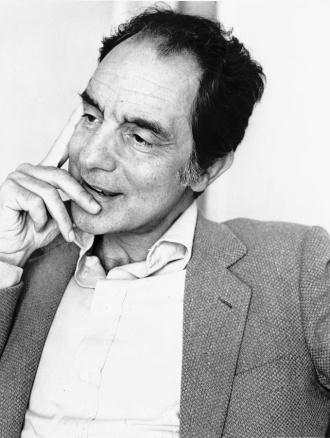
0 sources
Italo Calvino
Summary
Italo Calvino is a human[1]. He was born in Santiago de las Vegas[2]. He was born on October 15, 1923[3]. He passed away in Siena[4]. He died on September 19, 1985[5]. He worked as a writer[6], journalist[7], essayist[8], novelist[9], and screenwriter[10]. He ranks in the top 0.66% of human entities by monthly Wikipedia readership (8,109 views/month, #6,577 of 1,000,298).[11]
Key Facts
- Born in Santiago de las Vegas[2], Italo Calvino…
- Italo Calvino died in Siena[4].
- Italo Calvino was born on October 15, 1923[3].
- Italo Calvino was born on January 15, 1923[12].
- Italo Calvino died on September 19, 1985[5].
- Italo Calvino is buried at cemetery of Castiglione della Pescaia[13].
- Italo Calvino's father was Mario Calvino[14].
- Italo Calvino's mother was Giuliana Luigia Evelina Mameli Calvino[15].
- Among Italo Calvino's spouses was Esther Judith Singer[16].
- Italo Calvino held citizenship in Italy[17].
- Italo Calvino held citizenship in Kingdom of Italy[18].
- Italo Calvino held citizenship in Italy[19].
- Italo Calvino worked as a writer[6].
- Italo Calvino worked as a journalist[7].
- Italo Calvino's professions included essayist[8].
- Italo Calvino's professions included novelist[9].
- Italo Calvino worked as a screenwriter[10].
- Italo Calvino worked as a literary editor[20].
- Italo Calvino's field of work was Italian literature[21].
- Italo Calvino was educated at University of Turin[22].
- Italo Calvino was educated at University of Florence[23].
- A notable work attributed to Italo Calvino is The Baron in the Trees[24].
- A notable work attributed to Italo Calvino is Invisible Cities[25].
- A notable work attributed to Italo Calvino is If on a Winter’s Night a Traveler[26].
- A notable work attributed to Italo Calvino is Six Memos for the Next Millennium[27].
Body
Origins and Family
Italo Calvino's place of birth was Santiago de las Vegas[2]. Recorded date of birth include October 15, 1923[3] and January 15, 1923[12]. His father was Mario Calvino[14]. His mother was Giuliana Luigia Evelina Mameli Calvino[15].
Education
Educated at University of Turin[22], a university[28], in Italy[29], founded in 1404[30] and University of Florence[23], a university[31], in Italy[32], founded in 1321[33], headquartered in Florence[34].
Career and Affiliations
Recorded occupations include writer[6], journalist[7], essayist[8], novelist[9], screenwriter[10], and literary editor[20]. Italo Calvino's field of work was Italian literature[21].
Works and Contributions
Notable works include The Baron in the Trees[24], a literary work[35]; Invisible Cities[25], a literary work[36]; If on a Winter’s Night a Traveler[26], a literary work[37]; Six Memos for the Next Millennium[27], a written work[38]; The Nonexistent Knight[39]; and The Cloven Viscount[40]. Things named for Italo Calvino include Calvino[41] and 22370 Italocalvino[42].
Recognition
Awards received include Commander of the Legion of Honour[43], a grade of an order[44], in France[45]; Viareggio Prize[46], a literary award[47], in Italy[48], founded in 1929[49]; Feltrinelli Prize[50], a science award[51], in Italy[52]; Austrian State Prize for European Literature[53], a literary award[54], in Austria[55], founded in 1965[56]; and Ditmar Award[57], a group of awards[58], in Australia[59], founded in 1969[60].
Personal Life
Italo Calvino was married to Esther Judith Singer[16]. His religion is recorded as atheism[61].
Death and Burial
Italo Calvino died on September 19, 1985[5]. He passed away in Siena[4]. The cause of death was lung cancer[62]. He is buried at cemetery of Castiglione della Pescaia[13].
Why It Matters
Italo Calvino ranks in the top 0.66% of human entities by monthly Wikipedia readership (8,109 views/month, #6,577 of 1,000,298).[11] He has Wikipedia articles in 27 language editions, a strong signal of global cultural recognition.[63] He is known by 45 alternative names across languages and contexts.[64]
He has been cited as an influence by Salman Rushdie[65], a writer[66], b. 1947[67], of United Kingdom[68], awarded the Commandeur des Arts et des Lettres[69], specialised in history[70]; John Updike[71], a poet[72], 1932–2009[73], of United States[74], awarded the Commandeur des Arts et des Lettres[75]; Ismail Kadare[76], a poet[77], 1936–2024[78], of Albania[79], awarded the Princess of Asturias Literary Prize[80], specialised in literary activity[81]; Jonathan Lethem[82], a writer[83], b. 1964[84], of United States[85], awarded the National Book Critics Circle Award for Fiction[86]; Daniel Wallace[87], a writer[88], b. 1959[89], of United States[90], awarded the Harper Lee Award[91]; and Luigi Malerba[92], a writer[93], 1927–2008[94], of Italy[95], awarded the Prix Médicis étranger[96].
Works attributed to him include If on a Winter’s Night a Traveler[97], a literary work[98]; Invisible Cities[99]; The Baron in the Trees[100]; The Nonexistent Knight[101]; The Cloven Viscount[102]; and Cosmicomics[103]. Entities named for him include Calvino[41] and 22370 Italocalvino[42].
FAQs
Where was Italo Calvino born?
Born in Santiago de las Vegas[2], Italo Calvino…
Where did Italo Calvino die?
Italo Calvino died in Siena[4].
Who were Italo Calvino's parents?
Italo Calvino's father was Mario Calvino[14]. Italo Calvino's mother was Giuliana Luigia Evelina Mameli Calvino[15].
Who was Italo Calvino married to?
Italo Calvino's spouses include Esther Judith Singer[16].
What did Italo Calvino do for work?
Italo Calvino worked as writer[6], journalist[7], essayist[8], novelist[9], and screenwriter[10].
Where did Italo Calvino go to school?
Italo Calvino was educated at University of Turin[22] and University of Florence[23].
What awards did Italo Calvino receive?
Honors received include Commander of the Legion of Honour[43], Viareggio Prize[46], Feltrinelli Prize[50], and Austrian State Prize for European Literature[53].
Who did Italo Calvino influence?
Italo Calvino has been cited as an influence by Salman Rushdie[65], John Updike[71], Ismail Kadare[76], and Jonathan Lethem[82].