
Ion Antonescu
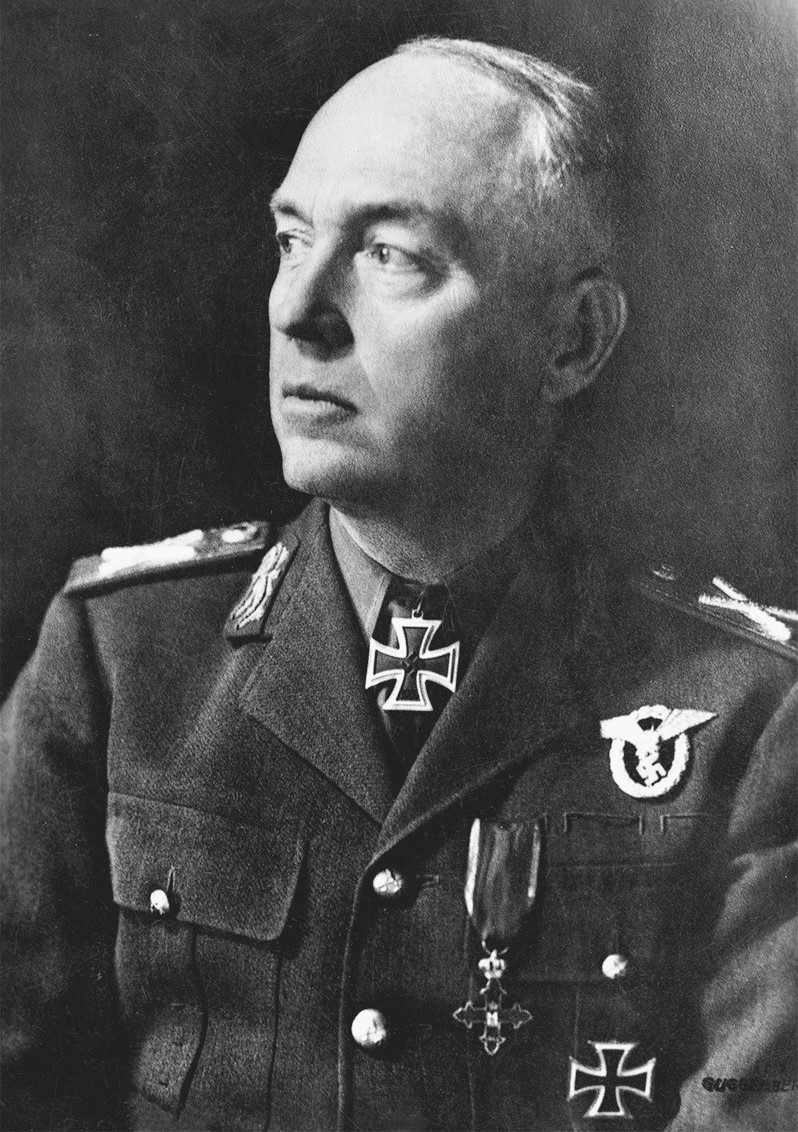
0 sources
Ion Antonescu was born on June 2, 1882, in Pitești[1][2][3]. He held Romanian citizenship and pursued a career as a politician, military personnel, and diplomat[2]. Antonescu received his education at the École Spéciale Militaire de Saint-Cyr.
He was married to Maria Antonescu. Throughout his career, Antonescu held various notable positions, including Prime Minister of Romania from 1940 to 1944[2], Chief of the Romanian General Staff from 1933 to 1934[2], and Minister of Foreign Affairs of Romania[2].
Ion Antonescu received several awards for his service, including the Knight's Cross of the Iron Cross, Order of Michael the Brave, Order of the German Eagle, Grand Cross of the Order of the White Rose of Finland, Grand Cross of the Order of the Cross of Liberty, and Crimea Shield in Gold[4][5]. Antonescu died on June 1, 1946, in Jilava[6][3][7][8][9][10][11][12].
Key Facts
- Spouse: Maria Antonescu[9]
- Country of citizenship: Kingdom of Romania[10]
- Position held: Prime Minister of Romania[11], Chief of the Romanian General Staff[12], Minister of Foreign Affairs of Romania[13]
- Educated at: École Spéciale Militaire de Saint-Cyr[14]
- Award received: Knight's Cross of the Iron Cross[15], Order of Michael the Brave[16], Grand Cross of the Order of the German Eagle in Gold with Swords[17], Grand Cross of the Order of the White Rose of Finland[18], Grand Cross of the Order of the Cross of Liberty[19], Crimea Shield in Gold[20], Iron Cross (1939), 2nd class[21], Iron Cross (1939), 1st class[22]
- Sex or gender: male[23]
- Member of political party: independent politician[24]
- Military branch: Romanian Land Forces[25]
- Commons category: Ion Antonescu[26]
- Military, police or special rank: marshal[27]
- Cause of death: gunshot wound[28]
- Participated in conflict: World War I[29], 1907 Romanian Peasants' Revolt[30], Second Balkan War[31], Hungarian–Romanian War[32], World War II[33]
- Family name: Antonescu[34]
- Given name: Ion[35]
- Significant event: November 20, 1940, Romania formally joined the Axis alliance (Germany, Italy, and Japan)[36], The Holocaust[37]
- Topic's main category: Category:Ion Antonescu[38]
- Political ideology: anti-communism[39], ethnic nationalism[40], Christian nationalism[41], fascism[42], Romanian nationalism[43], national conservatism[44]
- Manner of death: capital punishment[45]
- Described by source: Great Soviet Encyclopedia (1969–1978)[46], Why Romania had to ban Holocaust denial twice[47], SourceWatch List of Dictators[48], Armenian Soviet Encyclopedia, vol. 1[49], Biographical Dictionary of Central and Eastern Europe in the Twentieth Century[50]
- Participant in: The Holocaust[51]
- Convicted of: war crime[52], treason[53], crime against humanity[54], crime against peace[55]
- Languages spoken, written or signed: Romanian[56], French[57]
Why It Matters
Ion Antonescu has Wikipedia articles in 29 language editions, a strong signal of global cultural recognition.[58] He is known by 45 alternative names across languages and contexts.[59]
FAQs
Where was Ion Antonescu born?
Ion Antonescu was born in Pitești[2].
Where did Ion Antonescu die?
Ion Antonescu died in Jilava[4].
Who was Ion Antonescu married to?
Ion Antonescu's spouses include Maria Antonescu[9].
What did Ion Antonescu do for work?
Ion Antonescu worked as a politician[5], military personnel[6], and diplomat[7].
Where did Ion Antonescu go to school?
Ion Antonescu was educated at École Spéciale Militaire de Saint-Cyr[14].
What awards did Ion Antonescu receive?
Honors received include Knight's Cross of the Iron Cross[15], Order of Michael the Brave[16], Grand Cross of the Order of the German Eagle in Gold with Swords[17], and Grand Cross of the Order of the White Rose of Finland[18].