
Albert I, Prince of Monaco
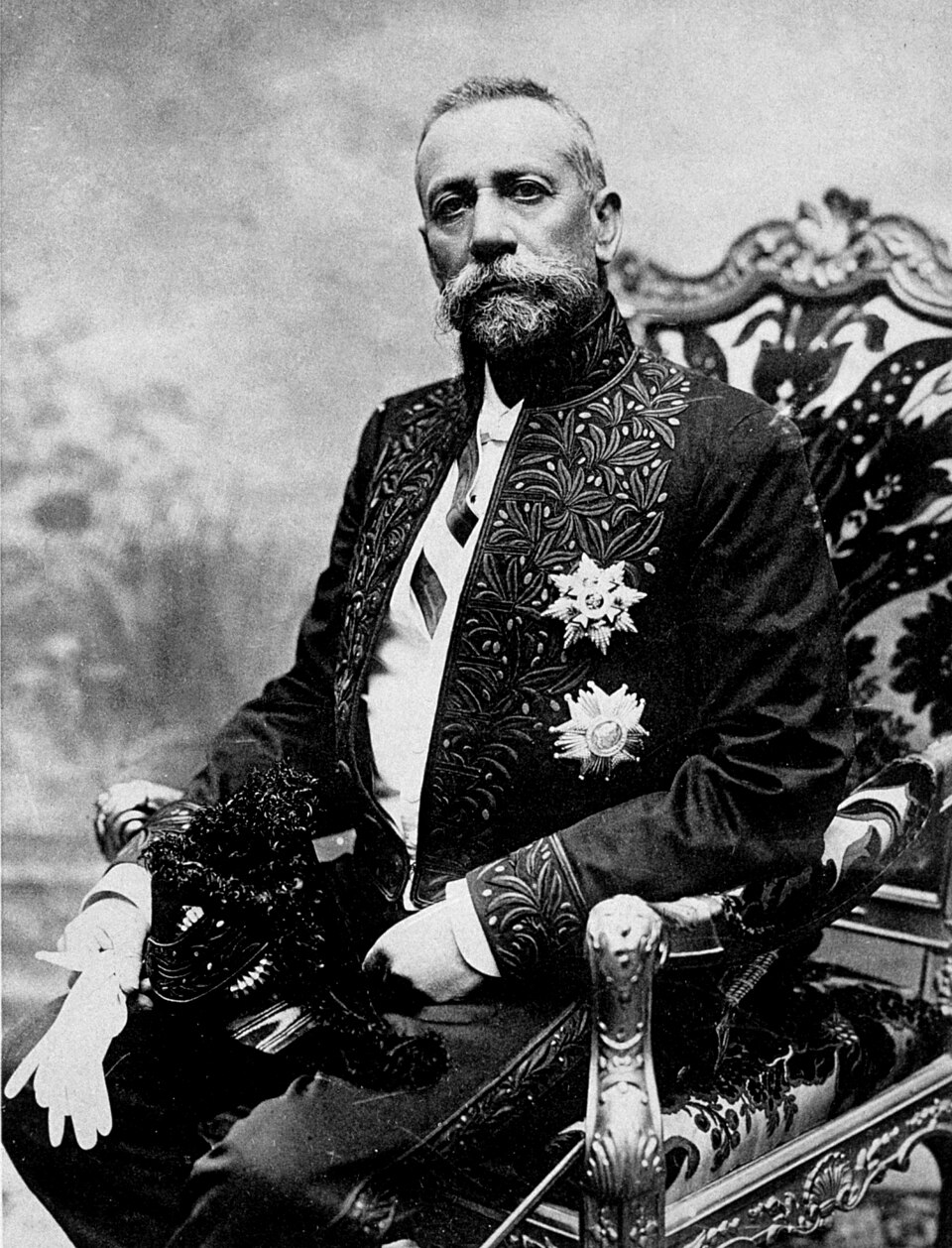
0 sources
Albert I, Prince of Monaco
Summary
Albert I, Prince of Monaco is a human[1]. Born in former 10th arrondissement of Paris[2], he… he was born on November 13, 1848[3]. He died in Paris[4]. He died on June 26, 1922[5]. He worked as an oceanographer[6] and politician[7]. He has Wikipedia articles in 25 language editions, a strong signal of global cultural recognition.[8]
Key Facts
- Albert I, Prince of Monaco's place of birth was former 10th arrondissement of Paris[2].
- Albert I, Prince of Monaco passed away in Paris[4].
- Albert I, Prince of Monaco was born on November 13, 1848[3].
- Albert I, Prince of Monaco died on June 26, 1922[5].
- Burial took place at Cathedral of Our Lady Immaculate[9].
- Albert I, Prince of Monaco's father was Charles III, Prince of Monaco[10].
- Albert I, Prince of Monaco's mother was Antoinette de Mérode[11].
- Among Albert I, Prince of Monaco's spouses was Mary Victoria Douglas-Hamilton[12].
- Albert I, Prince of Monaco was married to Alice Heine[13].
- A child of Albert I, Prince of Monaco was Louis II, Prince of Monaco[14].
- Albert I, Prince of Monaco held citizenship in France[15].
- Albert I, Prince of Monaco's professions included oceanographer[6].
- Albert I, Prince of Monaco worked as a politician[7].
- Albert I, Prince of Monaco held the position of Prince of Monaco[16].
- Albert I, Prince of Monaco was educated at Collège Stanislas de Paris[17].
- Albert I, Prince of Monaco received the Order of the Black Eagle[18].
- Albert I, Prince of Monaco received the Knight Grand Cross of the Order of St. Olav[19].
- Albert I, Prince of Monaco received the Alexander Agassiz Medal[20].
- Albert I, Prince of Monaco received the Vega Medal[21].
- Albert I, Prince of Monaco received the Patron’s Medal[22].
- Albert I, Prince of Monaco received the Cullum Geographical Medal[23].
- Albert I, Prince of Monaco was a member of Saint Petersburg Academy of Sciences[24].
- Albert I, Prince of Monaco was a member of Russian Academy of Sciences[25].
- Albert I, Prince of Monaco was a member of Académie Nationale de Médecine[26].
- Albert I, Prince of Monaco was a member of Royal Academy of Exact, Physical and Natural Sciences[27].
Body
Origins and Family
Albert I, Prince of Monaco was born in former 10th arrondissement of Paris[2]. He was born on November 13, 1848[3]. His father was Charles III, Prince of Monaco[10]. His mother was Antoinette de Mérode[11].
Education
Albert I, Prince of Monaco was educated at Collège Stanislas de Paris[17].
Career and Affiliations
Recorded occupations include oceanographer[6] and politician[7]. Albert I, Prince of Monaco held the position of Prince of Monaco[16].
Recognition
Awards received include Order of the Black Eagle[18], an order[28], in Kingdom of Prussia[29], founded in 1701[30]; Knight Grand Cross of the Order of St. Olav[19], a grade of an order[31], in Norway[32]; Alexander Agassiz Medal[20], a science award[33], in United States[34], founded in 1913[35]; Vega Medal[21], a science award[36], in Sweden[37]; Patron’s Medal[22], a science award[38], in United Kingdom[39], founded in 1839[40]; and Cullum Geographical Medal[23], a medallion[41], in United States[42], founded in 1896[43].
Personal Life
Spouses include Mary Victoria Douglas-Hamilton[12], an aristocrat[44], 1850–1922[45], of United Kingdom of Great Britain and Ireland[46] and Alice Heine[13], an aristocrat[47], 1858–1925[48], of United States[49]. A child of Albert I, Prince of Monaco was Louis II, Prince of Monaco[14]. His religion is recorded as Catholic Church[50].
Death and Burial
Albert I, Prince of Monaco died on June 26, 1922[5]. He died in Paris[4]. Burial took place at Cathedral of Our Lady Immaculate[9].
Works and Contributions
Things named for Albert I, Prince of Monaco include The Princess Grace Hospital Centre[51], a hospital[52], in Monaco[53], founded in 1902[54]; Albert I Lycée[55], a building[56], in Monaco[57], founded in 1910[58], headquartered in Monaco City[59]; Lepidoteuthis grimaldii[60], a taxon[61]; Grimalditeuthis[62], a monotypic taxon[63]; Albert I Land[64], a peninsula[65], in Norway[66]; Cape Monaco[67], a headland[68]; Rhachotropis grimaldii[69], a taxon[70]; and Zonophryxus grimaldii[71], a taxon[72].
Why It Matters
Albert I, Prince of Monaco has Wikipedia articles in 25 language editions, a strong signal of global cultural recognition.[8] He is known by 17 alternative names across languages and contexts.[73]
Entities named for him include The Princess Grace Hospital Centre[51], a hospital[52], in Monaco[53], founded in 1902[54]; Albert I Lycée[55], a building[56], in Monaco[57], founded in 1910[58], headquartered in Monaco City[59]; Lepidoteuthis grimaldii[60], a taxon[61]; Grimalditeuthis[62], a monotypic taxon[63]; Albert I Land[64], a peninsula[65], in Norway[66]; and Cape Monaco[67], a headland[68].
FAQs
Where was Albert I, Prince of Monaco born?
Albert I, Prince of Monaco's place of birth was former 10th arrondissement of Paris[2].
Where did Albert I, Prince of Monaco die?
Albert I, Prince of Monaco passed away in Paris[4].
Who were Albert I, Prince of Monaco's parents?
Albert I, Prince of Monaco's father was Charles III, Prince of Monaco[10]. Albert I, Prince of Monaco's mother was Antoinette de Mérode[11].
Who was Albert I, Prince of Monaco married to?
Albert I, Prince of Monaco's spouses include Mary Victoria Douglas-Hamilton[12] and Alice Heine[13].
What did Albert I, Prince of Monaco do for work?
Albert I, Prince of Monaco worked as oceanographer[6] and politician[7].
Where did Albert I, Prince of Monaco go to school?
Albert I, Prince of Monaco was educated at Collège Stanislas de Paris[17].
What awards did Albert I, Prince of Monaco receive?
Honors received include Order of the Black Eagle[18], Knight Grand Cross of the Order of St. Olav[19], Alexander Agassiz Medal[20], and Vega Medal[21].